


Listen to the article
Pop Mart Shares Tumble 23% Despite Strong Revenue as Investors Question Growth Beyond Labubu
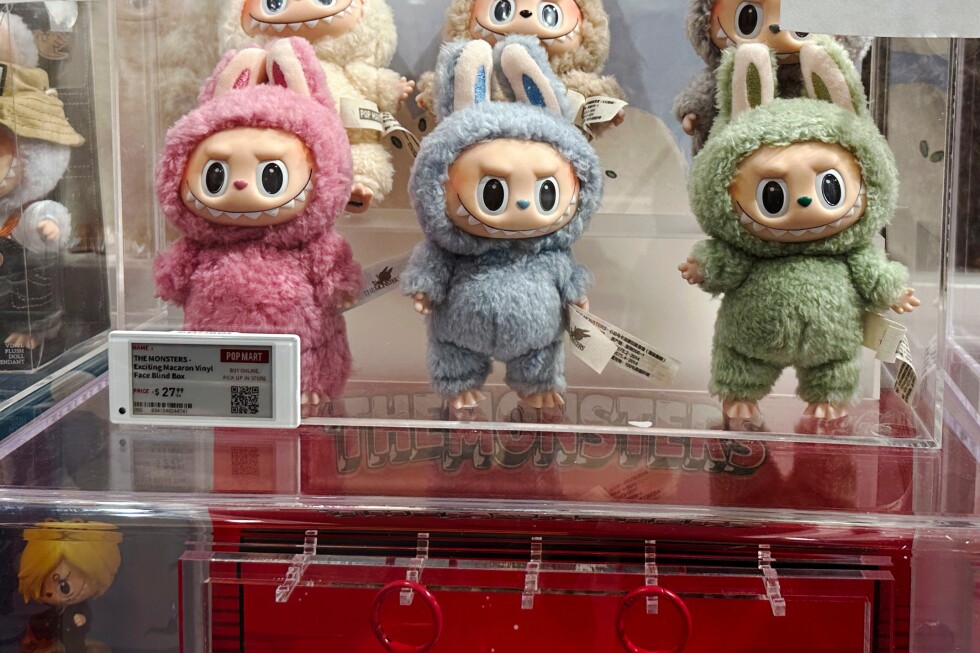
Shares of Chinese toy company Pop Mart plummeted nearly 23% in Hong Kong trading on Wednesday, revealing investor concerns about the company’s heavy reliance on its popular Labubu monster doll line despite otherwise impressive financial results.
The sell-off followed Pop Mart’s announcement of 37.1 billion yuan ($5.4 billion) in annual revenue for 2025, representing a 185% increase from the previous year. While the growth was substantial, it slightly missed analysts’ expectations. The company reported profits of 12.8 billion yuan ($1.9 billion), more than quadrupling the 3.1 billion yuan earned in 2024.
Despite Wednesday’s sharp decline, Pop Mart shares have still gained 33% over the past year, reflecting the extraordinary global success of its toothy monster dolls with pointed ears that have become a cultural phenomenon.
“We think the market’s biggest concern still lies in the earnings growth prospect,” explained Jeff Zhang, an equity analyst at Morningstar, though he noted the Labubu frenzy is likely “yet to cease.” Approximately 38% of Pop Mart’s revenue stems from “The Monsters” proprietary intellectual property characters, which includes the Labubu line.
The viral popularity of Labubu dolls began in 2024 when they gained traction on social media platforms and were spotted as accessories carried by celebrities. This sparked a collecting frenzy, with fans forming long queues outside Pop Mart stores worldwide, eager to purchase the latest editions.
Gary Ng, senior economist at French bank Natixis, acknowledged the success but highlighted the underlying concern. “Labubu’s popularity has been a huge success,” Ng said. “However, there is an emerging concern that there is no second growth driver.”
This concentration of success in a single product line creates potential vulnerability for the company. If Labubu’s growth momentum slows, it could represent a “concentration risk” that would negatively impact investor sentiment, according to Ng. Pop Mart does have other character lines, including Molly and Skullpanda, but none have achieved Labubu’s remarkable success.
During an earnings conference on Wednesday, Pop Mart CEO Wang Ning attempted to address these investor concerns. “People have expressed worries when talking about Labubu,” Wang acknowledged. “(About) whether it might just be a craze, and if it would be experiencing huge fluctuations.”
Wang pushed back against the characterization of Labubu as a passing fad. “However, based on our observations, we are pleased to see that it is becoming a lifestyle for more and more people,” he said. “We have strong expectations and confidence for (its) future.”
The company has been actively working to expand the Labubu brand beyond collectible figures. Pop Mart operates a theme park in Beijing and recently announced a partnership with Sony Pictures Entertainment to develop a feature film starring the Labubu character, potentially opening new revenue streams.
Pop Mart has also been aggressively expanding its global reach and diversifying its production capabilities. The company has established manufacturing partnerships across multiple countries, including Cambodia, Indonesia, and Mexico, in addition to its production facilities in China.
The market reaction highlights the challenges faced by companies built around viral product lines. While Pop Mart has achieved remarkable success with Labubu, investors are seeking evidence that the company can diversify its product portfolio and create new hit characters to sustain long-term growth beyond what some fear could be a temporary craze.
Fact Checker
Verify the accuracy of this article using The Disinformation Commission analysis and real-time sources.

9 Comments
The Labubu craze has been incredible, but investors are right to question whether Pop Mart can continue that success long-term. Broadening their portfolio seems crucial to maintaining investor confidence.
While the revenue growth is impressive, the market’s skepticism around Pop Mart’s earnings prospects makes sense given their heavy focus on Labubu. Diversification could help them weather any shifts in consumer trends.
Definitely a valid concern. Brands that rely too heavily on one blockbuster product often struggle when that fad fades. Diversification is key for sustainable long-term growth.
The Labubu phenomenon has clearly been a major driver of Pop Mart’s financial performance. But the market’s skepticism highlights the risks of being overly dependent on a single product line. Expanding their portfolio could pay dividends.
Exactly. A diversified product offering is key to building a resilient, long-term business model. Overreliance on one hot item is a precarious position.
Impressive revenue growth, but the market’s worries about Pop Mart’s reliance on Labubu are understandable. Diversifying their product lineup could help them weather any shifts in consumer preferences down the line.
Interesting to see Pop Mart’s reliance on Labubu dolls driving their revenue surge, but also sparking investor concerns about diversifying their product lineup. Curious to see if they can sustain this momentum long-term.
Agreed, overreliance on a single product line is always risky. They’ll need to carefully balance Labubu’s popularity with developing new revenue streams.
Rapid revenue growth is great, but the market’s concerns about Pop Mart’s Labubu focus are valid. Relying too heavily on a single product line, no matter how popular, is a risky strategy long-term.