


Listen to the article
Venezuelan Workers March for Higher Wages as Economic Crisis Deepens
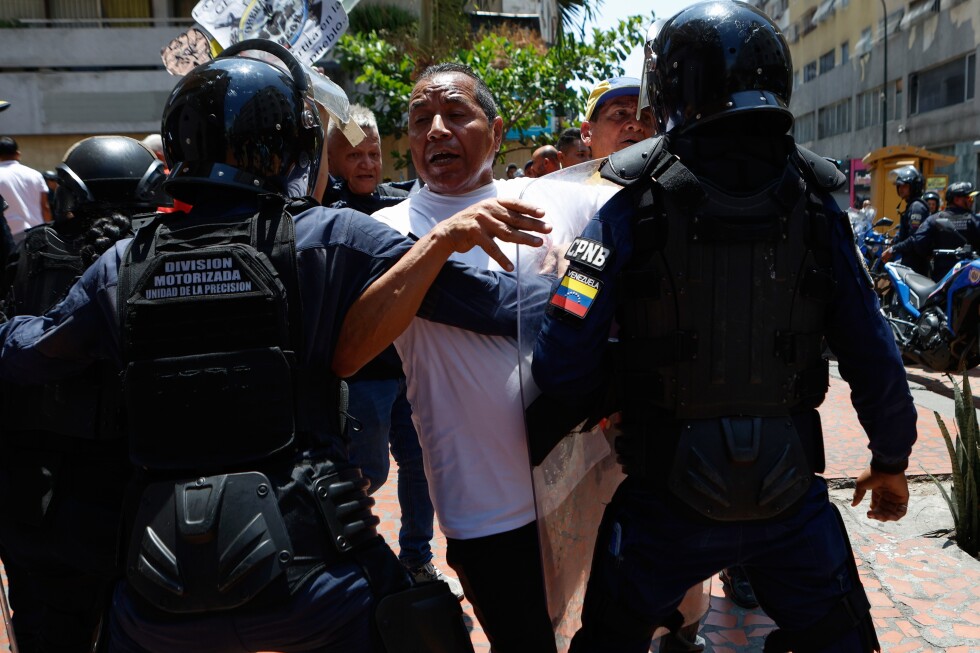
Union leaders, retirees and public sector workers took to the streets of Caracas on Thursday, demanding higher wages and better pensions as Venezuela’s economic crisis continues to strain the country’s workforce. The protesters, marching toward the Miraflores presidential palace, were blocked by National Police officers who had established multiple security barriers throughout downtown Caracas.
The demonstration came just one day after Acting President Delcy Rodríguez addressed the nation, urging both public and private sector employees to remain patient while the government works to improve the country’s struggling economy. In her televised speech, Rodríguez promised a wage increase on May 1, though she did not specify the amount.
“This increase, as we have indicated, will be a responsible increase,” Rodríguez stated. “Likewise in the near future, as Venezuela enjoys more resources that allow for the sustainability of salary improvements and workers’ income, we will continue moving forward on this path.”
For many demonstrators, however, these promises ring hollow after years of economic hardship. Venezuela’s minimum wage currently stands at 130 bolivars, equivalent to just $0.27 per month, a figure that has remained unchanged since 2022. This places Venezuelan minimum wage earners far below the United Nations’ extreme poverty threshold of $3 per day.
Though many public employees receive additional bonuses and stipends that can raise their monthly income to approximately $160, this still falls drastically short of covering basic necessities in a country ravaged by hyperinflation and economic mismanagement. Private sector employees fare only slightly better, earning an average of about $237 monthly last year.
“Call for elections and leave, that’s what the Venezuelan worker wants today,” said José Patines, a union leader participating in the march. “Because if on May 1 they come with an increase of a few dollars, no. We don’t need it. We want a salary with purchasing power.”
The protesters made several attempts to breach initial police barriers, successfully pushing through some early blockades. However, reinforced security measures eventually stopped the demonstration approximately two kilometers from the presidential palace. Despite tense confrontations between protesters and security forces, there were no immediate reports of injuries or arrests.
Venezuela’s economic situation has deteriorated significantly over the past decade, with a combination of political instability, U.S. sanctions, and declining oil production contributing to one of the worst economic collapses in Latin American history. Once one of the wealthiest countries in the region due to its vast oil reserves, Venezuela has seen its economy contract by more than 75% since 2013.
Hyperinflation has been a persistent problem, though it has somewhat moderated in recent years following the government’s decision to allow greater use of the U.S. dollar in everyday transactions. Despite this partial dollarization, most public sector workers still receive their salaries in bolivars, leaving them particularly vulnerable to inflation and currency devaluation.
In her address, Rodríguez emphasized that any wage increase would be implemented carefully to avoid triggering another inflationary spike like the one that followed the last minimum wage adjustment. This cautious approach reflects the government’s ongoing struggle to balance the immediate needs of workers against longer-term economic stability.
For now, Venezuela’s workers remain caught in a difficult economic reality, with Thursday’s protests highlighting the growing frustration among the population. As the May 1 deadline for the promised wage increase approaches, many Venezuelans are skeptical that any government action will significantly improve their deteriorating standard of living.
Fact Checker
Verify the accuracy of this article using The Disinformation Commission analysis and real-time sources.

9 Comments
It’s unfortunate to see the Venezuelan government cracking down on workers’ right to protest. Improving wages and economic conditions should be a top priority to address the ongoing crisis.
I agree, the government’s response seems heavy-handed. Peaceful protests are a fundamental democratic right, even in challenging economic times.
It’s a complex issue with no easy answers. The government needs to listen to the legitimate grievances of workers, while also maintaining public order. A more collaborative approach may yield better results.
This situation highlights the difficult balance governments must strike between maintaining order and respecting civil liberties. I hope cooler heads can prevail and find a constructive solution.
The economic crisis in Venezuela is clearly putting immense strain on the workforce. While the government promises action, the protesters’ frustration is understandable given the lack of meaningful progress so far.
You make a fair point. Restoring stability and improving living standards for Venezuelan workers will require substantive policy changes, not just rhetoric.
This protest is a symptom of the deeper economic challenges facing Venezuela. Addressing the root causes of inflation, shortages, and declining living standards should be the top priority.
Agreed. Merely cracking down on protests won’t solve the underlying issues. Meaningful economic reforms are needed to improve conditions for Venezuelan workers.
While I understand the government’s desire to maintain stability, blocking peaceful protests is counterproductive. Workers deserve a voice in finding solutions to the economic crisis.