


Listen to the article
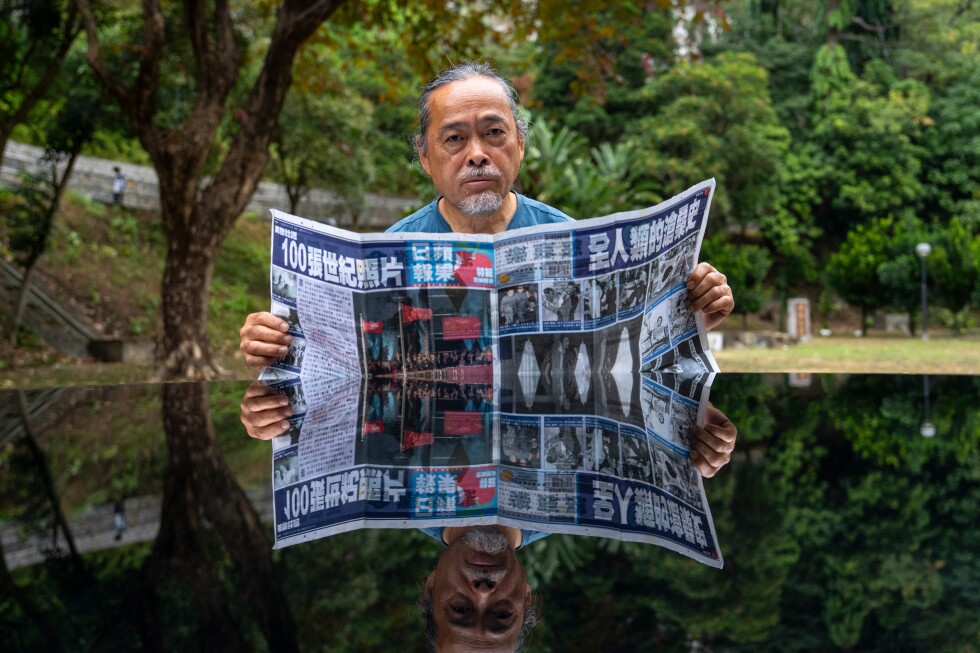
Nearly five years after the closure of Hong Kong’s pro-democracy newspaper Apple Daily and the imprisonment of its founder, former staff and readers continue to mourn what many see as the symbolic death of press freedom in the city.
Jimmy Lai, the 78-year-old founder of Apple Daily, received a 20-year prison sentence on Monday under Beijing’s national security law, making it the longest such sentence imposed since the law’s implementation in 2020. Six other former Apple Daily journalists who pleaded guilty to collusion-related charges received sentences ranging from six years and nine months to 10 years.
Hong Kong authorities and Beijing officials have defended the case against Lai and his colleagues, with Hong Kong leader John Lee accusing the newspaper of inciting violence and “poisoning young minds.” The government maintains that the case has nothing to do with press freedom, claiming the defendants used journalism as a disguise for activities harmful to Hong Kong and China.
The absence of Apple Daily has dramatically altered Hong Kong’s media landscape, which was once known for its freewheeling nature. “We’ve lost a newspaper that spoke for the people, and there’s no going back,” said William Wong, a 66-year-old longtime reader who appreciated the newspaper’s direct reporting style and critical coverage of political affairs since its founding in 1995.
Media experts note that Apple Daily occupied an important position within Hong Kong’s diverse media spectrum. Francis Lee, a journalism professor at the Chinese University of Hong Kong, explained that the newspaper’s openly pro-democracy stance helped create operational space for other media outlets. “When the one at the front has disappeared, the effect is that the whole spectrum and operating space will become narrow,” Lee said.
When Britain handed Hong Kong back to China in 1997, the territory was promised 50 years of Western-style civil liberties, including press freedom. Former Apple Daily journalists describe the newspaper as a place that fostered fearless and innovative journalism under Lai’s leadership.
A former reporter who spoke on condition of anonymity recalled the seemingly “endless” resources available to journalists. The newspaper pioneered the use of QR codes before they became commonplace and deployed helicopters for aerial coverage of pro-democracy demonstrations. Reporters could work without fear at a newspaper that stood with ordinary citizens.
Edward Li, a former chief news editor for the newspaper’s digital division, developed popular animated video reports with satirical narration, though they sometimes sparked debates about journalistic objectivity. Li remained with the paper for over a decade partly because of its experimental “trial and error” culture that allowed him to explore new formats. He has since co-founded Pulse HK, an online news outlet for Hong Kong readers based in Taiwan.
The company’s treatment of employees also stood out in an industry known for low wages. Both Li and the anonymous former reporter were impressed by how the company rewarded staff with shares in the parent company.
Not all aspects of the newspaper’s approach were universally appreciated, even by its staff. The anonymous former reporter admitted feeling uncomfortable with coverage that glorified pro-democracy figures while being overly critical of political opponents. He was also unhappy when Lai launched a campaign in May 2020 encouraging readers to petition then-U.S. President Donald Trump to “save Hong Kong.”
The newspaper’s fate was sealed shortly after Beijing imposed the national security law in June 2020 to quell the massive pro-democracy protests that had rocked the city in 2019. Police arrested Lai and senior Apple Daily journalists, freezing $2.3 million of the newspaper’s assets in 2021, which forced it to shut down.
Lai, who pleaded not guilty, was convicted in December of conspiracy to collude with foreign forces to endanger national security and conspiring with others to publish seditious articles. The court ruling stated that Apple Daily had transformed into a newspaper opposing the city and Chinese government after the 2014 pro-democracy Umbrella Movement.
The impact of these events extends far beyond Apple Daily. A 2025 survey by the Hong Kong Journalists’ Association found widespread self-censorship among journalists in the city. The association has raised concerns about journalists facing harassment through anonymous messages, and some Hong Kong residents have grown reluctant to speak with reporters.
The gap between freedom of speech in Hong Kong and mainland China has narrowed significantly. Dozens of civil society groups have disbanded, and the annual vigil commemorating the 1989 Tiananmen Square crackdown has disappeared, with its organizers now facing trial under the security law.
William Wong noted that news reports monitoring government actions have diminished, resulting in less accountability pressure on officials. Ordinary residents have become more cautious, with many avoiding political discussions entirely.
Simon Ng, another longtime Apple Daily reader, believes media outlets now exercise greater restraint in their coverage. “As transparency has weakened, it’s relatively more difficult to pursue the truth in news,” Ng observed, reflecting the profound transformation of Hong Kong’s once vibrant press environment.
Fact Checker
Verify the accuracy of this article using The Disinformation Commission analysis and real-time sources.

16 Comments
The plight of Jimmy Lai and the closure of Apple Daily are deeply troubling for press freedom in Hong Kong. It’s concerning to see journalists imprisoned for doing their jobs.
I agree, the loss of this independent voice is a huge blow to Hong Kong’s once vibrant media landscape.
While the government claims this case is not about press freedom, the lengthy sentences for the Apple Daily journalists tell a different story. It’s hard to see this as anything other than a crackdown on independent media.
I share your skepticism. The government’s explanations don’t seem to align with the harsh punishments handed down in this case.
The imprisonment of Jimmy Lai and his colleagues is a devastating blow to Hong Kong’s reputation as a free and open society. This case is a stark reminder of the fragility of democratic institutions in the face of authoritarian forces.
Well said. This is a deeply troubling development that should alarm anyone who values the free press and the rule of law.
This case is a troubling illustration of the Chinese government’s intolerance for dissent and criticism. The lengthy sentences handed down to the Apple Daily journalists are a clear message that independent media will not be tolerated.
I share your concern. This crackdown on press freedom in Hong Kong is a worrying development that deserves close international scrutiny and condemnation.
The closure of Apple Daily is a huge loss for Hong Kong. This newspaper gave voice to pro-democracy views and held the authorities to account. Its absence leaves a gaping hole in the city’s media landscape.
Absolutely. The diversity and independence of Hong Kong’s media was a key part of what made it unique. This erosion of press freedom is deeply concerning.
The closure of Apple Daily and the targeting of its staff is a devastating blow to Hong Kong’s reputation as a bastion of free speech and rule of law. This is a troubling sign of China’s tightening grip on the city.
Absolutely. This case highlights the urgent need for the international community to stand up for press freedom and human rights in Hong Kong.
This case highlights the erosion of civil liberties under the national security law. It’s a sad day when a newspaper can be shuttered and its founder jailed for his reporting.
Absolutely. This sets a dangerous precedent and raises serious concerns about the future of press freedom in Hong Kong.
It’s distressing to see how quickly press freedoms have been dismantled in Hong Kong. The imprisonment of Jimmy Lai and his colleagues is a chilling development that will have a lasting impact.
I agree. This case serves as a stark reminder of the fragility of democratic institutions and the importance of defending press freedom, even in the face of authoritarian crackdowns.