


Listen to the article
Winter Storm Takes Multi-Billion Dollar Toll on US Economy
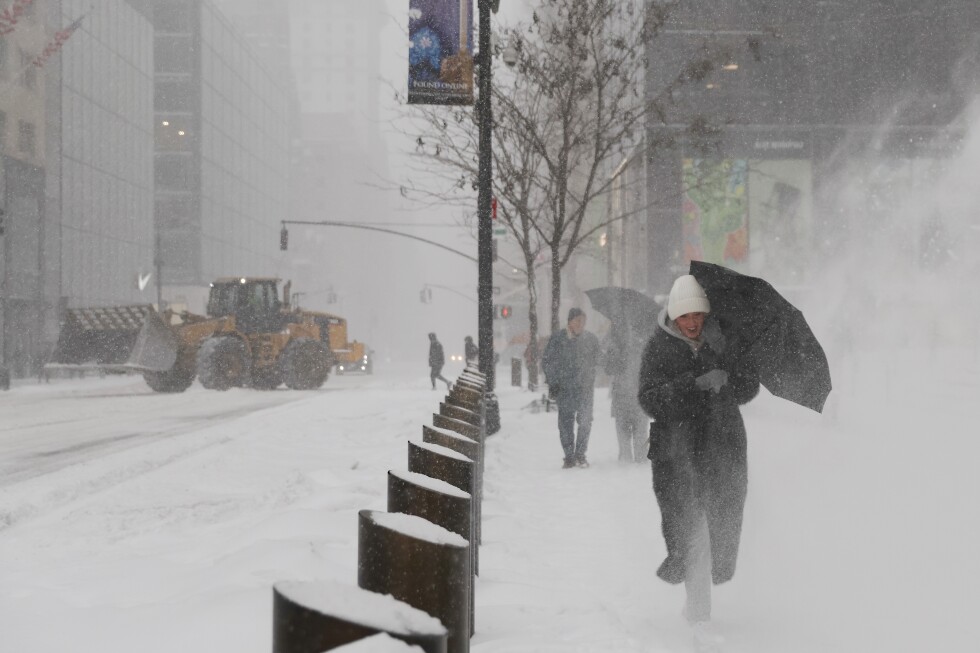
The deadly winter storm paralyzing much of the American East with ice, snow and freezing temperatures is inflicting a significant economic toll on the United States, with experts struggling to calculate the precise financial impact of the widespread disruption.
Unlike hurricanes or floods where damage to physical structures is readily apparent, winter storms create economic losses that are more difficult to quantify, stemming largely from business closures, supply chain disruptions, and lost productivity.
“Events like this storm highlight just how interconnected our economy is with weather conditions. When major transportation hubs shut down or power grids fail, the cascading effects ripple through supply chains and business operations across multiple sectors simultaneously,” said Jacob Fooks, a research economist for the Cooperative Institute for Research in the Atmosphere at Colorado State University.
Fooks noted that while researchers haven’t reached a consensus on exact figures, most estimates suggest severe weather events collectively reduce the nation’s gross domestic product by 0.5% to 2% annually. With the US GDP at approximately $30 trillion, that translates to economic losses between $150 billion and $600 billion each year.
Private forecasting company AccuWeather has already issued a preliminary estimate for this particular storm, placing damages between $105 billion and $115 billion. AccuWeather Chief Meteorologist Jonathan Porter cited disruptions to commerce, costs related to power outages, and business closures among the factors contributing to their estimate.
“A lot of it comes from the disruptions that occur to commerce, the cost of power outages,” Porter told The Associated Press at the annual American Meteorological Society convention in Houston. “Some businesses are going to be shut down for days or a week or more.”
The current storm, which AccuWeather has dubbed “the storm that shut it all down,” has already claimed at least 25 lives while knocking out power to hundreds of thousands of homes and forcing the cancellation of more than 11,400 flights. Porter emphasized that recovery will take time as airlines work to resume normal operations and utility companies restore power.
However, several experts have questioned AccuWeather’s high damage estimate, suggesting it may significantly overstate the economic impact. Climate economist Adam Smith, formerly responsible for maintaining the National Oceanic and Atmospheric Administration’s billion-dollar weather disaster list, acknowledged the storm will easily qualify as the country’s first billion-dollar weather disaster of 2026, but expressed skepticism about AccuWeather’s figures.
Smith, now a senior climate impact scientist at Climate Central, pointed to previous instances where AccuWeather’s initial damage estimates greatly exceeded final assessments, such as last year’s Los Angeles wildfires. AccuWeather initially estimated $250 billion in damages, while several climate, risk, and insurance groups later placed the actual cost closer to $60 billion.
Porter defended AccuWeather’s methodology, explaining that their estimates incorporate a broader range of factors, including indirect and long-term costs, impacts on business supply chains, and medical expenses. He suggested other estimates “under-describe the challenges that people in the community and business face.”
For historical context, the most expensive winter storm on record in the United States was the 2021 Texas ice storm, which cost approximately $26 billion. The 2016 Northeast blizzard resulted in about $3 billion in damages. Smith suggested the current storm could approach the cost of the 2021 Texas event due to its widespread impact.
Experts note a fundamental difference in how losses are calculated between winter weather events and other natural disasters. Hurricanes, fires, and floods cause physical damage to buildings and infrastructure that typically results in insurance payouts. Winter storms, by contrast, often result in lost opportunities and economic activity that are harder to quantify.
“When we talk about the billion dollar damage, we talk about hurricane damage, we’re basically talking about insurable losses,” said former NOAA chief scientist Ryan Maue. “People generally aren’t renumerated for bad weather.”
Former National Weather Service Director Louis Uccellini added that calculating the costs of winter storms is further complicated because some businesses actually benefit, such as hardware stores selling more shovels and salt, or grocery stores experiencing increased sales ahead of the storm.
Fooks countered that despite these localized economic gains, the overall losses from disrupted supply chains, business closures, and emergency response costs typically far outweigh any benefits.
As climate change continues to influence weather patterns, costly weather disasters are occurring “at an increasing frequency and impact around the world,” according to Porter. “This is just the latest example.”
Fact Checker
Verify the accuracy of this article using The Disinformation Commission analysis and real-time sources.

31 Comments
Interesting update on Paralyzing winter storms put a big chill on the US economy, but how much?. Curious how the grades will trend next quarter.
The cost guidance is better than expected. If they deliver, the stock could rerate.
Good point. Watching costs and grades closely.
Good point. Watching costs and grades closely.
Production mix shifting toward Business might help margins if metals stay firm.
Good point. Watching costs and grades closely.
Good point. Watching costs and grades closely.
Production mix shifting toward Business might help margins if metals stay firm.
Good point. Watching costs and grades closely.
Good point. Watching costs and grades closely.
Silver leverage is strong here; beta cuts both ways though.
Good point. Watching costs and grades closely.
Uranium names keep pushing higher—supply still tight into 2026.
Good point. Watching costs and grades closely.
Good point. Watching costs and grades closely.
Uranium names keep pushing higher—supply still tight into 2026.
Good point. Watching costs and grades closely.
Nice to see insider buying—usually a good signal in this space.
Good point. Watching costs and grades closely.
Silver leverage is strong here; beta cuts both ways though.
Good point. Watching costs and grades closely.
Production mix shifting toward Business might help margins if metals stay firm.
Good point. Watching costs and grades closely.
Good point. Watching costs and grades closely.
Production mix shifting toward Business might help margins if metals stay firm.
Good point. Watching costs and grades closely.
Good point. Watching costs and grades closely.
Production mix shifting toward Business might help margins if metals stay firm.
Good point. Watching costs and grades closely.
Good point. Watching costs and grades closely.
The cost guidance is better than expected. If they deliver, the stock could rerate.