


Listen to the article
Paraguay became the final South American country to ratify a landmark free trade agreement between Mercosur and the European Union on Tuesday, clearing a crucial hurdle for a pact that will create one of the world’s largest free trade zones. The agreement, which has been under negotiation for 25 years, will connect regions representing over 700 million people and approximately 25% of global GDP.
The deal received unanimous approval from the 58 Paraguayan deputies present during a session that stretched beyond nine hours, coming nearly two weeks after the Senate had already given its consent. The agreement now awaits the signature of President Santiago Peña to complete Paraguay’s formal ratification process.
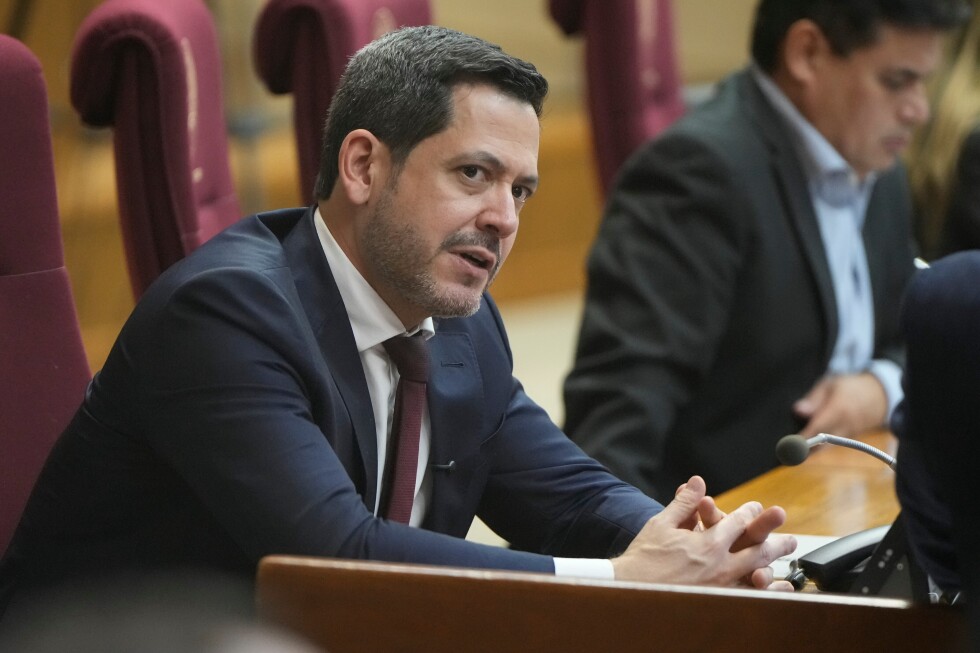
“This is a historic agreement for Paraguay, for the region, and for the world. We are creating what is possibly the largest market in the world,” said Deputy Rodrigo Gamarra, from the ruling Colorado Party and current president of the Mercosur Parliament.
With Paraguay’s vote, all four founding members of Mercosur – Argentina, Brazil, Paraguay, and Uruguay – have now ratified the agreement. Bolivia, which joined Mercosur more recently, did not participate in the negotiations but will have the opportunity to join the agreement in coming years.
The path to this moment has been long and complex. Uruguay became the first to ratify the agreement in late February, with Argentina following suit the same day, both securing large majorities in their respective legislative chambers. Brazil, Mercosur’s largest economy, moved swiftly afterward, with its Senate unanimously ratifying the alliance in early March after receiving approval from the lower house.
On the European side, implementation could move forward even before final legal hurdles are cleared. The European Commission has indicated it will provisionally ratify the deal, potentially allowing it to take effect while a legal challenge from European lawmakers proceeds through the European Court of Justice.
Unlike the process in South America, individual legislative bodies across the EU’s 27 member nations do not need to separately ratify the agreement. However, the European Parliament will vote on ratification again if the court concludes the agreement doesn’t violate EU treaties.
The agreement has faced significant opposition, particularly from France, left-wing groups, and farmers’ unions in Europe, who argue it could destabilize the European agricultural sector by introducing competition from South American producers with different regulatory standards.
European Commission President Ursula von der Leyen, who along with Brazilian President Luiz Inácio Lula da Silva has been one of the main architects pushing the deal forward, has described it as “one of the most significant trade agreements of the first half of this century.” She emphasized that “Mercosur embodies the spirit with which Europe operates on the global stage. Europe is strengthening itself and gaining independence.”
The agreement comes at a pivotal moment in international relations, with political fragmentation and economic shifts challenging traditional alliances. Several European nations face security challenges and strained relations with the United States, making new economic partnerships increasingly important.
Deputies across Paraguay’s political spectrum expressed optimism about the agreement during the ratification session. “This provisional agreement is the bridge to full integration,” said Deputy Juanma Añazco of the Colorado Party, while his colleague Alejandro Aguilera noted, “It was years and years of negotiations and reluctance… achieving this is truly historic.”
Even opposition voices supported the measure, with independent Deputy Raúl Benítez stating that “where there is isolation, we respond with multilateralism.”
The Mercosur-EU agreement represents a significant shift in global trade alignments at a time when protectionist sentiments have been rising in various parts of the world. If implemented, it would eliminate tariffs on 91% of goods that Mercosur countries export to the EU and gradually remove duties on 92% of European exports to Mercosur over a 10-year period.
Fact Checker
Verify the accuracy of this article using The Disinformation Commission analysis and real-time sources.

6 Comments
With over 700 million people and 25% of global GDP covered, this EU-Mercosur pact is no small feat. It will be worth monitoring how key sectors like energy and minerals fare under the new trade rules.
This is an important milestone for South American trade integration. The EU-Mercosur deal will open up new opportunities for businesses and consumers on both sides of the Atlantic.
The sheer scale of this trade zone is remarkable. I wonder how it will impact the global competitiveness of South American mining and resource companies as they gain better access to EU markets.
While the details still need to be worked out, this deal has the potential to significantly alter regional trade flows, especially for commodities. It’s an important development to watch closely.
It’s interesting to see Paraguay, the final holdout, finally approve this landmark trade agreement. This should boost economic ties between the EU and Latin America.
Absolutely, the deal’s unanimous approval in Paraguay’s parliament is a strong signal of support. It will be fascinating to see how industries like mining and commodities are affected.