


Listen to the article
Panama’s government has moved decisively to take control of two strategic ports at the Panama Canal entrances following a Supreme Court ruling that invalidated the long-standing operating concession held by Hong Kong-based CK Hutchison.
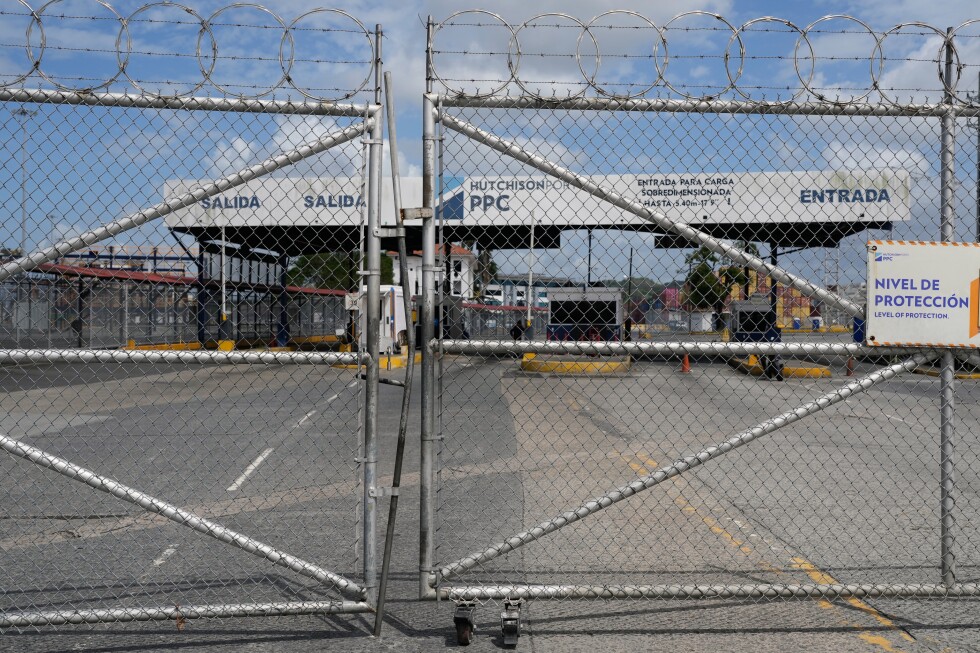
The decree, issued Monday, empowers the Panama Maritime Authority to occupy the Balboa and Cristóbal terminals for “reasons of urgent social interest.” The government’s takeover encompasses all assets at both facilities, including cranes, vehicles, computer systems, and proprietary software.
This dramatic development marks the culmination of a legal battle that began earlier this year when Panama’s Supreme Court declared the original concession contract unconstitutional. The ruling not only struck down the initial agreement from 1997 but also invalidated a 2021 extension, effectively removing any legal basis for CK Hutchison’s Panama Ports Company (PPC) to continue operations.
The port controversy has unfolded against the backdrop of escalating geopolitical tensions between the United States and China. Panama found itself caught in this superpower rivalry last year when then-U.S. President Donald Trump publicly claimed that China was “running the Panama Canal,” heightening scrutiny of Chinese influence in the region.
Adding to the complexity, CK Hutchison had been planning to sell the two ports to a consortium that included U.S. investment giant BlackRock. That proposed transaction prompted swift intervention from Beijing, which effectively blocked the deal, underscoring China’s strategic interest in maintaining influence over key maritime infrastructure in the Western Hemisphere.
The Panama Canal serves as one of the world’s most crucial maritime chokepoints, handling approximately 6% of global trade. The Balboa port on the Pacific side and the Cristóbal terminal on the Atlantic entrance are vital components of this international shipping network, making their control a matter of both national and international significance.
In addressing concerns about operational continuity, Panama’s government has announced that Danish shipping giant A.P. Moller-Maersk, through its APM Terminals subsidiary, will temporarily assume management of both facilities while authorities work to establish a new concession framework. Officials have also pledged to maintain port operations without disruption and protect existing jobs during the transition.
“This is fundamentally about reasserting Panamanian sovereignty over critical infrastructure,” said a government spokesperson who requested anonymity. “The Supreme Court provided clear direction, and we’re acting in accordance with national interests while ensuring these essential facilities continue functioning seamlessly.”
CK Hutchison has not accepted the government’s actions without challenge. The company has initiated arbitration proceedings against Panama under International Chamber of Commerce rules, setting the stage for what could become a protracted legal battle. The Hong Kong-based firm has also threatened litigation against APM Terminals if it proceeds with operating the ports, though the Danish company maintains it is not party to the underlying legal dispute.
Just days before the government takeover, a PPC spokesperson had indicated to local media that the company was seeking an agreement with Panamanian authorities to maintain operational control, suggesting some willingness to negotiate. However, Monday’s decree appears to have superseded any such discussions.
Maritime industry analysts note that the outcome of this dispute could have far-reaching implications for international investment in port infrastructure throughout Latin America, potentially influencing how foreign operators approach concession agreements in the region.
The situation remains fluid as stakeholders assess the immediate operational impact on shipping through the Panama Canal, one of the world’s most vital maritime thoroughfares connecting the Atlantic and Pacific Oceans.
Fact Checker
Verify the accuracy of this article using The Disinformation Commission analysis and real-time sources.

7 Comments
The timing of this decision, coming amidst heightened geopolitical tensions between the US and China, adds an extra layer of complexity. Panama will need to carefully weigh its relationships with both superpowers as it asserts control over these strategic port assets.
Absolutely, Panama’s delicate balancing act between the US and China will be crucial in this situation. Maintaining the canal’s neutrality and operational efficiency should be the top priority.
This is a complex geopolitical issue with significant economic implications for Panama and the global supply chain. It will be interesting to see how the Panamanian government navigates this transition and whether any diplomatic tensions arise with China over the port operations.
As a major global trade hub, any disruption to the Panama Canal operations could have far-reaching consequences. I wonder how this will impact shipping costs and timelines, especially for commodities like metals and minerals that rely on the canal’s efficient throughput.
The Supreme Court’s decision to invalidate the long-standing concession held by CK Hutchison raises important questions about transparency, governance, and national sovereignty in the management of critical infrastructure. Careful handling of this situation will be crucial.
Agreed, the government’s move to occupy the terminals directly raises concerns about the sanctity of private contracts and the protection of foreign investments. Navigating this delicate balance will require diplomatic finesse.
This is a significant move by the Panamanian government, and it will be important to monitor how it unfolds. The potential impacts on global trade, commodity prices, and geopolitical dynamics bear close watching in the coming months.