


Listen to the article
Oregon Court Reverses PacifiCorp Wildfire Ruling, Endangering $1 Billion in Victim Damages
An Oregon appeals court delivered a significant setback to wildfire victims on Wednesday, siding with utility company PacifiCorp in a ruling that could jeopardize more than $1 billion in damages awarded to those affected by the state’s catastrophic 2020 wildfires.
The three-judge panel of the Oregon Court of Appeals sent the class-action case back to a lower trial court, citing concerns about jury instructions provided during a pivotal 2023 trial. In that initial proceeding, jurors found the utility liable for negligently failing to cut power despite explicit warnings from fire officials and determined PacifiCorp should pay punitive and other damages to affected property owners.
The appeals court ruled that the trial court erred in instructing jurors that evidence presented regarding four distinct wildfires could be applied universally to all class members. “We conclude that this instruction was legally erroneous, because certain evidence at trial, particularly related to causation, did not necessarily apply to every class member,” the judges wrote in their decision.
The class included owners of more than 2,000 parcels damaged across multiple fires spanning great distances. These included the Santiam Canyon fire in northwestern Oregon, the Echo Mountain Complex fire near the coast, and the South Obenchain and 242 fires in southwestern Oregon – some separated by over a hundred miles.
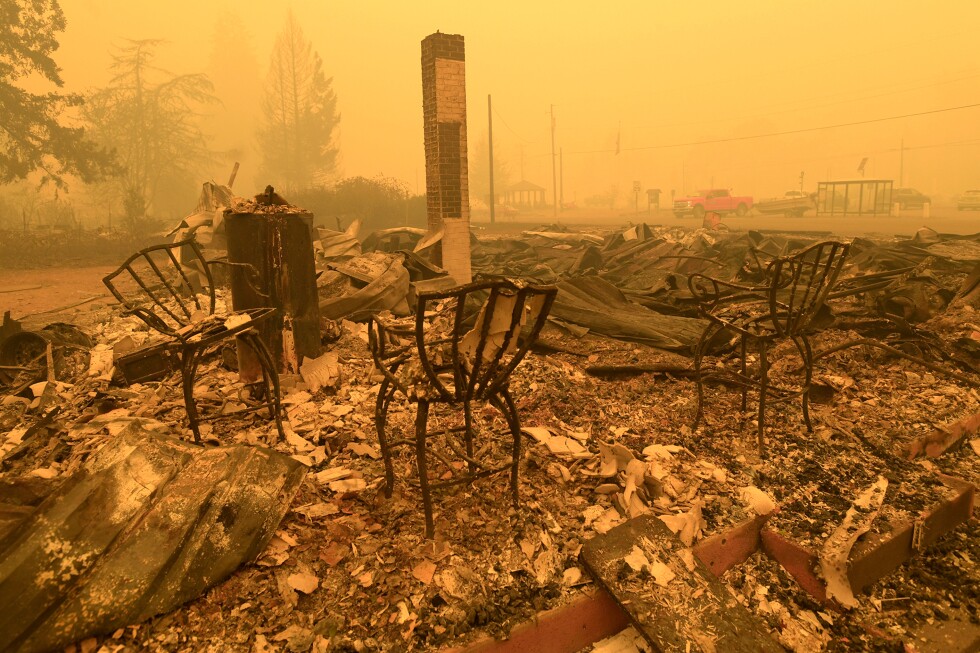
The 2020 Labor Day weekend fires rank among Oregon’s most devastating natural disasters, killing 11 people, burning more than 1,560 square miles of land, and destroying thousands of homes. The blazes swept through the state during unusually dry conditions and high winds, creating catastrophic fire conditions.
Since the initial verdict, subsequent juries have ordered PacifiCorp to pay more than $1 billion in damages to thousands of class members. More than 1,000 class members still have cases scheduled for trial in 2026 and 2027, creating uncertainty about how these proceedings will move forward following this reversal.
PacifiCorp welcomed the decision in a statement: “There are no winners in wildfire; however, the Court’s decision supports PacifiCorp’s longstanding belief that this process was prejudicial and not appropriate for managing wildfire litigation. The company remains open to resolving reasonable claims and will continue to defend against unsupported claims.”
Lead counsel for the plaintiffs characterized the ruling as merely a “procedural setback,” emphasizing that “nothing in this ruling suggests the jury got it wrong.” The plaintiffs’ attorneys noted that the court rejected PacifiCorp’s efforts to win the appeal on substantive merits, instead focusing on a single jury instruction issue. They suggested several paths forward, including fixing the problematic instruction and retrying the case.
Despite this legal victory, PacifiCorp has already agreed to pay over $2 billion in settlements for various lawsuits stemming from the 2020 wildfires, including $575 million to the federal government for damages on federal land in Oregon and California. These financial pressures have forced the utility to take significant steps to stabilize its finances.
In February, PacifiCorp announced plans to sell its wind and natural gas generation assets, along with distribution infrastructure in Washington state, to Portland General Electric Company in a $1.9 billion deal. The utility has faced cash flow challenges as it has been required to post bonds with the court while appealing the wildfire judgments.
The reversal marks the latest development in an ongoing legal saga that has significant implications for both the utility industry’s liability in natural disasters and the ability of wildfire victims to secure compensation. It remains unclear whether attorneys for the plaintiffs will appeal this decision to the Oregon Supreme Court.
Fact Checker
Verify the accuracy of this article using The Disinformation Commission analysis and real-time sources.

10 Comments
This is a complex case with a lot of moving parts. The court’s decision to send it back to the lower level is not entirely surprising, as technical legal matters often get scrutinized on appeal. However, the potential impact on the $1 billion in damages is concerning for the wildfire victims who have already suffered so much.
This is a concerning development for the wildfire victims seeking damages. The court’s decision to send the case back to a lower court could significantly impact the $1 billion in potential awards. It will be important to closely follow how this plays out going forward.
You’re right, the appeals court’s concerns about the jury instructions could create a major setback for the victims. It will be crucial to see how the lower court handles the case now.
I’m curious to learn more about the specific jury instructions that the appeals court took issue with. Understanding the court’s reasoning on that technical point could shed light on how the lower court might need to approach the case going forward.
This is a high-stakes case with major financial implications. The wildfire victims have already been through so much, so I hope the lower court is able to find a way to uphold the original $1 billion damages award despite the appeals court’s concerns. They deserve justice and compensation for their losses.
I agree, the victims have already endured so much. Hopefully the lower court can address the appeals court’s issues in a way that still delivers meaningful relief to those affected by the devastating wildfires.
Utilities like PacifiCorp play a critical role in fire prevention and response, so this ruling could have broader implications beyond just this case. It will be interesting to see if it prompts any changes in how utility companies approach their responsibilities during high-risk fire conditions.
That’s a good observation. This case could end up influencing utility policies and practices related to wildfire mitigation and safety measures. The legal precedent set here may have repercussions across the industry.
The ruling seems to hinge on the court’s view that evidence presented on the four specific wildfires may not have been applicable to all class members. This technical legal issue could have major financial implications for the victims. I wonder if the lower court will be able to address the court’s concerns.
That’s a good point. The appeals court’s focus on the specificity of the evidence and how it was applied to the broader class is an important nuance. Resolving that issue will be key to determining the ultimate outcome for the victims.