


Listen to the article
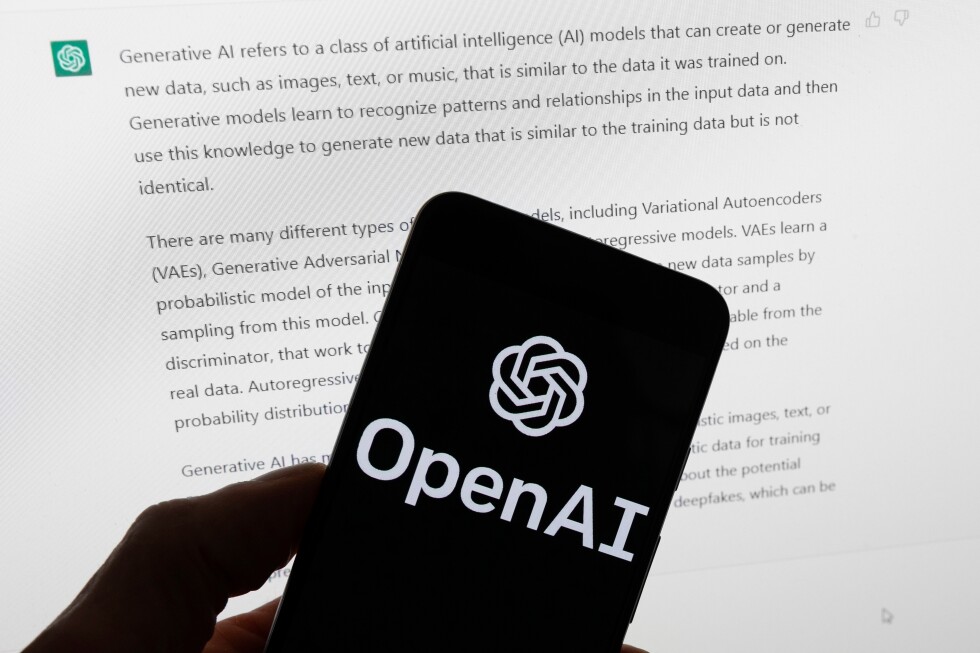
OpenAI Foundation, the nonprofit that controls artificial intelligence company OpenAI and its flagship product ChatGPT, announced Tuesday a commitment to distribute $1 billion in grants over the next year while significantly expanding its philanthropic operations.
The pledge marks a substantial evolution in OpenAI’s charitable activities and provides insight into how the organization, which began as a nonprofit in 2015, plans to fulfill its mission of developing AI that benefits “all of humanity.”
“We aim to enable the use of AI to find solutions to humanity’s hardest problems, transform what people are capable of, and deliver real benefits in people’s lives — while working hard with partners to be ready for new challenges, and to help make society resilient, as AI advances,” said Bret Taylor, OpenAI board chair, in a statement.
The foundation’s new funding initiative will focus on supporting life science and health research while addressing AI’s impacts on employment, economic systems, and mental health, with special attention to children’s well-being. This announcement follows an earlier commitment made in October to allocate $25 billion toward similar causes, though that pledge came without a specific timeframe.
To oversee this expanded grantmaking operation, the OpenAI Foundation plans to recruit a new executive director.
The announcement represents a significant shift for the organization, which has undergone substantial structural changes since its inception. Originally established as a nonprofit research laboratory in 2015, OpenAI has increasingly moved away from that model as it developed commercial technologies like ChatGPT through its for-profit subsidiary, now valued as one of the world’s most valuable startups.
In October, OpenAI finalized an agreement with regulators that maintained the nonprofit board’s authority over its for-profit business while creating clearer pathways for investors and the company to monetize its technologies. This agreement also clarified the nonprofit’s ownership stake in the company, which OpenAI valued at approximately $130 billion, positioning it among America’s best-resourced nonprofits.
Financial records reveal a dramatic shift in the nonprofit’s activities following the 2019 incorporation of its for-profit arm. According to public tax filings, OpenAI’s nonprofit entity reported $51 million in expenses in 2018, which plummeted to $3.3 million the following year. In 2024, the most recent reporting year, the nonprofit received just $4,433 in contributions while distributing $7.6 million in grants.
Brian Mittendorf, an accounting and public affairs professor at Ohio State University specializing in nonprofits, notes that tax forms may inadequately capture OpenAI’s activities or its focus on achieving charitable objectives. “People tend to focus on the financial part of that,” Mittendorf explained. “Is the immense value creation being used to further a charitable objective? But an equally important piece is whether the product they are developing is serving humanity as they envisioned.”
This question has also been raised by Elon Musk, an early OpenAI backer, who filed a lawsuit against the company alleging that CEO Sam Altman and others abandoned the nonprofit’s mission in pursuit of profits. This case is scheduled for trial in California.
In 2025, OpenAI began efforts to revitalize its nonprofit arm by assembling a temporary advisory board to provide guidance on restructuring its philanthropic activities while negotiating with regulators and investors regarding the nonprofit board’s oversight of business operations.
The advisory board, which included labor leader Dolores Huerta, recommended substantially increasing resources for the nonprofit and conducting extensive community consultations about AI’s impacts to inform grantmaking strategies. In December, the nonprofit announced $40.5 million in grants to community-based organizations supporting AI literacy, civic engagement, and economic opportunity.
This renewed philanthropic vision emerges amid growing public concerns about AI’s broader impacts, including increased electricity costs from data centers, potential mental health crises linked to AI chatbots, and questions about AI technologies in military applications.
As part of its restructuring, the OpenAI Foundation announced that co-founder Wojciech Zaremba will become the foundation’s head of AI resilience, focusing on addressing challenges arising from increasingly capable AI systems. Additionally, Jacob Trefethen, formerly with Coefficient Giving, will lead the foundation’s life sciences and health grantmaking efforts.
The $1 billion commitment represents not just a financial pledge but a strategic repositioning of the OpenAI Foundation as it attempts to balance commercial success with its original mission of ensuring artificial intelligence benefits humanity broadly rather than serving narrow commercial or governmental interests.
Fact Checker
Verify the accuracy of this article using The Disinformation Commission analysis and real-time sources.

6 Comments
This is an ambitious move by OpenAI to try to get ahead of some of the societal challenges that AI development may bring. Funding research into employment and mental health impacts seems like a smart priority. I hope they’re able to execute this program effectively.
It’s good to see a major AI company taking concrete steps to try to ensure their technology has a positive impact. $1 billion is a significant investment, though the tricky part will be allocating those funds in a way that truly benefits humanity as a whole.
Interesting to see OpenAI expand its philanthropic efforts. Investing in research on AI’s societal impacts could be really valuable, especially for vulnerable groups like children. I wonder how they’ll decide which projects to fund and ensure the grants are used effectively.
As AI becomes more capable and ubiquitous, it’s good to see OpenAI taking steps to ensure the technology benefits all of humanity. $1 billion in grants is a meaningful investment, though the real challenge will be allocating those funds strategically and with measurable impact.
Expanding OpenAI’s philanthropic work to address AI’s societal impacts is an interesting move. I’m curious to learn more about the specific initiatives and research projects they end up supporting through this $1 billion grant program.
A billion dollars is a substantial commitment from OpenAI. Directing that towards health, employment, and mental health issues related to AI advancement seems like a prudent approach. Curious to see what kinds of initiatives and partners they end up supporting.