


Listen to the article
Eight OPEC+ nations announced plans to increase crude oil production amid escalating military tensions between Iran, Israel, and the United States that threaten to disrupt vital Middle Eastern oil shipments.
The Organization of Petroleum Exporting Countries revealed Sunday that eight member countries will boost output by 206,000 barrels per day in April, exceeding analyst expectations. The decision, made during a previously scheduled meeting, comes as U.S. and Israeli forces launched significant strikes against Iran, which has responded with counterattacks targeting Israel and U.S. military installations in the Gulf region.
Saudi Arabia, Russia, Iraq, the United Arab Emirates, Kuwait, Kazakhstan, Algeria, and Oman are the eight nations that will increase production. The timing is critical as military actions throughout the region, including attacks on two vessels navigating the Strait of Hormuz, threaten to constrain global oil exports.
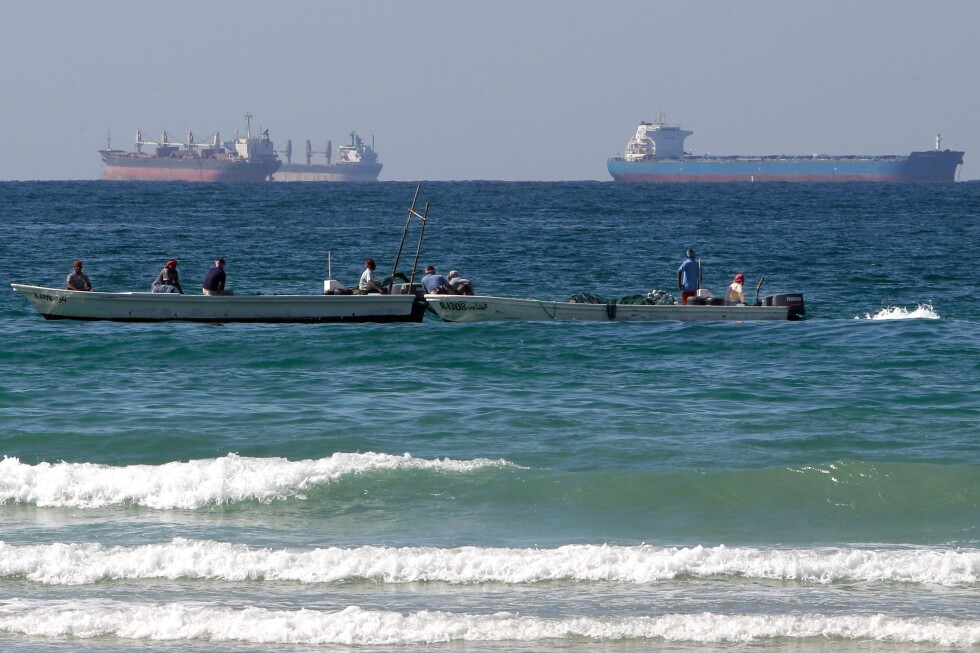
The Strait of Hormuz represents a crucial chokepoint in global energy markets, with approximately 15 million barrels of crude oil—roughly 20% of the world’s supply—passing through this narrow waterway daily, according to data from Rystad Energy. The strait serves as a vital export route for Saudi Arabia, Kuwait, Iraq, Qatar, Bahrain, the UAE, and Iran itself.
“Roughly one-fifth of global oil supply passes through the Strait of Hormuz, a vital artery for world trade, meaning markets are more concerned with whether barrels can move than with spare capacity on paper,” explained Jorge León, Rystad’s senior vice president and head of geopolitical analysis. “If flows through the Gulf are constrained, additional production will provide limited immediate relief, making access to export routes far more important than headline output targets.”
Iran had previously restricted passage through parts of the strait in mid-February, claiming it was conducting military drills. Any additional disruptions to this critical shipping channel could significantly impact global oil supply chains and drive prices higher.
The current military escalation poses particular risks for Iran’s oil exports, which amount to approximately 1.6 million barrels daily, with China being its principal customer. Should Iran’s export capacity be compromised, China may need to secure alternative supplies, potentially creating additional demand pressure in an already tightening market.
Energy analysts anticipate a sharp market reaction when trading resumes. Rystad analysts predict the price of Brent crude, the international benchmark, could surge by as much as $20 per barrel when markets open. Brent crude already closed at $72.87 on Friday, representing a seven-month high.
The OPEC+ production increase decision reflects the cartel’s attempt to stabilize energy markets amid growing geopolitical uncertainty. However, experts question whether boosting production on paper will provide meaningful relief if physical shipping routes remain compromised.
The situation underscores the fragility of global energy security when military conflicts affect key production and transportation infrastructure. Even as OPEC+ moves to increase supply, the ability to physically deliver that oil to international markets remains the more pressing concern.
For consumers worldwide, the conflict raises the specter of higher gasoline and energy prices in the coming weeks, particularly if hostilities continue to threaten shipping lanes. The conflict’s timing is especially problematic as many economies continue to grapple with inflationary pressures that could be exacerbated by rising energy costs.
Market analysts will be closely monitoring both military developments in the region and the practical implementation of OPEC+’s production increases in the days ahead, as both factors will determine the actual impact on global oil supplies and prices.
Fact Checker
Verify the accuracy of this article using The Disinformation Commission analysis and real-time sources.

23 Comments
I’m curious to see how this OPEC+ decision will impact the prices of other commodities like gold and copper, which are closely linked to energy costs.
Good point. The ripple effects across the broader commodities market will be worth monitoring closely.
I’m curious to see how this increase in production will affect oil prices. With the geopolitical risks, prices could remain elevated despite the additional barrels.
Good point. The market will be closely watching how the supply-demand dynamics play out in the coming weeks.
Glad to see OPEC+ taking proactive measures to boost oil production and help offset potential supply disruptions amid the heightened regional tensions.
With the attacks on Iran and the broader regional instability, this OPEC+ production increase is a sensible step to try to ensure reliable energy supplies.
It will be interesting to see how this OPEC+ production increase impacts the prices of other commodities like gold and copper, which are also influenced by energy costs.
Good point. The broader implications for the metals and mining sector are worth monitoring as well.
With the ongoing geopolitical risks, I’m curious to hear experts’ views on whether this OPEC+ production increase will be enough to offset potential supply disruptions.
That’s a great question. A lot will depend on the severity and duration of any supply shocks in the region.
The timing of this OPEC+ decision seems well-considered, given the heightened military activity in the Middle East. Hopefully it helps prevent any major oil price spikes.
It’s a delicate balancing act for OPEC+ – boosting output to meet demand, while also trying to mitigate the risks of potential supply disruptions. Careful management will be required.
Interesting move by OPEC+ to boost production amid the heightened regional tensions. Maintaining stable oil supplies will be crucial during this volatile period.
Agreed. The Strait of Hormuz is a critical chokepoint, so any disruptions there could have major global impacts.
The Strait of Hormuz is a real chokepoint for global oil trade. I hope the increased OPEC+ production helps offset any potential disruptions to shipments through that critical waterway.
With the attacks on Iran and the broader regional instability, this decision by OPEC+ to boost production is a sensible step to try to ensure stable energy markets.
Glad to see OPEC+ taking proactive steps to bolster oil supplies. Maintaining stable energy markets is crucial for the global economy.
With the attacks on Iran and the broader regional instability, this decision by OPEC+ seems like a prudent move to try to keep global oil markets stable.
Absolutely. Maintaining reliable energy supplies is crucial, especially during times of heightened geopolitical tensions.
This OPEC+ production increase seems like a prudent move to help stabilize global energy markets during a period of heightened geopolitical uncertainty.
Agreed. Maintaining reliable oil supplies will be crucial in the coming weeks and months.
It’s a prudent move by OPEC+ to increase production, but I wonder if they have contingency plans in place in case the regional tensions escalate further and disrupt supplies.
That’s a valid concern. OPEC+ will likely need to remain nimble and responsive to changing market conditions.