


Listen to the article
Rising electricity costs and data center controversies are transforming once-obscure utility board elections into heated political battlegrounds across the United States. What were previously low-profile contests are now drawing national attention and significant resources from major political organizations.
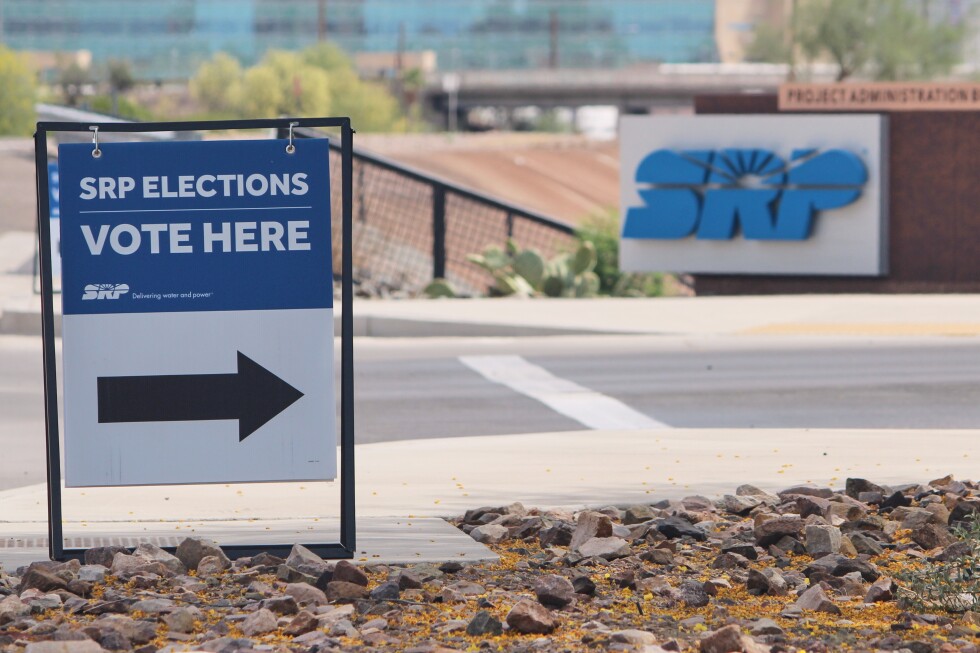
In Arizona, Tuesday’s election for control of the Salt River Project, the nation’s largest public utility, has attracted unprecedented interest. More than three times as many people requested early ballots compared to two years ago, with turnout already exceeding 22,000 votes—nearly triple the average from previous elections.
Two competing slates are vying for board control, backed by opposing national groups. Conservative organization Turning Point Action is supporting candidates who warn against rapid transitions to renewable energy, while the Jane Fonda Climate PAC is backing a “clean energy” slate. The election has become a proxy battle over energy policy, with yard signs, text messages, and door-knocking campaigns blanketing the Phoenix area.
“If they want to just overnight switch us to solar, there’s a reliability issue, there’s a cost issue there, and we just can’t keep up,” said Jimmy Lindblom, who formed the business-backed Arizonans for Responsible Growth. “We’d have blackouts. And so these things are really important to the growth of Arizona.”
The Phoenix region’s explosive growth and influx of data centers and semiconductor factories have intensified the stakes. The Salt River Project projects it will need to double its power capacity within a decade to meet demand, creating fundamental questions about which energy sources should power this expansion.
Opponents argue the current board is too quick to embrace natural gas and data centers while raising rates and neglecting renewable energy incentives. Randy Miller, a clean energy advocate currently serving on the board, called the situation “insane.”
The election’s unusual structure adds complexity. Though the utility serves over 2 million power and water customers, only landowners can vote, with votes weighted by acreage—giving larger property owners greater influence.
Similar dynamics are playing out in Alabama, where concerns about high electricity rates have spurred significant changes to the state’s Public Service Commission. Alabama has some of the highest power rates in the South, according to federal data.
This week, Alabama lawmakers voted to overhaul the commission, expanding it from three to seven members, with the governor appointing the four new positions initially. The legislation also freezes retail base rates until 2029.
Republican legislative leaders framed the changes as consumer protection. “The Alabama Legislature passed HB475 to put a freeze on electric rates and to give the people of Alabama broader representation on the Public Service Commission,” said Governor Kay Ivey.
Critics, however, see political maneuvering ahead of this year’s elections. Former U.S. Senator Doug Jones, a Democratic gubernatorial candidate, called the bill a “first-rate con job” on voters, suggesting Republicans are responding to Democratic victories in similar races in neighboring Georgia.
“Republicans in the Alabama Legislature want to completely revamp the PSC because all of the sudden after two wins in Georgia, they realize that maybe the people don’t like what’s going on with the PSC,” Jones stated on social media.
The increased politicization of utility elections reflects growing public concern about energy costs and sources. Dave Pomerantz of the Energy and Policy Institute noted the shift has created “all this pressure” on previously low-profile regulatory bodies.
At least six more states will hold utility regulator elections later this year, including Georgia, where another contentious campaign is anticipated following Democrats’ surprising victories in the previous cycle.
As data centers and artificial intelligence facilities drive greater electricity demand nationwide, these once-sleepy elections are becoming critical battlegrounds in determining America’s energy future—balancing costs, reliability, and environmental concerns in increasingly partisan contexts.
Fact Checker
Verify the accuracy of this article using The Disinformation Commission analysis and real-time sources.

8 Comments
The rapid growth in early voter turnout for this utility board election is quite remarkable. It shows how much energy policy has risen to the forefront of public consciousness. I wonder what it will mean for the eventual outcome.
It’s surprising to see these utility board races attracting so much national attention and resources. I guess it reflects how high the stakes are when it comes to shaping the future energy mix. Curious to see how the battle lines get drawn.
The fact that turnout is already so high for this utility board election really underscores how much energy policy has become a hot-button issue. I wonder if this trend will continue in other local races across the country.
Interesting to see utility board elections becoming so high-profile and political. It reflects the growing tensions around energy policy and the shift to renewables. Reliability and cost will be key concerns for voters.
This is a great example of how the energy transition is playing out at the local level, with real implications for ratepayers. It will be fascinating to see if the ‘clean energy’ or ‘reliability’ slates prevail.
This is a fascinating case study in how the energy transition is playing out in real-time. The competing visions and national involvement really highlight the high stakes involved. I’ll be curious to see how this particular race unfolds.
This highlights how energy issues are becoming increasingly polarized and partisan. It’s concerning to see national groups getting so involved in what were traditionally low-key local elections. Voters will have to weigh the tradeoffs carefully.
This is a good example of how the energy transition is playing out at the local level, with competing visions for the pace and approach. It will be interesting to see which priorities – reliability, cost, or climate – end up carrying the most weight with voters.