


Listen to the article
Decommissioned NASA Satellite Makes Uncontrolled Reentry Over Pacific Ocean
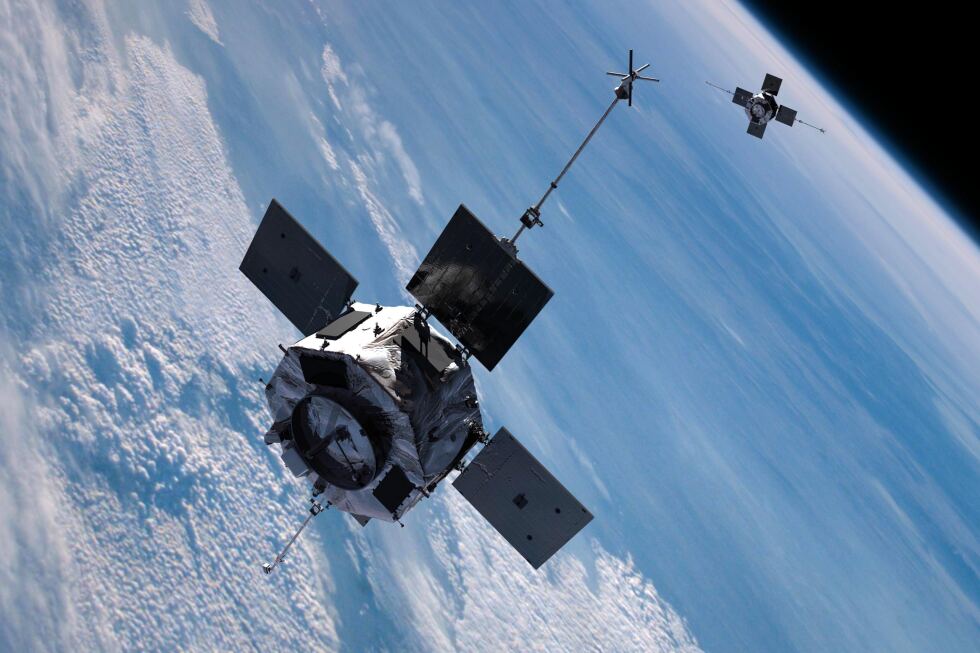
A defunct NASA research satellite made an uncontrolled descent into Earth’s atmosphere Wednesday, completing its journey with a fiery plunge over the Pacific Ocean. The Van Allen Probe A, weighing 1,323 pounds (600 kilograms), reentered west of the Galapagos Islands, according to the U.S. Space Force.
NASA officials had projected that while most of the spacecraft would disintegrate during reentry, some components were robust enough to survive the journey through the atmosphere. The space agency had calculated the risk of human injury from falling debris at approximately 1-in-4,200, a relatively low probability considering the remote location of the reentry.
The unplanned descent came years earlier than scientists had initially projected, highlighting the unpredictable nature of orbital decay. NASA had originally estimated that both Van Allen probes would remain in orbit until 2034 after their missions ended.
“The intense solar activity we’ve experienced over the past several years dramatically accelerated the orbital decay process,” explained a NASA representative. Solar activity affects the density of Earth’s upper atmosphere, increasing drag on satellites in low Earth orbit and hastening their descent.
The twin satellites, launched in 2012, were designed to study the Van Allen radiation belts, concentric rings of charged particles that encircle Earth. These belts, discovered in 1958 by physicist James Van Allen, play a crucial role in our planet’s magnetic field and significantly impact space weather phenomena.
For seven years, the probes collected invaluable data about these radiation zones, helping scientists better understand how they respond to solar activity and their effects on satellite communications, GPS systems, and other space-based infrastructure. The mission concluded in 2019 when both spacecraft exhausted their fuel supplies.
Dutch scientist Marco Langbroek, who tracks orbital objects, noted the particular difficulty in predicting this reentry. “All reentries pose forecasting challenges,” Langbroek stated, “but the Van Allen Probe’s highly eccentric, lopsided orbit made this prediction especially complicated.” Such elliptical orbits make it harder for scientists to calculate precise timing and location for atmospheric reentry.
While Van Allen Probe A has completed its mission with this unplanned descent, its twin—Van Allen Probe B—continues to orbit Earth, though it no longer functions. Current projections suggest the second probe will remain aloft until at least 2030, though these estimates could change based on solar activity levels.
The early reentry of this satellite underscores broader concerns in the space community about orbital debris management. As Earth’s orbital spaces become increasingly congested with both active satellites and defunct hardware, space agencies worldwide have intensified efforts to develop more responsible end-of-life protocols for satellites.
NASA’s Van Allen Probes mission, despite its premature orbital conclusion, is widely regarded as a scientific success. The mission provided unprecedented insight into Earth’s radiation environment, helping to improve satellite design, astronaut safety protocols, and space weather forecasting.
The data collected by these probes continues to inform scientific understanding years after the mission’s conclusion, supporting dozens of research papers and enhancing models used to predict radiation hazards in near-Earth space—critical knowledge for planning future crewed missions beyond low Earth orbit.
NASA maintains that while the mission’s active phase ended in 2019, the scientific legacy of the Van Allen Probes will continue to influence space physics research and satellite operations for decades to come.
Fact Checker
Verify the accuracy of this article using The Disinformation Commission analysis and real-time sources.

8 Comments
With the growing commercial space industry, uncontrolled reentries like this could become more common. Curious to see if private companies take any lessons from NASA’s experience here to improve their own satellite operations and end-of-life planning.
As someone invested in the mining and minerals sectors, I’m always keen to track the supply and demand dynamics for critical materials like those used in space technology. Hopefully this doesn’t disrupt any ongoing research or data-gathering efforts.
Good point. The materials used in these satellites, like rare earth elements, are important inputs for a lot of high-tech industries. Maintaining a stable supply chain is crucial.
Fascinating to see this old NASA satellite make its final descent back to Earth. I wonder if any valuable data or components were recovered from the wreckage. A sobering reminder of the challenges of maintaining aging space assets in orbit.
A bit concerning to hear about the unpredictable nature of orbital decay, even for older satellites. I wonder if there are any calls for improved monitoring or modeling to better anticipate these events in the future.
Gotta hand it to NASA’s engineers – even with the unexpected orbital decay, they were able to calculate the reentry risk down to a 1-in-4,200 chance of injury. That’s pretty impressive. I hope they can apply those lessons to future satellite missions.
Reentries like this always make me a bit uneasy, even with the low risk of injury. I hope NASA and the space community can continue working to safely deorbit aging satellites before they pose a real threat. Safety should always be the top priority.
The acceleration of orbital decay due to increased solar activity is an interesting point. I imagine the team will be closely studying this event to improve their models and predictions for other aging satellites. Curious to see if this leads to any breakthroughs in space debris mitigation.