


Listen to the article
Oil Markets Brace for Volatility Following U.S.-Israeli Strikes on Iran
Oil markets are poised for significant price fluctuations when trading resumes next week, as uncertainty looms over how the recent U.S. and Israeli strikes against Iran will affect Middle Eastern oil supplies.
Analysts had previously outlined several possible scenarios before the military action. The most optimistic forecast suggested a brief price spike that would quickly normalize if the attacks spared oil shipping routes and critical infrastructure such as Iranian pipelines and the country’s crucial Kharg Island terminal. However, a more severe and sustained price surge could materialize if oil infrastructure suffers damage or if supply chains face disruption, particularly through the strategically vital Strait of Hormuz.
The tension has already driven oil prices upward, with the international benchmark Brent crude closing Friday at $72.87 per barrel, its highest level in seven months.
Iran currently exports approximately 1.6 million barrels of oil daily, with China as its primary customer. Chinese refineries, largely privately owned, have shown less concern about U.S. sanctions that restrict Iran from selling its oil to other markets. Energy analysts note that any disruption to this supply would force Chinese buyers to seek alternative sources in the global marketplace, potentially triggering broader price increases worldwide.
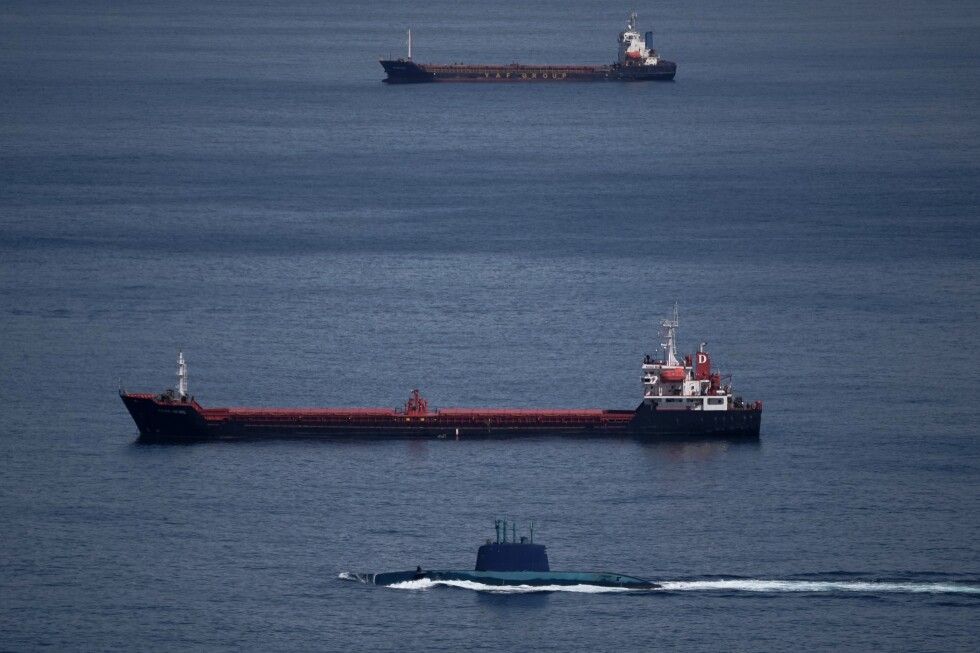
The Strait of Hormuz represents another crucial factor in the equation. This narrow waterway serves as a conduit for roughly 20% of global oil supplies daily, with major Middle Eastern exporters including Saudi Arabia, Iraq, and the United Arab Emirates heavily dependent on the route for their shipments. Despite Iran’s strategic position along the strait, experts suggest Tehran has little incentive to attempt closing this vital maritime corridor, as doing so would simultaneously cut off its own exports and damage its relationship with China, its sole significant customer.
Before the current escalation, Rystad Energy projected that limited strikes targeting Iran’s nuclear program and Revolutionary Guard—actions stopping short of regime change or full-scale war—could drive oil prices up by $5-$10 per barrel based on market fear alone.
More alarming scenarios involving wider conflict and Iranian interference with tanker traffic could push crude prices beyond $90 per barrel, according to pre-conflict analysis from Clayton Seigle at the Center for Strategic & International Studies. Such developments could send U.S. gasoline prices “well above” $3 per gallon, significantly higher than the $2.98 per gallon national average reported by the American Automobile Association last week.
The timing of these tensions coincides with already tight global oil markets. OPEC+ members have implemented production cuts throughout much of 2023 and 2024 to support prices, leaving limited spare capacity to offset any sudden supply disruptions from Iran or regional shipping routes.
Market watchers are particularly focused on how Saudi Arabia and other major producers might respond to potential supply gaps. The kingdom has historically played the role of swing producer during regional conflicts, though its willingness to rapidly increase production remains uncertain given current OPEC+ agreements.
The situation also highlights the vulnerability of global energy markets to geopolitical shocks despite the growth of U.S. oil production in recent years. While American production has reached record levels, the global nature of oil pricing means that Middle East conflicts still significantly impact energy costs worldwide.
As financial markets reopen on Monday, traders will be closely monitoring official statements from Iran, Israel, and the United States for indications of whether the conflict will escalate further or potentially de-escalate, with oil prices likely to respond immediately to any developments.
Fact Checker
Verify the accuracy of this article using The Disinformation Commission analysis and real-time sources.

9 Comments
This geopolitical conflict adds significant uncertainty to the global oil supply outlook. Investors will need to closely track the situation and its potential ramifications for commodities prices.
Agreed. With so many moving parts, there’s potential for significant price volatility. Prudent risk management will be essential for market participants.
With Iran being a major exporter, any damage to its oil facilities or shipping routes could create significant volatility in global oil prices. Careful management of the situation will be crucial.
Absolutely. The Strait of Hormuz is a critical chokepoint, so disruptions there could have far-reaching consequences. Prudent planning and diplomacy will be key to mitigating risks.
The potential supply disruptions from the US-Israel strikes on Iran are certainly concerning for oil markets. It will be important to closely monitor the situation and any impacts on regional infrastructure and exports.
Agreed. Even a brief disruption could significantly impact prices, given the tight global supply-demand balance. Hopefully the attacks are limited in scope and the situation stabilizes quickly.
This geopolitical tension is a stark reminder of the fragility of the global oil supply. Investors will be closely watching to see how this situation unfolds and its potential impact on commodities markets.
You raise a good point. Diversifying energy sources and improving supply chain resilience should be priorities to help insulate markets from these types of disruptions in the future.
The US-Israel strikes on Iran are a concerning development that could roil oil markets. Careful monitoring of the situation and its effects on production and transportation will be critical in the coming weeks.