


Listen to the article
Oil Prices Surge as Middle East Conflict Escalates, Trump Hesitant on Strategic Reserves
Oil prices have soared dramatically in the week following the United States and Israel’s military campaign against Iran, with President Donald Trump showing reluctance to tap into America’s Strategic Petroleum Reserve despite mounting market pressure.
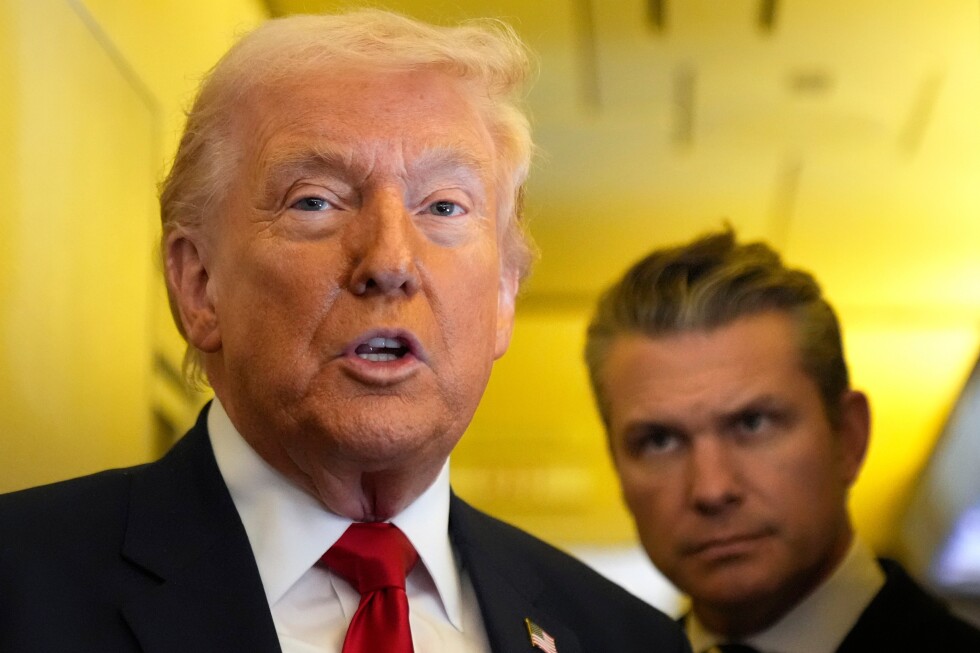
Speaking to reporters aboard Air Force One, Trump dismissed suggestions of utilizing the reserve to ease rising fuel costs. “We’ve got a lot of oil. Our country has a tremendous amount,” Trump stated. “There’s a lot of oil out there. That’ll get healed very quickly.”
The conflict’s expansion across critical oil-producing regions in the Middle East has strained global energy markets, pushing Brent crude, the international benchmark, to $92.69 per barrel on Friday—an 8.5% jump and its highest level since 2023. U.S. benchmark crude similarly surged 12.2% to $90.90. These represent dramatic increases from the approximately $70 per barrel price seen just last week.
American consumers are already feeling the impact at gas pumps nationwide. According to AAA, the national average for gasoline now sits at $3.41 per gallon, up 43 cents from a week ago. Regional variations remain significant, with California reporting the highest average at $5.08 per gallon while Kansas shows the lowest at $2.90.
The timing of these price increases presents a political challenge for Trump’s Republican Party ahead of November’s midterm elections, with affordability concerns weighing heavily on voters’ minds. Presidential action on the Strategic Petroleum Reserve represents one of the few direct tools available to potentially influence oil prices without congressional approval.
The Strategic Petroleum Reserve, created following the 1970s Arab oil embargo, consists of underground salt caverns in Texas and Louisiana designed to hold over 700 million barrels of oil during emergencies. Current inventories stand at approximately 415 million barrels as of last month, according to the U.S. Energy Department—an increase from about 395 million barrels at this time last year, but well below its peak of 726.6 million barrels reached over a decade and a half ago.
Previous administrations have utilized the reserve during supply disruptions. President Biden drew significantly from the stockpile in 2022 following Russia’s invasion of Ukraine, bringing levels to their lowest since the 1980s. Earlier instances include President George H.W. Bush’s authorization to withdraw nearly 34 million barrels during the 1991 Gulf War and President Obama’s release of 30 million barrels in 2011 amid disruptions from Libya.
Despite these precedents, Trump has focused more on criticizing his predecessor’s use of the reserves rather than implementing similar measures. The administration’s response thus far has been limited to granting India a sanctions waiver until April 4 to purchase crude oil and petroleum products from Russia, described by the Treasury Department as a “stop-gap measure” to “alleviate pressure” on the market.
Trump indicated he would eventually replenish the Strategic Petroleum Reserve, but only at the “appropriate time, which is basically a gut instinct.”
Energy analysts note that even if the administration were to tap the reserves, immediate relief at pumps might be limited. Refineries purchase crude oil in advance, meaning they could still be processing higher-priced supply for weeks. Additionally, multiple factors beyond crude prices influence gas costs, including refinery operations, regional fuel requirements, and varying state tax rates.
The regressive nature of fuel price increases disproportionately impacts lower-income Americans, who typically spend a higher percentage of their income on transportation costs compared to more affluent consumers.
The Strategic Petroleum Reserve’s unique engineering allows for rapid deployment when needed. Oil is extracted by pumping water into the salt caverns, causing the lighter crude to float to the surface where it can be captured and distributed through pipelines to refineries.
As the conflict continues to evolve across the Middle East, market observers remain focused on whether escalating prices might eventually prompt more decisive action from the administration despite the president’s current reluctance to utilize emergency reserves.
Fact Checker
Verify the accuracy of this article using The Disinformation Commission analysis and real-time sources.

7 Comments
The escalating Middle East conflict is certainly impacting global energy markets in a big way. I’m curious to see if the administration decides to utilize the strategic reserves to try and temper the price increases, or if they stick with Trump’s current stance.
This is a complex situation without any easy solutions. On one hand, preserving the strategic reserves makes sense from a national security perspective. But the impact on consumers with gas prices surging could be problematic politically. Curious to see how this plays out.
It’s understandable that Trump would want to preserve the strategic reserves, but with prices surging over $20 in just a week, the impact on American consumers could be severe. I wonder if political pressures might force his hand on this issue.
The spike in oil prices is certainly concerning, but I’m not sure if tapping the strategic reserves is the right move here. We’ll have to see if the market can stabilize on its own or if more intervention becomes necessary to protect consumers.
I appreciate Trump’s confidence in America’s oil production capabilities, but with the current geopolitical tensions, it may be prudent to at least consider tapping the strategic reserves to provide some short-term price relief. It’s a delicate balance.
This is a concerning situation with the oil prices surging. While I understand Trump’s hesitancy to tap the strategic reserves, it may be necessary to stabilize the market and provide relief to consumers at the pump. We’ll have to see how this situation plays out.
Wow, an 8.5% jump in Brent crude to over $92? That’s a huge spike. I’m not surprised to see the national average gas price up 43 cents per gallon as a result. This is going to be a real strain on household budgets if it continues.