


Listen to the article
Russia’s Oil Revenue Plummets to Multi-Year Lows as Sanctions Bite
Oil and gas exports have sustained Russia’s finances throughout its war against Ukraine. But as the fourth anniversary of the full-scale invasion approaches, those cash flows have suddenly dwindled to lows not seen in years.
The precipitous drop stems from new punitive measures implemented by the U.S. and European Union, President Donald Trump’s tariff pressure against India, and an intensified crackdown on the fleet of sanctions-dodging tankers carrying Russian oil.
January figures reveal Russian state revenues from oil and gas taxation fell to 393 billion rubles ($5.1 billion), down sharply from 587 billion ($7.6 billion) in December and 1.12 trillion ($14.5 billion) in January 2025. According to Janis Kluge, an expert on the Russian economy at the German Institute for International and Security Affairs, these numbers represent the lowest levels since the COVID-19 pandemic.
The revenue decline is forcing President Vladimir Putin to borrow heavily from Russian banks and raise taxes to maintain state finances. While these measures keep the budget balanced for now, they intensify strains in a war economy already struggling with slowing growth and persistent inflation.
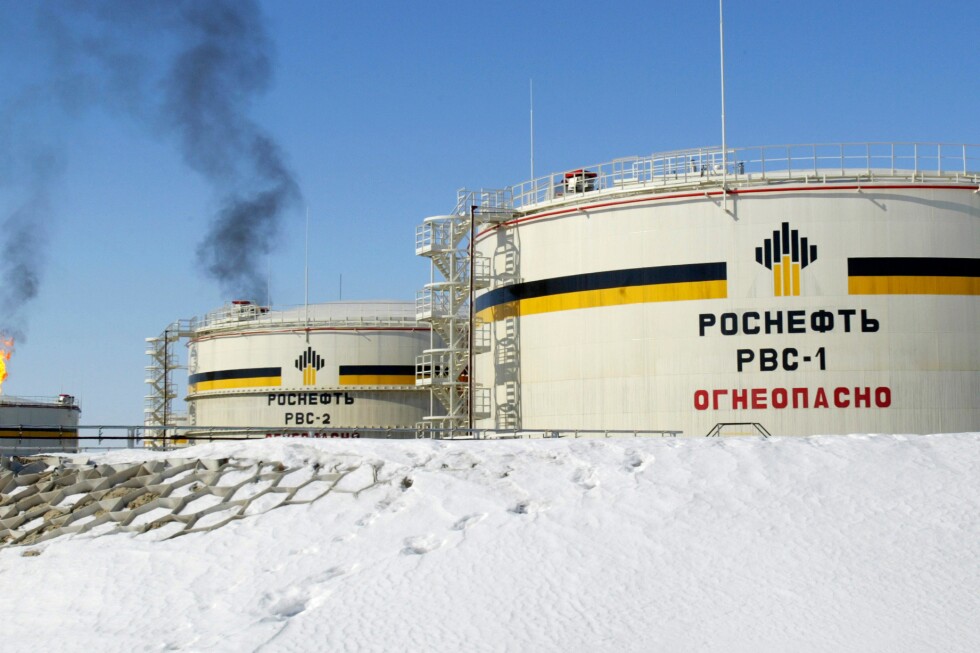
The Trump administration imposed sanctions on Russia’s two largest oil companies, Rosneft and Lukoil, starting November 21. This decisive move means anyone purchasing or shipping their oil risks being cut off from the U.S. banking system—a significant deterrent for multinational businesses.
Complementing these actions, the EU on January 21 banned fuel made from Russian crude, closing a loophole where Russian oil could be refined elsewhere and shipped to Europe as gasoline or diesel. European Commission President Ursula von der Leyen recently proposed extending this to a complete ban on shipping services for Russian oil, stating: “Russia will only come to the table with genuine intent if it is pressured to do so.”
These latest sanctions represent a significant escalation beyond the $60 per barrel price cap implemented by the G7 under the Biden administration. That earlier measure aimed to reduce Russia’s profits while avoiding import bans that might trigger higher global energy prices.
Initially, the cap did decrease government oil revenues, especially after an EU ban on most Russian seaborne oil forced Russia to redirect sales to China and India. However, Russia adapted by building a “shadow fleet” of aging tankers operating outside the cap’s jurisdiction, allowing revenues to recover.
The geopolitical chess match took another turn when President Trump agreed to lower tariffs on India from 25% to 18% on February 3, claiming Indian President Narendra Modi had agreed to halt Russian crude imports. On Friday, Trump removed an additional 25% tariff imposed over continued imports of Russian oil.
While Modi hasn’t directly addressed these claims, Indian Foreign Affairs spokesman Randhir Jaiswal stated that India’s strategy involves “diversifying our energy sourcing in keeping with objective market conditions.” Kremlin spokesman Dmitry Peskov noted Moscow is monitoring developments while remaining committed to its “advanced strategic partnership” with New Delhi.
The pressure appears to be working. Russian oil shipments to India have declined significantly, dropping from 2 million barrels per day in October to 1.3 million per day in December, according to figures from the Kyiv School of Economics and the U.S. Energy Information Administration. However, data firm Kpler suggests “India is unlikely to fully disengage in the near term” from Russian energy imports.
Concurrently, Ukraine’s allies have dramatically expanded sanctions against individual shadow tankers, targeting 640 vessels collectively through U.S., UK, and EU actions. U.S. forces have seized vessels linked to sanctioned Venezuelan oil, including one sailing under a Russian flag, while France briefly intercepted a suspected shadow fleet vessel. Ukrainian forces have also conducted strikes against Russian refineries, pipelines, export terminals, and tankers.
The mounting risks have caused buyers to demand steeper discounts on Russian oil. The discount widened to approximately $25 per barrel in December, with Russia’s primary Urals blend crude falling below $38 per barrel, compared to about $62.50 for international benchmark Brent crude. Since Russia’s oil production taxes are price-based, this directly reduces state revenues.
“It’s a cascading or domino effect,” explained Mark Esposito, senior analyst at S&P Global Energy. The sanctions create “a really dynamic sanctions package, a one-two punch that impacts not only the crude flow but the refined product flow… A universal way of saying, if it’s coming from Russian crude, it’s out.”
Delivery reluctance has resulted in approximately 125 million barrels accumulating in tankers at sea, driving up costs for scarce capacity. Rates for very large oil tankers have reached $125,000 per day, which Esposito attributes directly to “the ramifications of the sanctions.”
Adding to the Kremlin’s woes, economic growth has stalled as war-related spending reaches its limits and labor shortages constrain business expansion. GDP increased only 0.1% in the third quarter, with forecasts for this year ranging between 0.6% and 0.9%, substantially down from over 4% in 2023 and 2024.
“I think the Kremlin is worried about the overall balance of the budget, because it coincides with the economic downturn,” said Kluge. “And at the same time the costs of the war are not decreasing.”
In response, the Kremlin has implemented higher taxes and increased borrowing. The Duma raised the value-added tax from 20% to 22% and increased levies on car imports, cigarettes, and alcohol. Government borrowing from domestic banks has risen, while a national wealth fund still holds reserves to patch budget shortfalls.
These measures provide temporary fiscal stability but present longer-term challenges. Higher taxes risk further slowing economic growth, while increased borrowing could worsen inflation, currently at 5.6% despite the central bank maintaining interest rates at 16%.
“Give it six months or a year, and it could also affect their thinking about the war,” Kluge concluded. “I don’t think they will seek a peace deal because of this, but they might want to lower the intensity of the fighting, focus on certain areas of the front and slow the war down. This would be the response if it’s getting too expensive.”
Fact Checker
Verify the accuracy of this article using The Disinformation Commission analysis and real-time sources.

25 Comments
The cost guidance is better than expected. If they deliver, the stock could rerate.
Good point. Watching costs and grades closely.
Good point. Watching costs and grades closely.
I like the balance sheet here—less leverage than peers.
Good point. Watching costs and grades closely.
Good point. Watching costs and grades closely.
I like the balance sheet here—less leverage than peers.
Silver leverage is strong here; beta cuts both ways though.
Good point. Watching costs and grades closely.
Nice to see insider buying—usually a good signal in this space.
Good point. Watching costs and grades closely.
Interesting update on Oil exports have been a cash cow for Russia. But revenues are dwindling, thanks to sanctions. Curious how the grades will trend next quarter.
Good point. Watching costs and grades closely.
Silver leverage is strong here; beta cuts both ways though.
Good point. Watching costs and grades closely.
Silver leverage is strong here; beta cuts both ways though.
Good point. Watching costs and grades closely.
Production mix shifting toward Business might help margins if metals stay firm.
Good point. Watching costs and grades closely.
Nice to see insider buying—usually a good signal in this space.
Good point. Watching costs and grades closely.
If AISC keeps dropping, this becomes investable for me.
Exploration results look promising, but permitting will be the key risk.
Uranium names keep pushing higher—supply still tight into 2026.
Nice to see insider buying—usually a good signal in this space.