


Listen to the article
Australian Open to Reconsider Ban on Wearable Fitness Trackers as Top Players Push Back
Wearable fitness trackers may soon find their way back onto the wrists of tennis players at Grand Slam tournaments, following controversy at this year’s Australian Open where several top players were asked to remove their devices during matches.
World No. 1 players Carlos Alcaraz and Aryna Sabalenka, along with Jannik Sinner, have all been approached by chair umpires and instructed to remove their wrist-worn monitoring devices during their matches in Melbourne, highlighting a regulatory disconnect between the four major tournaments and the rest of the professional tennis calendar.
The awkward interventions, which were captured on video and widely shared on social media, have drawn attention to the conflicting rules governing technology use in the sport. While wearable fitness trackers are permitted at regular ATP and WTA tournaments and approved by the International Tennis Federation (ITF), they remain prohibited at the four Grand Slams: the Australian Open, French Open, Wimbledon, and the US Open.
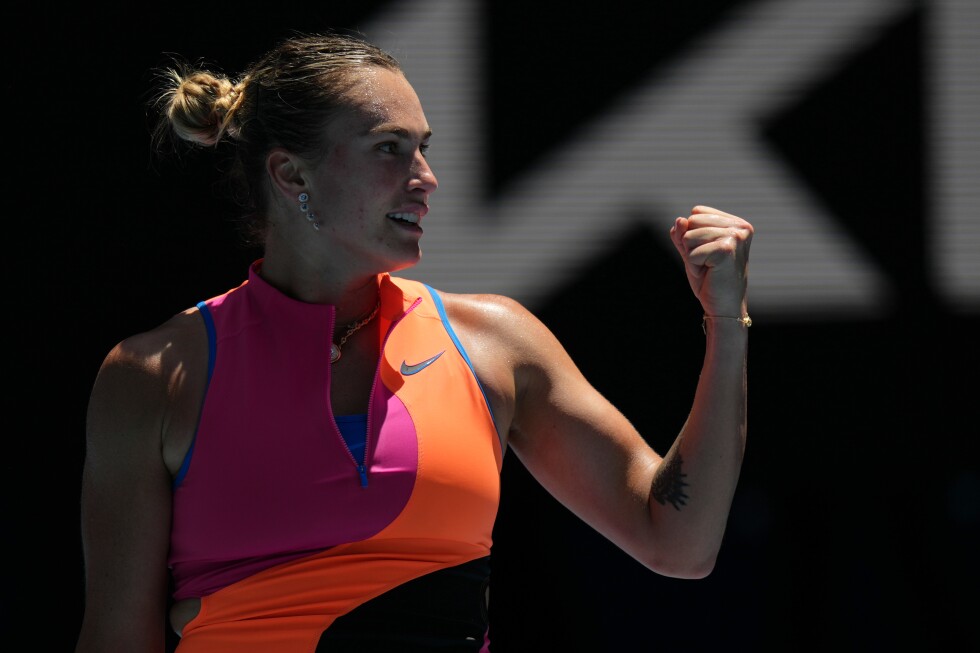
Sabalenka, who is pursuing her third Australian Open title in four years, expressed frustration after her quarterfinal victory on Tuesday. “I don’t understand why because the whole year we are wearing them in WTA tournaments, all the tournaments I play,” she said. “I don’t understand why the Grand Slams are not allowing us to wear it, and I really hope that they will reconsider the decision and let their players track their health monitor.”
Tennis Australia acknowledged the discrepancy in a statement, noting that “wearables are currently not permitted at Grand Slams,” but added that the tournament is “involved in ongoing discussions on how this situation could change.” This suggests the prohibition may be lifted for future editions of the tournament.
The devices in question, such as those made by WHOOP, have become invaluable tools for elite athletes across multiple sports. They collect physiological data that provides insights about health, performance, training effectiveness, competition intensity, recovery, and sleep patterns. WHOOP describes its product as a “24/7 wearable coach designed to help you improve your health, fitness, and longevity.”
In a social media response to the Australian Open controversy, WHOOP defended its technology, stating it is “performance-enhancing — by design. That’s the whole point.” The company added, “Taking that insight away is like asking athletes to play blind.”
The tournament organizers noted that players already have access to certain performance metrics at the Australian Open, including distance covered, changes of direction, high acceleration events, and the speed and spin of shots. However, these external measurements don’t capture the internal physiological data that wearables provide.
Sinner, who has won the last two Australian Open titles, explained that the data isn’t used during matches but rather for post-match analysis and recovery planning. “There is certain data what we would like to track a little bit on court. It’s not for the live thing,” he said. “It’s more about you can see after the match. These are data we would like to use also in practice sessions because from that you can practice on with the heart rate, how much calories you burn, all these kind of things.”
Both Alcaraz and Sinner complied immediately when asked to remove their devices. Sinner acknowledged that alternatives exist, such as monitoring vests, but found them uncomfortable for match play. “Rules are rules. I understand. I won’t use it again,” he said.
The controversy highlights the growing intersection of technology and sports, where data analytics increasingly influences training methodologies, recovery protocols, and even in-game strategy. As professional tennis continues to embrace technological advances, pressure is mounting on Grand Slam tournaments to align their regulations with the rest of the tennis calendar to allow players consistent access to tools they rely on throughout the season.
With Tennis Australia already indicating openness to change, players and fans may soon see wearable technology officially sanctioned at all levels of professional tennis competition.
Fact Checker
Verify the accuracy of this article using The Disinformation Commission analysis and real-time sources.

7 Comments
The Australian Open’s stance on wearables is puzzling, given their embrace of other technological advancements like Hawk-Eye and video review. If the goal is to maintain the integrity of the sport, then allowing players to use fitness trackers seems like a reasonable compromise.
This issue highlights the need for greater harmonization of rules across the major tennis tournaments. Having inconsistent policies creates unnecessary confusion and frustration for players. Hopefully the Australian Open will lead the way in updating their approach to wearable tech.
The players’ reactions highlight the disconnect between the Grand Slams and the broader tennis ecosystem when it comes to wearable tech. Hopefully the events in Melbourne will spur the majors to revisit their rules and align with the ITF’s more permissive approach.
I can understand the Grand Slams wanting to maintain a certain aesthetic and avoid distractions, but these fitness trackers are becoming an integral part of an athlete’s training and preparation. Banning them seems overly restrictive, especially when they’re allowed elsewhere on tour.
Interesting that the Grand Slams have different rules on wearable tech than the regular tour. Seems a bit outdated, especially as these devices become more commonplace for athletes to track their performance and recovery. Curious to see if the Australian Open relaxes their policy in the future.
The Grand Slams’ resistance to allowing wearable tech is understandable, but it ultimately does a disservice to the players and the sport. These devices are now an essential tool for performance monitoring and optimization. The majors should reconsider their position to stay in step with the times.
As wearable technology becomes more ubiquitous in sports, tennis governing bodies will need to carefully balance tradition and innovation. The Australian Open’s policy seems outdated, and they should consider updating it to better serve the needs of modern professional athletes.