


Listen to the article
African EV Manufacturers Accelerate Local Assembly, Pioneering Affordable Transport Solutions
Electric mobility companies across Africa are making significant strides in local manufacturing, assembling electric vans and taxis using Chinese-supplied kits and introducing innovative financing models to expand clean transportation on the continent.
In Nigeria, Lagos-based Saglev has begun assembling 18-seater electric passenger vans with components from China’s Dongfeng Motor Corporation. The company aims to produce up to 2,500 vehicles annually and eventually assemble 17 different electric models for Nigeria and neighboring West African markets.
“This is a major step in Nigeria’s transition toward clean, fossil-free transportation,” said Saglev CEO Olu Falaye. “This feat is a clear signal that electric mobility in Nigeria is practical, scalable and ready for adoption.”
Saglev, a joint venture between Nigeria’s Stallion Group and Chinese automaker Sokon Motor, also plans to install solar-powered charging infrastructure to address one of the key challenges for electric vehicle adoption in regions with unreliable power supplies.
Meanwhile, Kenya is witnessing similar developments with Chinese-backed Rideence Africa signing a $2.46 million agreement with Mombasa-based Associated Vehicle Assemblers (AVA). This partnership will facilitate local assembly of electric taxis and minibuses using kits supplied by China’s Jiangsu Joylong Automobile and Beijing Henrey Automobile Technology.
“We are now moving decisively from operator to manufacturer,” explained Rideence Africa’s managing director, Minnan Yu. “Our aim is to build a Kenya-rooted new-energy mobility company serving Africa.”
Kenya and Nigeria, as two of Africa’s largest economies, are spearheading the push for domestic EV assembly as part of broader strategies to reduce fuel costs, lower emissions, and develop local manufacturing capabilities.
AVA Managing Director Matt Lloyd emphasized the significance of this development: “This partnership delivers Kenya’s first dedicated electric vehicle assembly line, demonstrating clearly that Kenya has the capacity and capability to assemble EVs locally at scale.”
Electric vans and minibuses represent a particularly strategic segment for Africa’s public transportation needs. Currently, Japanese models like Toyota Hiace and Nissan vans dominate the continent’s roads for passenger and cargo transport. The economic benefits of switching to electric are compelling – EV charging costs average about $3 for up to 200 kilometers (123 miles) compared to more than $15 in petrol costs for similar distances.
“The assembly of electric vans is emerging as a strong market segment,” noted Dennis Wakaba, secretary-general of the Electric Mobility Association of Kenya. “Earlier, the cost of electric vans was high, putting off operators. But as local assembly scales up, these costs have dropped, attracting more orders.”
Kenya has established itself as one of Africa’s most vibrant electric mobility markets, with startups actively assembling buses and vans for public transport and ride-hailing services. Ethiopia and South Africa have also entered the market, with Ethiopia’s Belayneh Kinde Group (BKG) now assembling approximately 150 electric minibuses monthly using Chinese components.
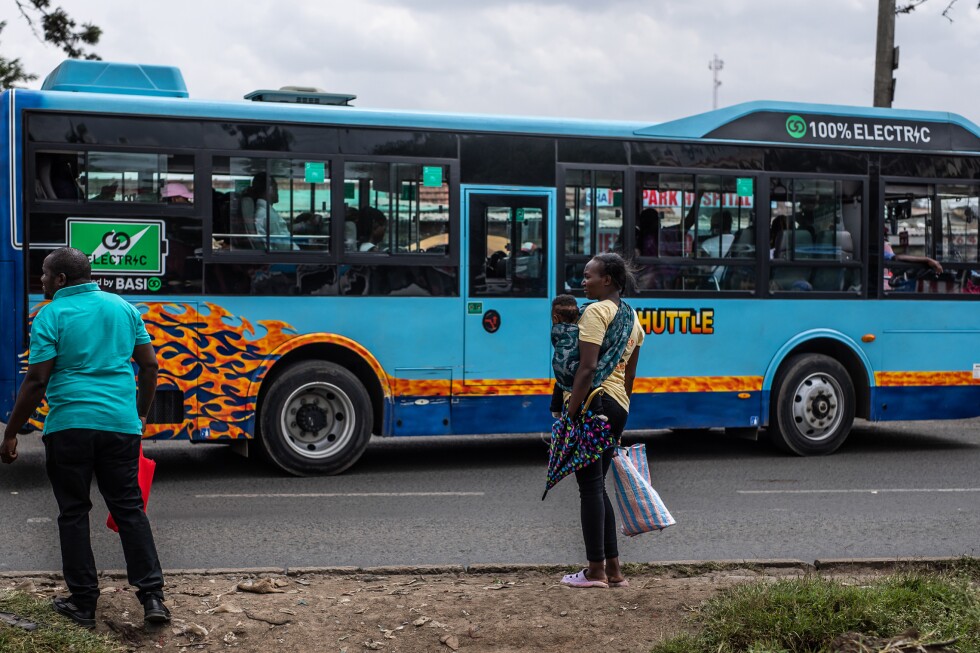
To overcome affordability barriers, companies are implementing innovative financial models. Rideence has introduced pay-as-you-drive and lease-to-own options, allowing operators to avoid substantial upfront investments by leasing taxis to drivers for about $18 per day. Similarly, BasiGo-Kenya Vehicle Manufacturer requires a deposit from operators followed by a usage-based fee of approximately 20 U.S. cents per kilometer.
These financing approaches align with economic realities in Africa, where access to credit is often limited and few operators can afford outright vehicle purchases.
“These innovative financing models mitigate risks for both assembler and operators, helping put vehicles on the road faster. With these, we expect to see more e-vans taking a larger share of the African transport systems,” Wakaba explained.
Despite this progress, the scale of EV adoption remains modest. The continent has only about 30,000 electric vehicles compared to millions of conventional fossil-fueled vehicles, according to the Africa Mobility Alliance. Overall vehicle manufacturing in Africa reached just 1.1 million units last year, with 90% produced in Morocco and South Africa.
As local assembly operations expand and financing solutions evolve, industry experts anticipate accelerated adoption of electric vehicles across Africa’s public transportation networks, bringing environmental and economic benefits to the continent’s rapidly growing urban centers.
Fact Checker
Verify the accuracy of this article using The Disinformation Commission analysis and real-time sources.

16 Comments
It’s great to see African countries taking the lead in electric vehicle adoption. Locally assembled EVs using Chinese components could make clean transportation much more accessible and affordable.
I’m curious to learn more about the specific financing models and incentives being offered to consumers. Making EVs financially viable for the mass market will be key to driving widespread adoption.
The collaboration between Nigerian and Chinese companies is an interesting model for accelerating EV adoption in Africa. Leveraging global expertise to build local manufacturing capacity is a smart approach.
I’m curious to see how the financing models and charging infrastructure roll-out will impact consumer uptake of these locally assembled electric vans and taxis.
It’s great to see African countries taking the lead in transitioning to electric mobility. This could be a game-changer for reducing emissions and improving urban air quality.
I’m curious to learn more about the specific models being assembled and the pricing/financing options available to consumers. Affordability will be key to driving mass adoption.
This is an important step forward for sustainable transportation in Africa. Local EV assembly using Chinese kits could make these vehicles more accessible and affordable for the mass market.
The plan to eventually assemble 17 different electric models is ambitious. I wonder how they will ensure quality and safety standards are maintained across the product range.
This is an interesting development in Africa’s push for electric vehicles. Locally assembled EVs using Chinese components could make clean transportation more affordable and accessible across the continent.
Addressing infrastructure challenges like reliable power supplies will be crucial for wider EV adoption. The solar-powered charging plans are a smart move.
This is an exciting development in Nigeria and Kenya’s push towards cleaner transportation. Locally assembled electric vehicles could make a significant impact on reducing emissions and improving air quality in major cities.
The plan to eventually assemble 17 different EV models is ambitious. I wonder how they will balance affordability, performance and safety across such a diverse product range.
Harnessing Chinese EV technology to build local manufacturing capacity is a smart strategy for Africa to leapfrog traditional automobile development and transition to sustainable mobility.
The solar-powered charging infrastructure plans are particularly interesting. This could help overcome the challenge of unreliable power grids in many parts of Africa.
This is an important milestone in Africa’s transition to sustainable mobility. Localizing EV assembly using Chinese kits could accelerate the adoption of clean transportation across the continent.
The plan to install solar-powered charging infrastructure is a smart move to address power grid reliability issues. This could help overcome a major barrier to EV adoption in many African countries.