


Listen to the article
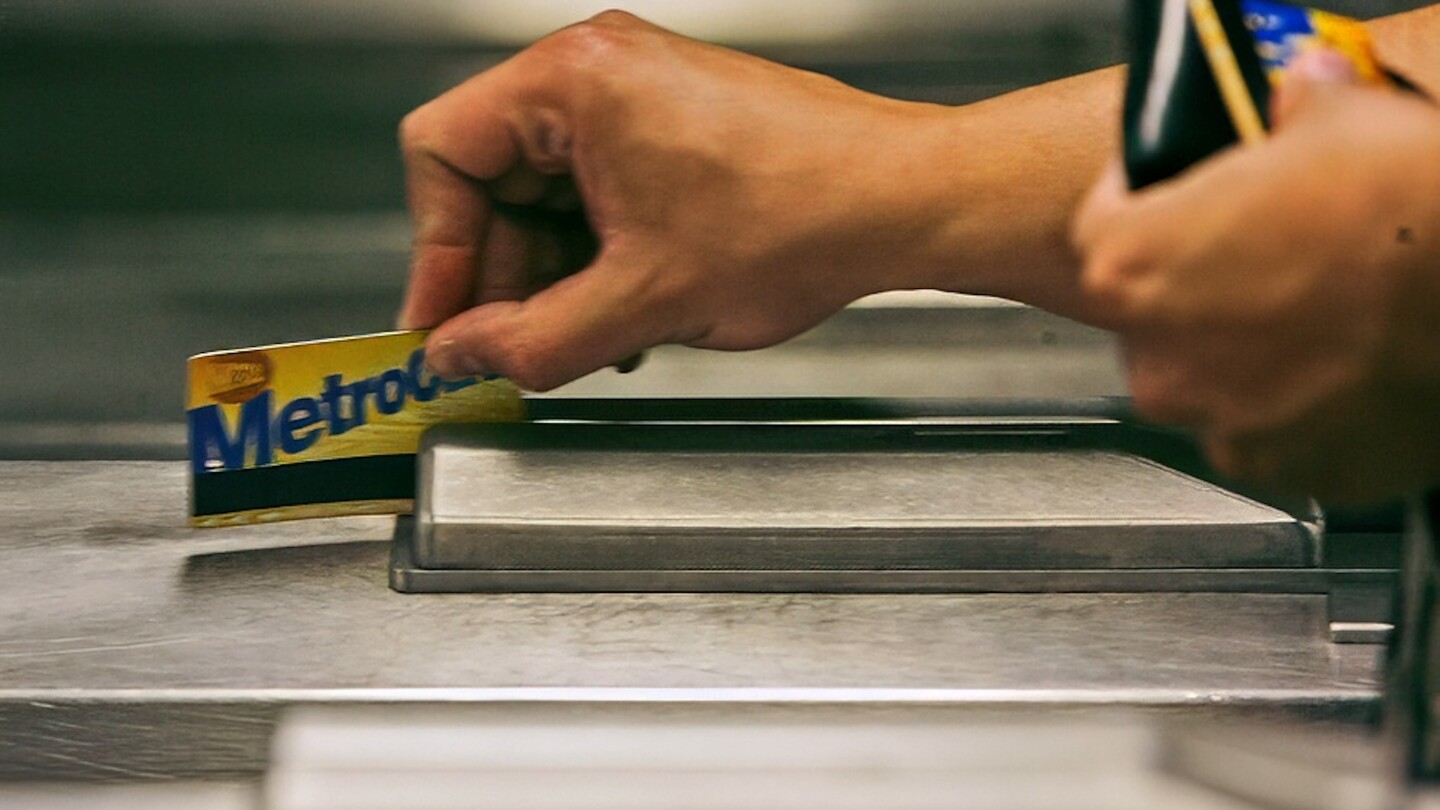
New York’s iconic MetroCard will soon become a relic of the past as the city’s transit system completes its transition to contactless payment technology, marking the end of an era for one of the world’s most recognizable fare cards.
The Metropolitan Transportation Authority (MTA) has announced that December 31, 2025, will be the final day to purchase or refill MetroCards. The agency is fully embracing OMNY, the tap-and-go payment system introduced in 2019 that allows commuters to pay their fares by tapping credit cards, smartphones, or other smart devices at turnstiles and on buses.
Transit officials report that OMNY has gained significant traction, with more than 90% of subway and bus trips now paid using the contactless system. The transition places New York in line with other major global cities including London and Singapore, which have long employed similar fare payment technologies. In the United States, San Francisco recently launched its own contactless system, joining Chicago and several other metropolitan areas.
“There was a resistance to change from tokens to something else because tokens work,” explains Jodi Shapiro, curator at the New York Transit Museum in Brooklyn, which recently opened an exhibition celebrating the MetroCard’s legacy. “MetroCards introduced a whole other level of thinking for New Yorkers.”
The MetroCard represented a technological leap forward when it replaced subway tokens in 1994. Prior to its introduction, riders relied on the brass-colored coins introduced in 1953, which were purchased from station booths. Even earlier, when the subway first opened in 1904, paper tickets cost just a nickel—equivalent to about $1.82 in today’s currency.
The transition to MetroCards wasn’t without growing pains. The MTA launched public education campaigns to teach commuters the proper swiping technique to avoid error messages and lost fares. Officials briefly considered introducing a quirky mascot called “the Cardvaark” before abandoning the idea.
Over the decades, MetroCards evolved into cultural touchstones and collectors’ items. The transit authority released special commemorative editions marking significant events, such as the 2000 “Subway Series” between the New York Yankees and Mets. At that time, a single fare cost $1.50, compared to the current $2.90 rate that will increase to $3.00 in January.
Various artists and celebrities have graced the cards throughout the years, including David Bowie, Olivia Rodrigo, and influential New York hip-hop acts like Wu-Tang Clan, the Notorious B.I.G., and LL Cool J. Television shows with strong New York connections, such as Seinfeld and Law & Order, have also been featured.
“For me, the most special cards are cards which present New York City to the world,” says Lev Radin, a collector from the Bronx. “Not only photos of landmarks, skylines, but also about people who live and make New York special.”
Mastering the precise angle and speed of the MetroCard swipe became something of a badge of honor for New Yorkers, distinguishing locals from tourists. Former U.S. Senator and presidential candidate Hillary Clinton famously struggled during a 2016 campaign stop, requiring five attempts to successfully navigate a Bronx turnstile.
Unlike the MetroCard rollout three decades ago, the OMNY transition has been relatively smooth. Riders hesitant to use credit cards or smart devices can purchase reloadable OMNY cards, similar to MetroCards. Existing MetroCards will remain functional into 2026, allowing users to deplete remaining balances.
The MTA expects to save at least $20 million annually by eliminating MetroCard-related costs. The new system also offers a financial benefit to frequent riders through fare capping—providing unlimited free rides within a seven-day period after 12 paid trips, with a weekly maximum of $35 once the fare increases in January.
However, the technological advancement has raised concerns about data collection and surveillance. Privacy advocates have questioned how payment information might be used and protected in the new system.
On a recent morning near Times Square, 70-year-old Manhattan resident Ronald Minor expressed disappointment about the impending change. While he has an OMNY card, he finds the vending machines to reload it more challenging to use.
“It’s hard for the elders,” Minor remarked as he boarded a train to Brooklyn. “Don’t push us aside and make it like we don’t count. You push these machines away, you push us away.”
John Sacchetti, another MetroCard user, appreciates being able to view his balance when swiping through a turnstile. “It’s just like everything else, just something to get used to,” he said. “Once I get used to it, I think it’ll be okay.”
Fact Checker
Verify the accuracy of this article using The Disinformation Commission analysis and real-time sources.

7 Comments
This change aligns New York with other leading cities that have embraced tap-and-go fares. It will be interesting to see if the adoption of OMNY leads to any operational efficiencies or cost savings for the MTA.
You raise a good point. The MTA will likely benefit from reduced maintenance and administrative costs associated with the MetroCard system.
While the MetroCard has been iconic, technology moves forward. Contactless payments offer a more seamless and hygienic experience for riders. The transition may take some adjustment, but it’s a necessary step to modernize New York’s transit infrastructure.
The end of the MetroCard is a bittersweet moment. While progress is inevitable, the MetroCard has been a fixture of the NYC transit experience for many. I hope the MTA can find a way to preserve its legacy in some form.
The end of the MetroCard era is a major milestone for New York’s transit system. Contactless payments like OMNY offer more convenience and flexibility for commuters. I’m curious to see how the user experience evolves as this transition takes place.
I wonder how this will impact low-income or unbanked New Yorkers who may not have access to the credit/debit cards or smart devices needed for OMNY. Ensuring equitable access should be a key priority during this transition.
That’s a good point. The MTA will need to provide affordable options, like a stored-value OMNY card, to ensure the system remains accessible for all riders.