


Listen to the article
Nevada’s largest utility company, NV Energy, has revealed it would need triple the electricity currently required to power Las Vegas just to accommodate proposed data centers in the state. Company officials acknowledge that meeting this demand without using fossil fuels will be nearly impossible, potentially derailing Nevada’s clean energy goals of achieving 50% renewable power by 2030.
“I can’t remember a time in the history of the industry where we’ve seen as much interest in adding load, which is primarily driven by data centers,” said Shawn Elicegui, senior vice president of regulatory and resource planning for NV Energy, which serves 90% of the state.
This predicament isn’t unique to Nevada. Across the United States, utility companies are struggling to balance the surging electricity demands from data centers, particularly those powering artificial intelligence applications, with long-term plans to transition away from fossil fuels toward renewable energy sources.
In North Carolina, another state experiencing rapid data center growth, the largest utility is revising its long-term strategy to delay coal plant retirements and build additional natural gas facilities. State legislators have removed an interim carbon reduction target, raising concerns among environmental advocates about meeting the state’s 2050 zero-carbon goal.
Meanwhile, NextEra Energy, which provides commercial electricity across more than a dozen states, has abandoned its goal of zero emissions by 2045, citing overwhelming “demand for all forms of power generation” in a recent business filing.
The environmental implications of this trend have alarmed conservation groups. “It’s very alarming, and it’s probably the single largest natural resource issue of our time,” said Olivia Tanager, director of the Sierra Club’s Toiyabe chapter in Nevada.
Nevada has become one of the fastest-growing data center markets in the country, attracted by the absence of corporate income tax, affordable land, and generous tax incentives. Dozens of facilities already operate in the state, with more planned. This growth has sparked debate among lawmakers about balancing economic benefits against environmental commitments.
Industry representatives argue that data centers are part of the solution, not just the problem. “The industry was responsible for half of all corporate clean energy procurement in 2024,” noted Dan Diorio, vice president of state policy for the Data Center Coalition.
However, the expansion of renewable energy infrastructure isn’t keeping pace with demand. Nationally, gas turbine orders face significant backlogs, and renewable energy projects require extensive time for approval and development.
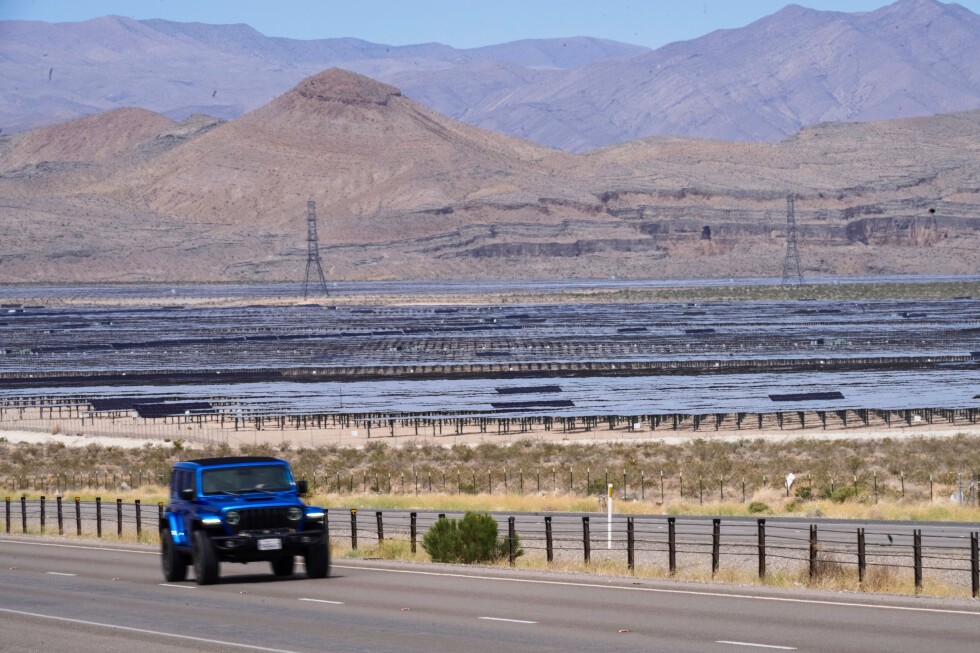
Some companies are taking matters into their own hands. South of the Las Vegas Strip, the Switch data center occupies nearly a square mile and runs entirely on renewable energy. Unlike most competitors, Switch is licensed to build its own renewable energy sources at utility-scale capacity.
“We’ve built 1 gigawatt of solar energy and are in the process of building more solar fields,” said Jason Hoffman, Switch’s chief strategy officer. The facility uses NV Energy’s grid only for electricity delivery while sourcing power from third-party suppliers. During summer heat waves, when cooling demands increase, Switch can operate independently from the grid.
By contrast, many utilities and tech companies are turning to gas-fired generation. In Northern Nevada, environmental groups have raised concerns about multiple proposed data centers that would use hundreds of diesel-powered backup generators, potentially worsening air quality.
The issue has sparked community opposition. At a recent seven-hour legislative meeting, Nevada residents voiced concerns about noise pollution from data centers, as well as potential impacts on water supplies and energy costs. Similar opposition has emerged in Boulder City, home to the Hoover Dam.
NV Energy requires data center developers to fund their own infrastructure and energy needs but doesn’t mandate renewable sources. Nevada pioneered a voluntary funding model allowing companies to finance the utility’s clean energy development and count it toward corporate sustainability goals. This approach led to the development of a geothermal plant in Northern Nevada with Google as a partner.
Environmental advocates are pushing to make this model mandatory but worry it still wouldn’t generate sufficient clean energy to meet demand. They also fear NV Energy might expand fossil fuel dependency without guarantees that proposed data centers will materialize.
Elicegui said the utility will require companies to sign binding contracts before building new power generation. “Growth is welcomed,” he stated, but companies must take responsibility for additional power load created on their behalf “whether they show up or not.”
Nevada’s public utilities commission could impose fines or grant exemptions if NV Energy fails to meet state renewable energy standards. The utility is expected to publish a detailed report by month’s end.
Democratic Assemblymember Howard Watts of Las Vegas has taken a firm stance on the issue. “Building more gas plants seems like going in the exact opposite direction of what we need to do as a state,” he said, emphasizing Nevada’s “tremendous solar and geothermal energy potential.”
Fact Checker
Verify the accuracy of this article using The Disinformation Commission analysis and real-time sources.

9 Comments
This is a tricky situation. On one hand, Nevada’s clean energy goals are commendable, but the rapid growth of data centers is creating major electricity demands that can’t be easily met with renewables alone. Utility companies will need to carefully balance short-term needs with long-term sustainability.
You raise a good point. It’s a tough balance to strike, especially as data center power needs continue to surge. Utilities will need to get creative to find solutions that support both economic growth and environmental objectives.
I’m curious to see how NV Energy and other utilities approach this challenge. Relying more on fossil fuels to power data centers seems at odds with Nevada’s clean energy goals, but the demand is clearly there. Perhaps a mix of renewables, energy storage, and strategic use of natural gas could be the answer. It will be an interesting space to watch.
Good point. A balanced, diversified approach may be the best solution – leveraging renewables where possible, but also exploring other low-carbon options to supplement when needed. The key will be finding the right mix to meet both economic and environmental priorities.
The impact of data centers on electricity demand is a growing concern for utilities, especially as they try to meet ambitious clean energy targets. Nevada’s predicament highlights the tricky trade-offs involved. Delaying fossil fuel phase-outs could help meet short-term needs, but at the expense of long-term sustainability goals. This is a tough challenge with no easy answers.
The data center boom is really putting utilities in a bind when it comes to meeting clean energy targets. It’s an interesting dilemma – how can states like Nevada transition away from fossil fuels while also providing the massive amounts of power demanded by AI and other data-intensive technologies? This will require some innovative thinking.
Absolutely. Utilities will need to explore a range of options, from boosting renewable capacity to evaluating the potential for nuclear or next-gen geothermal. The path forward won’t be easy, but finding solutions that balance economic and environmental needs is critical.
This is a challenging situation that many utilities are facing as data centers become increasingly power-hungry. Finding ways to meet that demand while still transitioning to cleaner energy sources is no easy feat. It will be interesting to see the strategies Nevada and other states develop to tackle this issue.
Absolutely. The rise of data centers is putting a real strain on utility infrastructure and clean energy goals. Innovative solutions combining renewables, energy storage, and strategic fossil fuel use may be needed to strike the right balance. It’s certainly a complex problem that bears close watching.