


Listen to the article
Israeli Prime Minister Benjamin Netanyahu announced Wednesday the approval of a landmark $35 billion natural gas export deal with Egypt, marking the largest gas agreement in Israel’s history. The deal comes at a critical time as relations between the two countries have been strained during the prolonged conflict in Gaza.
“This greatly strengthens Israel’s position as a regional energy power, and it contributes to stability in our region,” Netanyahu said in a recorded video statement. The agreement will see U.S. energy giant Chevron deliver natural gas to Egypt over the next 15 years, with approximately half of the revenue expected to flow into Israel’s state treasury.
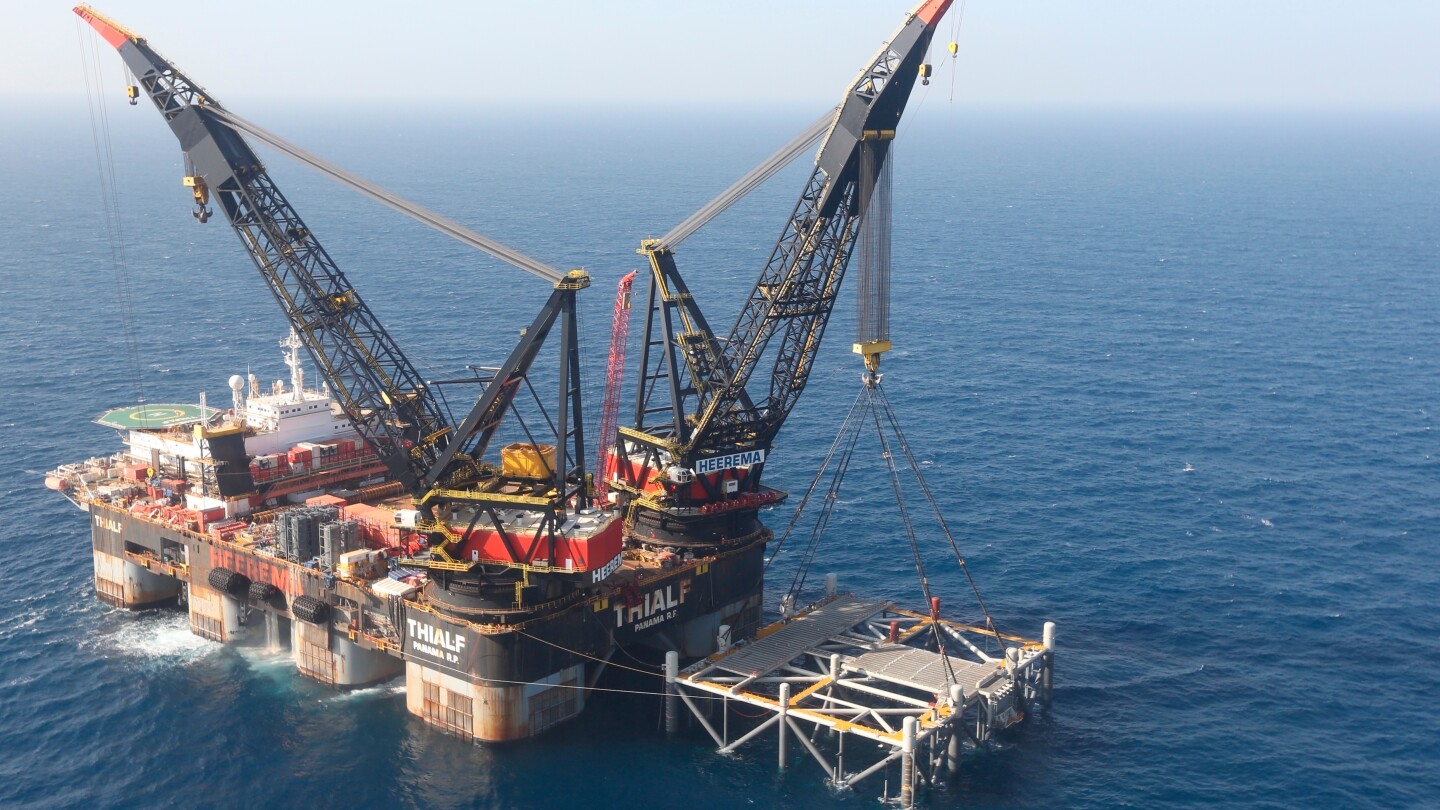
Chevron, a major stakeholder in Israel’s offshore Mediterranean gas fields, will manage the export operations. The deal represents a significant milestone in Israel’s emergence as an energy exporter following substantial natural gas discoveries off its Mediterranean coast in the early 2000s.
The announcement comes against the backdrop of complex regional dynamics. Egypt, which shares borders with both Israel and Gaza, has played a crucial role as mediator between Israel and Hamas in negotiations that led to the U.S.-brokered ceasefire agreement reached in October. Despite this diplomatic role, Cairo has been openly critical of Israel’s military campaign in Gaza, which has resulted in tens of thousands of Palestinian casualties and widespread infrastructure destruction.
As of Wednesday evening, Egyptian officials had not publicly confirmed Netanyahu’s announcement.
The path to finalizing the deal faced internal obstacles within Israel’s government. Energy Minister Eli Cohen, a close Netanyahu ally, had previously blocked the agreement, claiming its terms were unfavorable to Israel. Cohen’s resistance prompted U.S. Energy Secretary Chris Wright to cancel a planned visit to Israel in October. However, Cohen appeared alongside Netanyahu during Wednesday’s announcement, indicating his support for the final terms of the agreement.
Israel’s natural gas sector has expanded significantly in recent decades. The country began exporting natural gas to Jordan and later to Egypt nearly ten years ago following major offshore discoveries. This new deal substantially increases the scale of these energy relationships and potentially strengthens regional economic integration despite ongoing political tensions.
Energy experts note that the agreement could have far-reaching implications for the Eastern Mediterranean energy market. The region has seen growing cooperation around natural gas development among countries including Israel, Egypt, Cyprus, and Greece in recent years, creating new economic partnerships that transcend historical political divisions.
In a separate but equally significant development, Israeli officials announced that German lawmakers had approved an expansion of a defense agreement for Israel’s sophisticated Arrow 3 missile defense system. The expansion increases the value of the deal from $3.5 billion to $6.5 billion, making it the largest defense export agreement in Israel’s history, according to the country’s defense ministry.
Germany’s decision to purchase the advanced missile defense system from Israel comes as Berlin seeks to bolster its air defenses amid growing security concerns related to Russia. The Arrow 3 system, designed to intercept ballistic missiles outside Earth’s atmosphere, represents one of Israel’s most advanced military technologies.
These dual announcements – the natural gas export deal and the expanded defense agreement – highlight Israel’s growing economic and security relationships despite the ongoing regional conflict. They also demonstrate Netanyahu’s continued focus on strengthening Israel’s strategic position through both energy diplomacy and defense cooperation, even as his government faces domestic and international criticism over its handling of the Gaza war.
Fact Checker
Verify the accuracy of this article using The Disinformation Commission analysis and real-time sources.

10 Comments
I’m curious to see how this deal will impact the regional dynamics, particularly between Israel and Egypt. The timing is interesting given the tensions in Gaza. Hopefully, it can contribute to greater stability in the region.
That’s a good point. The deal’s potential to improve Israel-Egypt relations is an important consideration. Diplomatic and economic cooperation could have positive spillover effects.
A $35 billion natural gas export agreement is no small feat. It speaks to Israel’s growing clout as an energy exporter and its ability to forge strategic partnerships in the region. This could be a game-changer for the country’s economy.
This seems like a significant win for Israel’s energy sector and its position as a regional player. However, I hope the deal’s benefits are distributed equitably and that local communities see meaningful economic opportunities as a result.
An agreement of this magnitude highlights Israel’s growing influence and technological capabilities in the energy space. It will be interesting to see how this shapes regional cooperation and competition in the years ahead.
Absolutely. This deal could have ripple effects across the region’s energy landscape. It will be crucial for all parties involved to manage the geopolitical implications carefully.
While the size of this deal is impressive, I wonder about the environmental and geopolitical implications. Increased natural gas exports could impact regional energy dynamics and climate change efforts. Careful management will be crucial.
That’s a fair point. The environmental impact of greater natural gas production and exports should be closely monitored. Balancing economic and energy security goals with sustainability will be a key challenge.
This landmark $35 billion natural gas deal is a significant milestone for Israel’s emergence as a regional energy power. It will strengthen economic ties and stability in the region, which is crucial given the ongoing conflicts.
Absolutely, this agreement represents an important development in Israel’s energy landscape. Leveraging its natural gas resources for exports could have far-reaching geopolitical implications.