


Listen to the article
NCAA Calls for Suspension of Prediction Markets in College Sports Amid Gambling Concerns
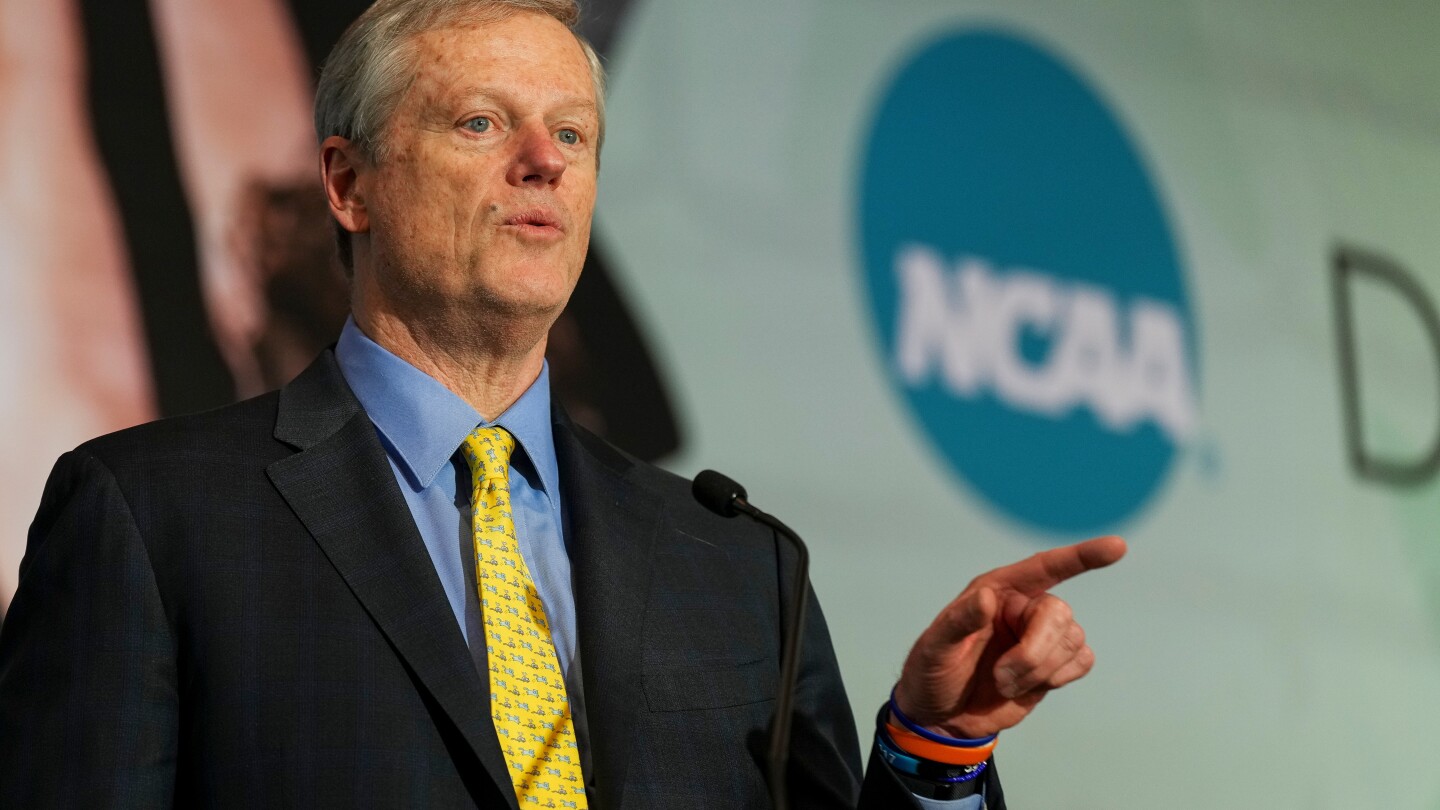
In a significant escalation of efforts to address gambling issues in collegiate athletics, NCAA President Charlie Baker has formally requested that federal regulators suspend prediction markets for college sports. The request came in a letter sent Wednesday to the chair of the Commodity Futures Trading Commission (CFTC).
Speaking from the NCAA’s annual convention in Oxon Hill, Maryland, Baker urged the commission to halt these trading platforms “until a more robust system with appropriate safeguards is in place.” Prediction markets operate as trading sites where users can effectively bet on game outcomes without being classified as traditional gambling websites, allowing them to operate in a regulatory gray area.
During his convention address, Baker specifically mentioned one platform that had planned to offer betting on player transfer destinations, a move the NCAA successfully challenged. “They backed down after we called them out,” Baker noted, highlighting the growing concern over these largely unregulated markets.
Unlike conventional sports betting operations, prediction markets are categorized as financial trading platforms rather than gambling websites, exempting them from many gambling regulations. This classification has created challenges for the NCAA as it attempts to protect the integrity of collegiate athletics.
The NCAA’s relationship with gambling has become increasingly complex since the Supreme Court’s landmark 2018 decision that struck down the nationwide ban on sports betting. That ruling opened the floodgates for states to legalize sports wagering, creating new pressures on college athletics programs and their participants.
The organization’s struggle to develop consistent policies was evident last November when it approved and then quickly rescinded a rule that would have permitted staff and athletes to bet on professional sports. This reversal followed high-profile gambling-related arrests in the NBA that raised broader concerns about sports integrity across all levels.
In his letter to the CFTC, Baker outlined several critical safeguards missing from prediction markets, including restrictions on proposition betting—commonly known as “prop bets”—which allow gamblers to wager on specific outcomes within games rather than final results. These types of bets have proven particularly problematic in college sports.
The NCAA has recently taken disciplinary action against more than a dozen basketball players for allegedly manipulating their in-game performance to influence betting outcomes related to point spreads and proposition bets. These incidents have raised serious concerns about the vulnerability of college athletics to gambling influence, particularly when individual player statistics become betting commodities.
The request for regulatory intervention reflects the NCAA’s growing realization that it cannot address gambling-related threats alone. By appealing to federal regulators, the organization is seeking broader governmental support in creating stronger barriers between gambling markets and college athletics.
Gambling experts note that prediction markets pose unique risks because they often lack the sophisticated monitoring systems that major regulated sportsbooks employ to detect suspicious betting patterns. Without these safeguards, college sports—where athletes receive no professional salaries—may be particularly susceptible to integrity issues.
The CFTC has not yet publicly responded to Baker’s request. However, the commission has previously shown willingness to examine novel financial products that blur the line between trading and gambling. Should the CFTC act on the NCAA’s request, it would represent one of the most significant regulatory interventions in the rapidly evolving relationship between sports and gambling in the United States.
As states continue to expand legal gambling options and online platforms proliferate, the NCAA’s challenge to maintain the integrity of college athletics will likely require increasingly sophisticated approaches and regulatory partnerships in the years ahead.
Fact Checker
Verify the accuracy of this article using The Disinformation Commission analysis and real-time sources.

18 Comments
While innovative financial products can be interesting, when it comes to college sports, the priority should be preserving the sanctity of the game and protecting vulnerable student-athletes. The NCAA’s stance seems prudent given the potential risks.
Absolutely, the NCAA is taking the responsible course in calling for a suspension of these prediction markets until proper regulations are in place. The integrity of college athletics must come first.
While innovation in financial products can be positive, the NCAA is right to be cautious about prediction markets that could undermine the integrity of college sports. Protecting student-athletes should be the top priority.
Absolutely. The NCAA is taking a responsible approach by pressing for federal action to address this issue proactively. Maintaining public trust in the fairness of college athletics is essential.
The NCAA is right to be concerned about the emergence of these prediction markets and their potential impact on college sports. Robust oversight is needed to ensure fairness and protect the wellbeing of student-athletes.
Agreed, the NCAA is wise to proactively address this issue before it spirals out of control. Maintaining the trust and credibility of college athletics should be the top priority.
The NCAA’s concerns about the impact of these prediction markets on college sports are valid. While financial innovation can be positive, the integrity and well-being of student-athletes must be the primary consideration. Proper regulation is essential to ensure a level playing field.
Well said. The NCAA is taking a responsible approach by pressing for federal action to address this issue proactively. Maintaining public trust in the fairness of college athletics should be the top priority.
The NCAA’s concerns about the potential risks of these prediction markets seem well-founded. Unregulated gambling-adjacent activities could have serious consequences for the student-athletes and the overall collegiate sports ecosystem.
I agree. The NCAA is right to call for federal regulators to step in and suspend these prediction markets until appropriate safeguards can be put in place. Protecting the integrity of college sports should be the top priority.
This is a complex issue with valid arguments on both sides. While prediction markets may offer some interesting financial products, the NCAA’s concerns about the potential impact on college sports seem reasonable. Striking the right balance will be challenging.
You make a fair point. The NCAA is taking a proactive stance, but federal regulators will need to carefully weigh the tradeoffs and risks before deciding on the appropriate course of action.
The NCAA’s request to suspend these prediction markets is understandable given the potential for abuse and the vulnerability of student-athletes. Maintaining the integrity of college sports should be the top priority, even if it means restricting some financial innovation.
I agree that the NCAA’s position is reasonable. Protecting the fairness and credibility of collegiate athletics is crucial, and that should take precedence over the interests of these prediction market operators.
I’m curious to see how the federal regulators respond to the NCAA’s request. These prediction markets do seem to occupy a regulatory gray area that needs to be clarified to safeguard the collegiate sports ecosystem.
That’s a good point. The CFTC will have to carefully weigh the NCAA’s concerns against any potential benefits these prediction markets could offer. Finding the right balance will be critical.
This is a concerning development for college sports. Unregulated prediction markets could undermine the integrity of NCAA competitions and put student-athletes at risk. Proper oversight and safeguards are critical to protect the fairness and reputation of collegiate athletics.
I agree, the NCAA is right to push for federal action on these opaque prediction platforms. They need to be subject to the same consumer protections as traditional sports betting.