


Listen to the article
NASA’s Artemis Moon Rocket Rolls Out to Launch Pad, Marking New Era of Lunar Exploration
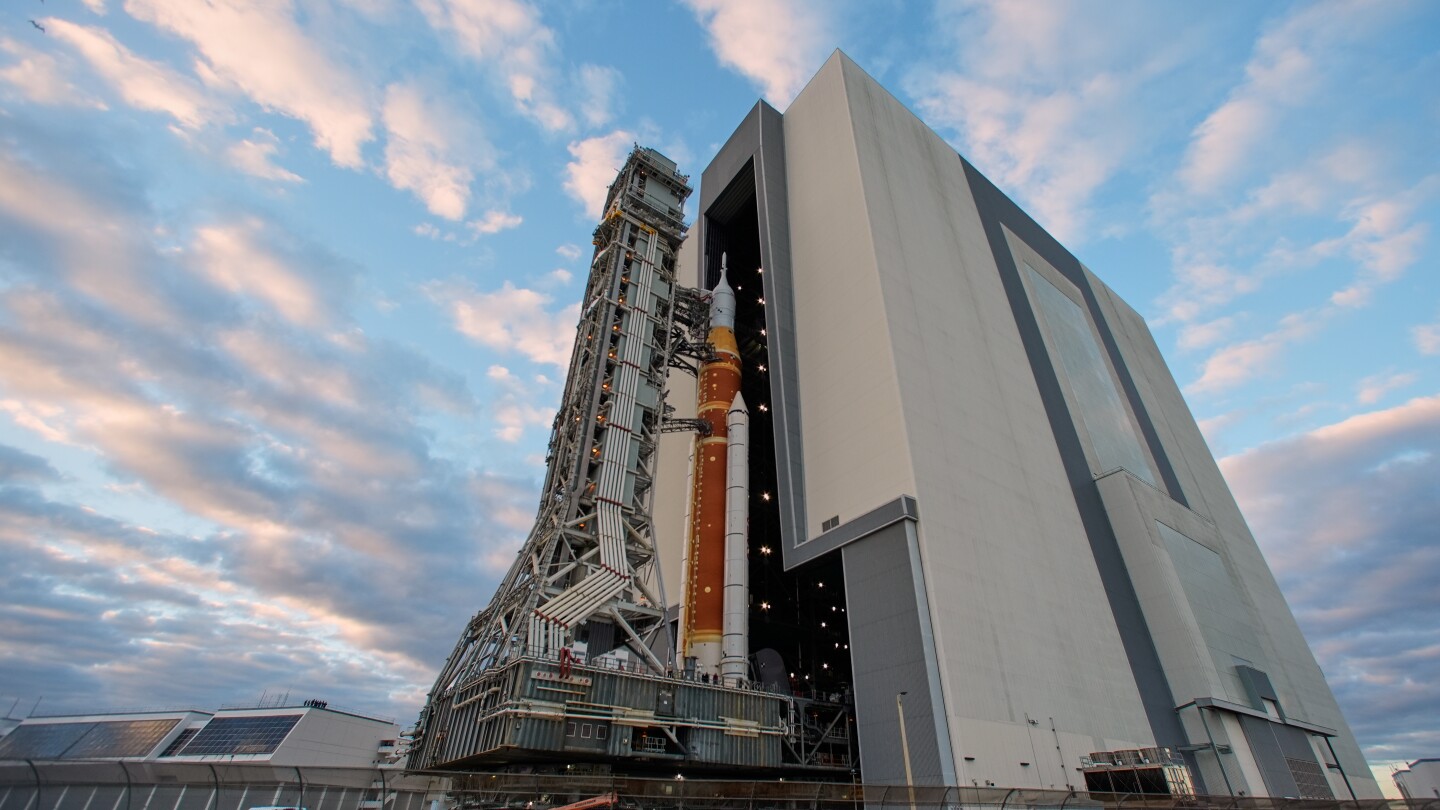
NASA’s colossal Space Launch System (SLS) rocket made its ceremonial journey to the launch pad at Kennedy Space Center on Saturday, setting the stage for humanity’s first lunar flyby mission since the Apollo era more than 50 years ago.
The 322-foot rocket began its slow, deliberate trek from the Vehicle Assembly Building at daybreak, moving at just 1 mph along the 4-mile route that took until nightfall to complete. Thousands of space center workers and their families gathered in the early morning chill to witness this milestone moment, which has faced years of delays due to technical challenges and safety concerns.
NASA Administrator Jared Isaacman led the cheering crowd alongside the four astronauts assigned to the mission. “What a great day to be here,” said Reid Wiseman, the crew commander. “It is awe-inspiring.”
The massive rocket system, weighing approximately 11 million pounds, was transported aboard a specialized crawler vehicle first used during the Apollo program and later for Space Shuttle missions. Engineers upgraded the transporter to accommodate the SLS rocket’s unprecedented weight and dimensions.
This rollout marks a crucial step toward the mission tentatively scheduled for February. Unlike the program’s first test flight in November 2022, which sent an empty Orion capsule around the moon, this mission will carry a four-person crew. However, extensive analysis of heat shield damage and other technical issues discovered during that initial uncrewed test flight pushed this crewed mission’s timeline back significantly.
The upcoming 10-day mission represents a significant advance in NASA’s Artemis program, the agency’s ambitious plan to return humans to the lunar surface. The crew consists of experienced NASA astronauts Reid Wiseman, Victor Glover, and Christina Koch, along with Canadian Space Agency astronaut Jeremy Hansen, who awaits his first spaceflight.
While the astronauts won’t orbit or land on the moon during this particular mission, their journey will take them farther from Earth than any humans have traveled in over half a century. The milestone mission serves as a crucial stepping stone toward NASA’s goal of landing astronauts on the lunar surface on the third Artemis mission, scheduled for the coming years.
“They are so fired up that we are headed back to the moon,” Wiseman said of the Apollo-era astronauts, including the four remaining moonwalkers. “They just want to see humans as far away from Earth as possible discovering the unknown.”
The current mission follows in the footsteps of the Apollo program, which sent 24 astronauts toward the moon between 1968 and 1972. Twelve of those astronauts walked on the lunar surface, beginning with Neil Armstrong and Buzz Aldrin in 1969 and ending with Gene Cernan and Harrison Schmitt in December 1972. Aldrin, who turns 96 this week, is among just four moonwalkers still living.
Before confirming an official launch date, NASA plans to conduct a crucial fueling test on the pad in early February. “We’ve, I think, zero intention of communicating an actual launch date” until completing the fueling demonstration, Isaacman told reporters. The space agency faces a tight launch window, with only five available days in the first half of February before the opportunity shifts to March.
The Artemis program represents a new chapter in lunar exploration, with broader goals than Apollo. Beyond establishing a sustainable human presence on the moon, NASA aims to test technologies and systems needed for eventual human missions to Mars, while also fostering international and commercial partnerships in space exploration.
As the massive rocket now stands silhouetted against the Florida sky, it serves as a tangible reminder of humanity’s renewed ambitions beyond Earth orbit and signals that a new era of deep space exploration is finally taking shape after decades of focusing primarily on low Earth orbit operations.
Fact Checker
Verify the accuracy of this article using The Disinformation Commission analysis and real-time sources.

10 Comments
The scale and complexity of the Artemis Moon Rocket are truly impressive. After years of delays, it’s great to see NASA making progress towards the first crewed Artemis mission. I wonder how the launch and flight profile of the SLS compares to the Saturn V used in the Apollo program.
This is an exciting milestone for the Artemis program and a testament to NASA’s perseverance in the face of technical challenges. I’m curious to learn more about the specific scientific objectives and payloads that will be part of the first crewed Artemis mission to the Moon.
Witnessing the SLS rocket’s journey to the launch pad must have been a thrilling experience for the NASA team and spectators. This is a significant step towards the first Artemis mission, which could pave the way for a sustainable human presence on the lunar surface. I’m curious to learn more about the scientific instruments and experiments planned for this mission.
While the technical challenges have been significant, it’s great to see NASA overcoming them to make progress on the Artemis program. The rollout of the SLS rocket to the launch pad is an exciting milestone. I wonder what key innovations have been incorporated to improve reliability and safety compared to previous lunar missions.
This is an exciting time for space exploration as NASA’s new Artemis program takes shape. The rollout of the SLS rocket to the launch pad is a significant milestone. I’m curious to learn more about the potential scientific and technological advancements that could come from this new era of lunar exploration.
The Artemis program represents an important new chapter in space exploration. I’m eager to see how the SLS rocket’s capabilities compare to the Saturn V that carried the Apollo missions. Advancements in launch vehicle technology will be crucial for future human and robotic exploration of the Moon and beyond.
The Artemis program represents a bold new chapter in human space exploration. While the technical challenges have been significant, it’s great to see NASA overcoming them to make progress towards the first crewed mission. I wonder what key innovations have been incorporated into the SLS rocket to improve reliability and safety.
This is a historic moment as NASA moves closer to the first crewed Artemis mission. The scale and complexity of the SLS rocket is truly impressive. I’m looking forward to seeing the launch and the scientific discoveries that could come from this new era of lunar exploration.
Exciting to see NASA’s new Artemis Moon Rocket reach this major milestone. The journey to the launch pad is a symbolic step towards humanity’s return to the lunar surface. I’m curious to learn more about the technical specifications and capabilities of this powerful launch system.
The rollout of the Artemis Moon Rocket to the launch pad is a significant step towards humanity’s return to the lunar surface. While the technical challenges have been substantial, it’s exciting to see NASA making progress on this ambitious program. I wonder what key advancements in launch vehicle and spacecraft technology will enable new scientific discoveries and exploration capabilities.