


Listen to the article
NASA’s Artemis Moon Mission Back on Track for March Launch After Successful Fueling Test
NASA officials announced Friday they are targeting a March launch date for the Artemis II mission that will send astronauts around the moon, following a successful rocket fueling test that cleared a major technical hurdle.
The announcement comes two weeks before the first potential launch window opens on March 6, putting NASA one step closer to returning humans to lunar proximity for the first time in over half a century.
“This is really getting real, and it’s time to get serious and start getting excited,” said Lori Glaze, NASA’s exploration systems development chief, reflecting the growing anticipation for the historic mission.
The decision follows a critical countdown rehearsal conducted Thursday night, which demonstrated significant improvements over an earlier test from earlier this month that was plagued by dangerous hydrogen leaks. Mission Manager Jared Isaacman noted the “major progress” between the two tests, with the latest showing only minimal hydrogen seepage.
“A big step toward America’s return to the lunar environment,” Isaacman stated on social media platform X, highlighting the milestone’s significance in NASA’s broader lunar exploration goals.
The four-person crew – consisting of three Americans and one Canadian – is now prepared to enter the mandatory two-week health quarantine in Houston, a standard procedure to ensure astronauts don’t carry illnesses into space. The crew has a narrow launch window with only five days in March before opportunities shift to late April.
Engineers traced the earlier hydrogen leaks to problematic Teflon seals, which were subsequently replaced. When examined, the removed seals showed light scratches and moisture in the surrounding area that likely contributed to the excessive leakage. Thursday’s test, with the new components installed, proceeded smoothly to the targeted 29-second mark in the countdown, according to launch director Charlie Blackwell-Thompson.
Commander Reid Wiseman and two crew members were on site during Thursday’s test, working alongside launch controllers to monitor operations. Their upcoming flight will mark a historic return to lunar space travel, ending a 51-year gap since Apollo 17’s mission in December 1972.
Before launch can proceed, NASA will conduct a flight readiness review scheduled for next week. If all goes well, the astronauts will return to Kennedy Space Center in early March for final preparations.
“Every night I look up at the moon and I see it and I get real excited because I can really feel she’s calling us, and we’re ready,” Glaze said, expressing the emotional weight of the mission for the space agency.
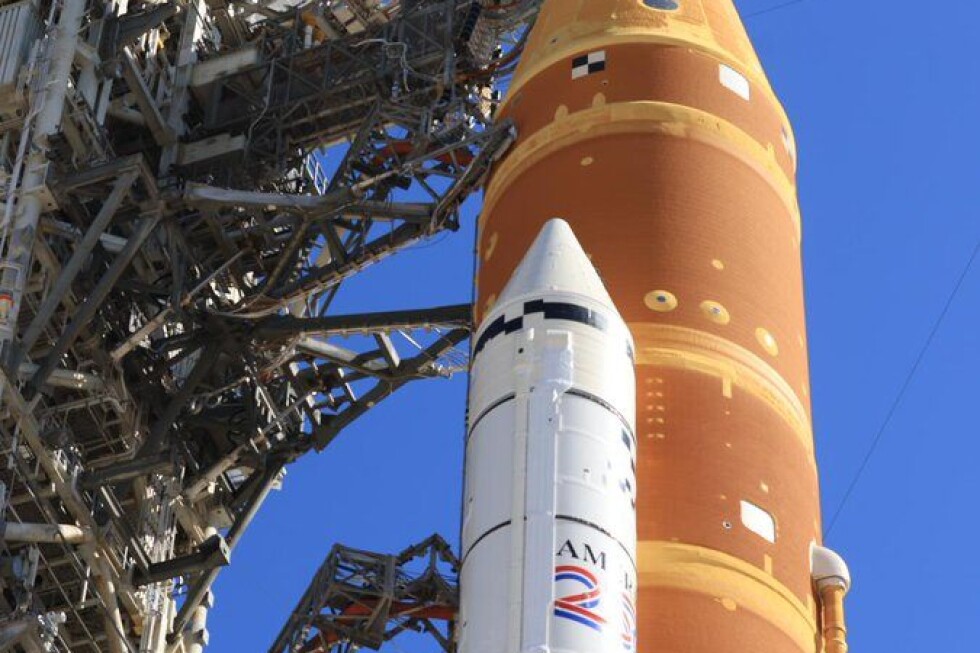
The Artemis II mission is planned as a nearly 10-day test flight, representing the first time humans will travel aboard NASA’s massive Space Launch System (SLS) rocket. Standing 322 feet (98 meters) tall, the SLS has only flown once before – an uncrewed test flight in 2022 that laid groundwork for this crewed mission.
Artemis II serves as a crucial stepping stone in NASA’s larger lunar exploration program. The subsequent mission, Artemis III, will attempt the first human moon landing since Apollo, targeting the lunar south pole region where scientists believe water ice exists in permanently shadowed craters – a potential resource for future lunar outposts.
However, several technical challenges remain for Artemis III, including the selection of a lunar lander. Both Elon Musk’s SpaceX and Jeff Bezos’ Blue Origin are competing for the contract to develop the vehicle that will carry astronauts from lunar orbit to the surface. These complexities mean it could be “months, perhaps even a year,” according to Glaze, before NASA selects the crew for that historic landing mission.
The Artemis program represents NASA’s commitment to establishing a sustainable human presence on and around the moon, serving as a proving ground for technologies needed for eventual Mars missions while inspiring a new generation of space explorers.
Fact Checker
Verify the accuracy of this article using The Disinformation Commission analysis and real-time sources.

6 Comments
While I’m excited about the Artemis mission, I have some concerns about the program’s rising costs and delays. NASA will need to carefully manage the budget and timeline to ensure this initiative stays on track. Nonetheless, the prospect of sending astronauts back to the Moon is thrilling.
Kudos to the NASA engineers and scientists who have persevered through the technical challenges to get the Artemis program to this point. The March launch target is an ambitious timeline, but if anyone can pull it off, it’s the dedicated professionals at NASA. I’m looking forward to seeing what they accomplish.
The Artemis program is paving the way for a new era of lunar exploration. It’s remarkable how far space technology has come since the Apollo missions. I’m curious to see what new discoveries and advancements in fields like mining and resource utilization come out of this landmark mission.
Absolutely, the potential scientific and commercial applications of the Artemis program are really intriguing. Establishing a sustainable human presence on the Moon could unlock all sorts of opportunities, from in-situ resource utilization to advances in robotics and materials science.
The successful fueling test is an important milestone, but there’s still a lot of work ahead for the Artemis team. I hope NASA can maintain this momentum and deliver a safe, on-time launch in March. The world will be watching as the first Artemis astronauts embark on this historic journey.
Really exciting to see NASA making progress on the Artemis Moon mission. After the technical hurdles, it’s great they were able to successfully complete the fueling test and set a target launch date for March. Can’t wait to see the first Artemis astronauts take flight.