


Listen to the article
NASA’s Moonshot with Astronauts Delayed Until March Due to Hydrogen Fuel Leaks
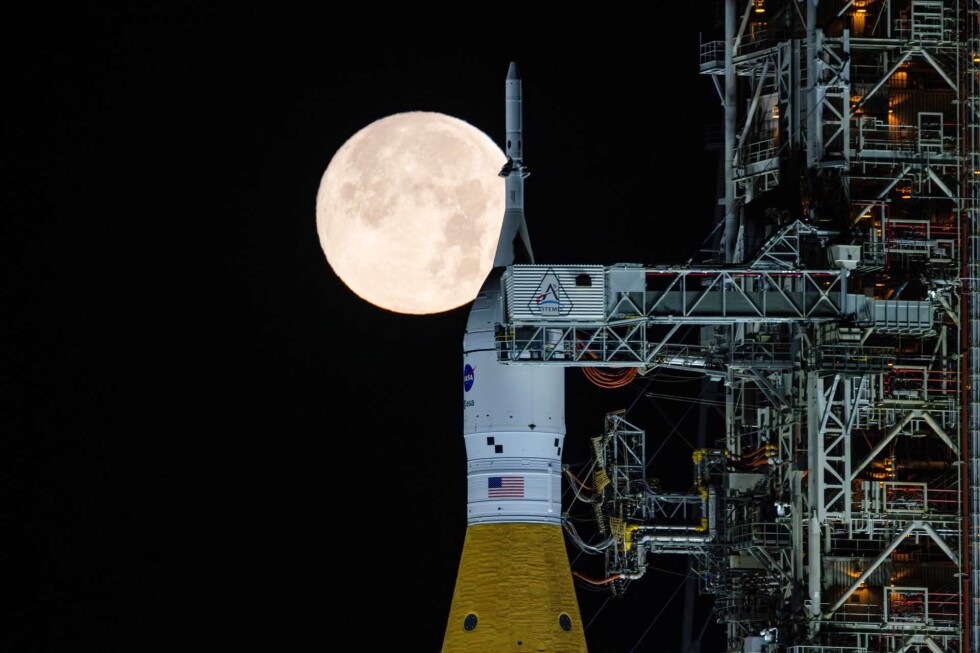
CAPE CANAVERAL, Fla. — NASA has postponed its highly anticipated crewed mission to the moon until at least March 2024 after recurring hydrogen fuel leaks disrupted a critical dress rehearsal of its Space Launch System (SLS) rocket.
The persistent leaks, which appeared during Monday’s countdown test at Kennedy Space Center, halted proceedings at the five-minute mark, preventing launch controllers from reaching their goal of a 30-second countdown. The setback delays humanity’s first lunar voyage in over 50 years, which had been tentatively scheduled for this weekend.
“Actually, this one caught us off guard,” admitted NASA’s John Honeycutt on Tuesday, hours after the aborted test. The space agency has battled similar hydrogen leaks before, which delayed the SLS rocket’s uncrewed debut by several months in 2022.
Hydrogen, while prized for its energy efficiency in rocket propulsion, presents significant engineering challenges. “When you’re dealing with hydrogen, it’s a small molecule. It’s highly energetic, and we like it for that reason, and we do the best we can,” Honeycutt explained. The ultra-cold liquid hydrogen, chilled to minus 423 degrees Fahrenheit (minus 253 degrees Celsius), creates particularly demanding conditions for fuel system seals and connections.
Launch teams attempted several troubleshooting measures during the test, including interrupting fuel flow to warm the connection points between the rocket and fuel lines, hoping to reseat any loose seals. They also adjusted hydrogen flow rates—techniques that had previously resolved similar issues with the first SLS launch in 2022—but these efforts proved unsuccessful.
The month-long delay will enable engineers to conduct another fueling test before committing the four-person crew—three Americans and one Canadian—to the lunar mission. NASA officials indicated that necessary repairs to deformed or damaged seals could likely be completed at the launch pad, avoiding a return to the Vehicle Assembly Building that would cause even longer delays.
With the launch window now pushed to March 6 at the earliest, mission commander Reid Wiseman and his crew have been released from pre-flight quarantine in Houston. They will re-enter isolation two weeks before the next launch attempt.
Despite the setback, Wiseman expressed pride in the test’s execution, writing on social media platform X that he was “especially proud knowing how challenging the scenario was for our launch team doing the dangerous and unforgiving work.”
NASA’s Amit Kshatriya, associate administrator, emphasized that the Space Launch System remains “an experimental vehicle” with ongoing learning curves. He noted that long intervals between fueling tests and launches present additional challenges, adding, “I’m just reminded again almost four days and 40 years from Challenger, nobody sitting in one of these chairs needs to be calling any of these vehicles operational.”
The upcoming Artemis II mission represents a crucial step in NASA’s broader lunar exploration program. While the astronauts won’t land on the moon or enter lunar orbit during their nearly 10-day journey, they will validate critical life support and capsule systems essential for future landing missions. NASA’s launch opportunities are limited to just a handful of days each month due to complex orbital mechanics and mission requirements.
This mission marks a significant milestone in humanity’s return to lunar exploration after a five-decade hiatus. The last human mission to the moon occurred in 1972, concluding NASA’s Apollo program that sent 24 astronauts to lunar space between 1968 and 1972.
Unlike Apollo, which focused on equatorial regions, NASA’s new Artemis program targets the moon’s south polar region, where evidence suggests the presence of water ice in permanently shadowed craters. The program aims to establish a sustainable human presence on the lunar surface, with longer-duration stays than were possible during Apollo.
The successful completion of Artemis II will pave the way for Artemis III, which plans to return humans to the lunar surface later this decade, including the first woman and person of color to walk on the moon.
Fact Checker
Verify the accuracy of this article using The Disinformation Commission analysis and real-time sources.

9 Comments
Delays are always disappointing, but it’s better for NASA to take the time to ensure the SLS rocket is safe and ready to go before the Artemis mission. Hydrogen leaks seem to be an ongoing headache – hopefully they can find a reliable solution to get the program back on schedule.
Hydrogen’s efficiency as a rocket fuel is clearly a double-edged sword, given the engineering challenges NASA is facing with these persistent leaks. It’s good to see they are taking the time to properly address the issue, even if it means pushing the Artemis mission timeline back.
It’s frustrating to see another delay for the Artemis moon missions. Repeated hydrogen fuel leaks are really hampering progress. NASA will need to find a reliable solution before they can proceed with sending astronauts to the lunar surface. Reliability and safety have to be the top priorities.
Hydrogen is a tricky propellant, so I’m not surprised NASA is struggling with leaks during fueling tests. The engineering challenges of working with such a volatile substance must be immense. I hope they can get a handle on this issue soon so the Artemis program can get back on track.
The hydrogen fuel leaks are really hampering progress on the Artemis program. While it’s frustrating to see further delays, NASA is right to take the time to thoroughly address these engineering challenges. The moon mission is too important to rush, even if it means pushing the timeline back.
The persistent hydrogen fuel leaks are really throwing a wrench in NASA’s plans for the Artemis moon missions. Dealing with the complexities of such a small, energetic molecule must be incredibly difficult. I hope they can resolve these engineering challenges soon so the program can regain momentum.
Hydrogen leaks have been a persistent challenge for NASA’s SLS rocket. While it’s an efficient fuel, the engineering difficulties of dealing with such a small, energetic molecule are clearly not easy to overcome. Hopefully they can resolve these issues in time for the crucial Artemis missions.
The Artemis program is certainly facing some significant challenges with these recurring hydrogen fuel leaks. NASA will need to really dig into the root causes and implement robust engineering solutions to get the SLS rocket ready for its crucial moon missions.
It’s disappointing to see the Artemis moon landing pushed back yet again due to the hydrogen fuel leak issues. But NASA is right to prioritize safety and reliability over speed. Resolving these complex engineering problems should be their top focus right now.