


Listen to the article
NASA Delays Artemis II Moon Mission Again Due to Helium System Issue
In a significant setback for America’s return to lunar exploration, NASA announced Saturday that the highly anticipated Artemis II mission to the moon will face further delays, pushing the earliest possible launch to April.
The announcement came just one day after NASA had set March 6 as the target date for the mission, which would mark humanity’s first journey to the moon in over 50 years. According to NASA officials, the latest delay stems from an unexpected interruption in the flow of helium to the Space Launch System (SLS) rocket’s upper stage. Solid helium flow is critical for engine purging and fuel tank pressurization.
“We will begin preparations for rollback, and this will take the March launch window out of consideration,” NASA Administrator Jared Isaacman stated via social media platform X. He explained that a faulty filter, valve, or connection plate could be responsible for the stalled helium flow.
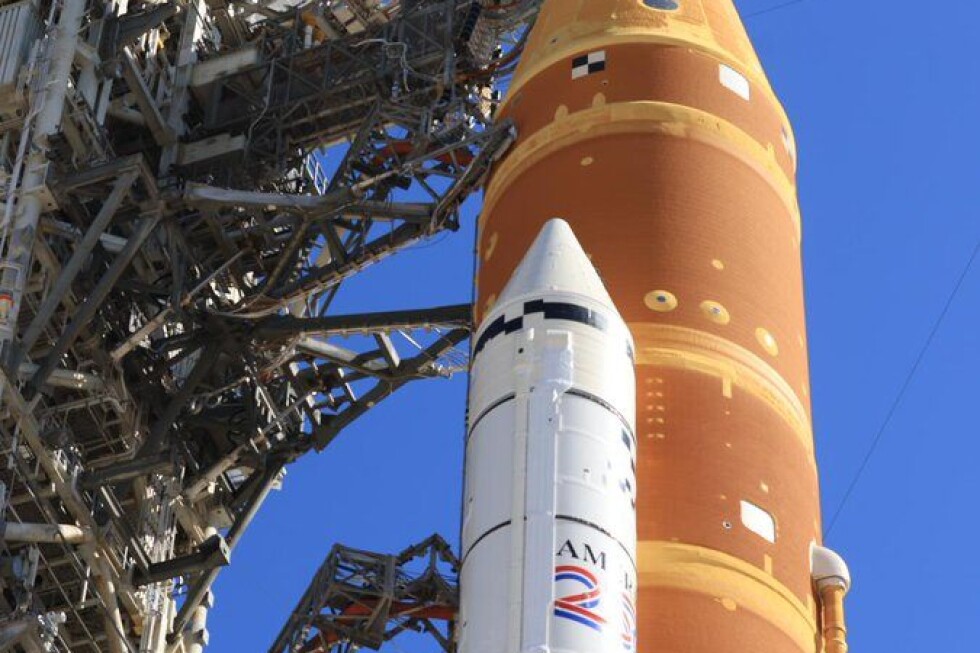
The issue is isolated to the SLS rocket’s interim cryogenic propulsion stage, which plays a crucial role in placing the Orion crew capsule into the proper high-altitude Earth orbit after liftoff. This stage is also designed to separate from Orion later in the mission to serve as a target for astronauts to practice docking techniques essential for future lunar landings.
This helium system malfunction is separate from the hydrogen fuel leaks that had already pushed the mission back by a month. NASA had conducted a second fueling test on Thursday that showed minimal leaks, giving mission managers confidence to target a March launch. The four Artemis II astronauts had even begun their mandatory two-week pre-flight quarantine on Friday evening.
“I understand people are disappointed by this development,” Isaacman acknowledged. “That disappointment is felt most by the team at NASA, who have been working tirelessly to prepare for this great endeavor.”
NASA spokeswoman Cheryl Warner described the situation as dynamic but confirmed that the necessary preparations for moving the 322-foot (98-meter) rocket back to the Vehicle Assembly Building at Kennedy Space Center would rule out any March launch window. Engineers will need direct access to the affected components to complete repairs, which is only possible inside the assembly building.
The Artemis program represents NASA’s ambitious plan to return humans to the lunar surface and establish a sustainable presence on the moon as a stepping stone for eventual Mars missions. To date, the program has completed only one flight—Artemis I in 2022, an uncrewed mission that orbited the moon. That mission also experienced hydrogen fuel leaks and helium issues similar to the current problem.
The delays highlight the immense technical challenges involved in returning to lunar exploration. During NASA’s Apollo program, 24 astronauts flew to the moon between 1968 and 1972, with 12 actually walking on the lunar surface. However, the technology and infrastructure that supported those missions have long since been dismantled, requiring NASA to develop new systems and capabilities.
Industry analysts note that these technical setbacks come amid increasing international competition in space exploration. China has announced plans for its own crewed lunar missions by 2030, while private companies like SpaceX are developing their own lunar capabilities.
The Artemis II mission, when it eventually launches, will carry four astronauts—three Americans and one Canadian—on a trajectory around the moon without landing. The crew will travel farther from Earth than any humans since Apollo 17 in 1972, testing critical systems and procedures for future lunar landing missions.
Despite these delays, the first actual moon landing with a crew under the Artemis program—designated Artemis III—remains several years away, with NASA targeting no earlier than 2026 for that historic mission.
Fact Checker
Verify the accuracy of this article using The Disinformation Commission analysis and real-time sources.

9 Comments
The delayed Artemis II mission is a setback, but it’s important that NASA takes the time to get it right. Rushing could lead to bigger problems down the line. I hope they can resolve the helium flow issue quickly and safely.
The helium flow issue sounds like a tricky problem to solve. I hope NASA’s engineers can get to the root cause quickly and get Artemis II back on track. The world is eager to see the first crewed mission to the moon in over 50 years.
Agreed. The successful Artemis II mission is crucial for rebuilding momentum and public excitement around lunar exploration. NASA will need to demonstrate reliability and progress to secure long-term support.
This is another setback for NASA’s ambitious Artemis program. The technical issues with the SLS rocket are becoming a real challenge. One has to wonder if the delays will impact public support and funding for future lunar missions.
The Artemis program represents a major technological and scientific challenge. Setbacks are inevitable, but NASA’s track record shows they have the expertise to work through problems methodically. I’m confident they’ll get Artemis II off the ground soon.
While delays are frustrating, it’s better for NASA to take the time to thoroughly address technical issues rather than rushing a launch. Safety should always be the top priority for human spaceflight missions.
Interesting that the issue is isolated to the interim cryogenic propulsion stage. I wonder if this is a design flaw that needs to be addressed more broadly, or just a one-off problem with this particular component. Either way, NASA will need to get to the bottom of it.
Good point. Identifying the root cause will be critical to ensure similar issues don’t crop up on future Artemis missions. NASA will need to thoroughly investigate and potentially make design changes if needed.
It’s understandable that the public may be frustrated by these delays, but spaceflight is inherently challenging. NASA has to balance the need for speed with the need for safety and reliability. I’m sure they’re working hard to get Artemis II back on track.