


Listen to the article
NASA Chief Condemns Boeing and Agency for Starliner Mission Failures
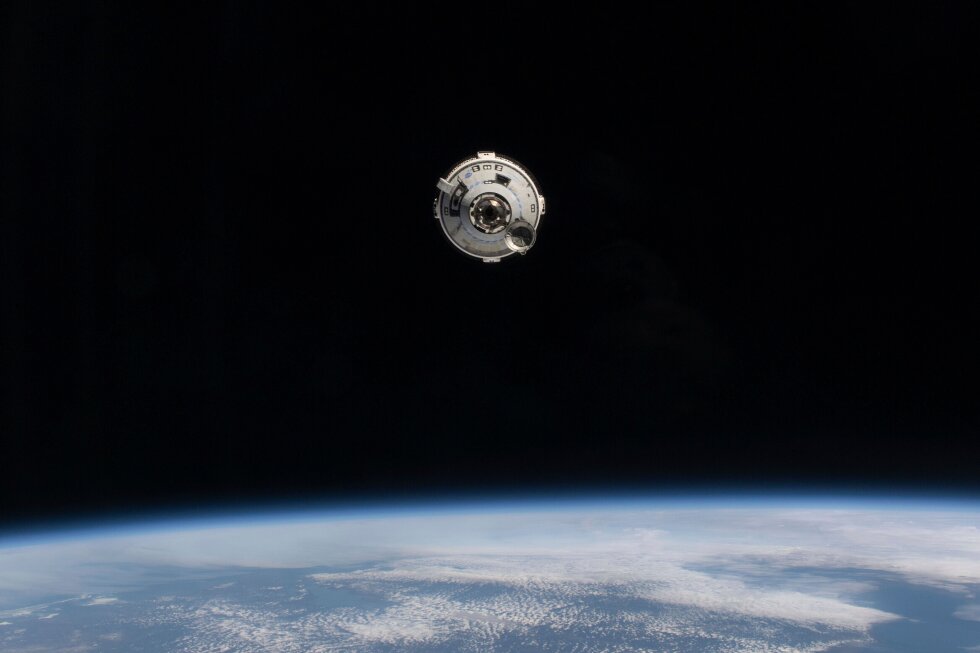
NASA Administrator Jared Isaacman delivered a scathing rebuke of Boeing and the space agency on Thursday regarding the troubled Starliner mission that left two astronauts stranded on the International Space Station for more than nine months.
Isaacman attributed the spacecraft’s numerous problems to poor leadership and decision-making at Boeing while also criticizing NASA managers for failing to intervene more quickly to bring astronauts Butch Wilmore and Suni Williams back to Earth. The two test pilots, who have since retired from NASA, ultimately returned via a SpaceX capsule last March.
“This is just about doing the right thing. This is about getting the record straight,” Isaacman stated firmly during the announcement of NASA’s comprehensive 312-page report on the incident.
In a significant escalation, Isaacman reclassified Starliner’s troubled flight as a “Type A mishap” – a designation indicating potential danger to crew members. This places the mission’s problems in the same serious category as the Challenger and Columbia space shuttle disasters, which also involved organizational and leadership failures.
Isaacman revealed that internal pressure to keep Boeing involved in the Commercial Crew Program and maintain flight schedules prevented the mission from receiving this critical designation earlier. “We almost did have a really terrible day,” added NASA Associate Administrator Amit Kshatriya, referring to the possibility of losing astronauts.
The problems began immediately after Starliner’s June 2024 launch when multiple thruster failures nearly prevented the spacecraft from reaching the space station. Boeing is still analyzing these thruster malfunctions, among other technical issues.
The mishap represents the latest setback in Boeing’s troubled Starliner program. The capsule’s first uncrewed test flight in 2019 failed to reach the correct orbit, necessitating a second attempt that also encountered difficulties. These repeated problems stand in stark contrast to SpaceX, which has successfully completed 13 crewed missions to the ISS since 2020.
NASA awarded contracts worth billions to both Boeing and SpaceX in 2014 following the space shuttle’s retirement, aiming to establish redundant transportation systems to the ISS. With Starliner now grounded indefinitely, SpaceX remains the sole U.S. provider of astronaut transport services to the station.
The timing of the report’s release coincides with another NASA challenge – a second fueling test of its Artemis moon rocket at Kennedy Space Center, following hydrogen fuel leaks that derailed the first attempt earlier this month and delayed plans to return astronauts to the lunar surface.
Boeing responded to the findings with a statement emphasizing the company’s commitment to crew safety and the Starliner program’s continuation: “Boeing has made substantial progress on corrective actions for technical challenges we encountered and driven significant cultural changes across the team.”
Despite the setbacks, Isaacman, who himself has flown to space as a private astronaut, expressed optimism about commercial space opportunities, predicting “endless demand” for multiple orbital transportation options once private space stations begin operations.
There is currently no timeline for when Starliner might conduct a supply mission to the ISS – a necessary step to prove the vehicle’s safety before resuming crewed flights. This uncertainty creates additional pressure as NASA moves toward decommissioning the International Space Station in 2030.
NASA’s Kshatriya acknowledged the agency’s responsibility in the situation: “We have to own our part of this. We failed them,” referring to Wilmore and Williams, who endured the extended stay in space due to the mission’s problems.
The report underscores growing concerns about NASA’s oversight of its commercial partners and raises questions about the future of Boeing’s participation in human spaceflight programs amid the company’s broader struggles across its aerospace divisions.
Fact Checker
Verify the accuracy of this article using The Disinformation Commission analysis and real-time sources.

12 Comments
Placing the Starliner mission problems in the same category as the Challenger and Columbia disasters is a clear sign that NASA views this as an extremely serious incident. Hopefully the full report will shed light on the specific breakdowns that led to this outcome and spur meaningful reforms.
The NASA boss is right to call out these issues so directly. Putting astronauts at risk due to poor leadership and decision-making is completely unacceptable. The public deserves a full accounting of what happened and concrete steps to prevent future failures.
Agreed. Reclassifying this as a ‘Type A mishap’ is a serious move that signals the gravity of the situation. NASA and its contractors need to demonstrate they can reliably and safely transport crew to and from the ISS.
This is a major setback for the Starliner program and for NASA’s efforts to develop new crew transport capabilities. The agency needs to get to the bottom of what went wrong and hold all parties fully accountable. Rigorous quality control is critical for human spaceflight.
This report sounds like a damning indictment of Boeing’s management and NASA’s oversight. Stranding astronauts in space for over 9 months due to preventable issues is a major failure. The agency needs to get to the bottom of what went wrong and hold people accountable.
This seems like a concerning breakdown in oversight and risk management. If NASA managers failed to intervene quickly enough to bring the stranded astronauts home, that’s a major lapse. Rigorous testing and quality control are critical for human spaceflight.
I agree. The fact that two veteran astronauts were stuck on the ISS for over 9 months due to these issues is very troubling. NASA and its contractors need to do better to ensure the safety of crew members.
Wow, this is a serious rebuke from the NASA boss. It sounds like there were major leadership and decision-making issues at Boeing that jeopardized the astronauts’ safety. I’m glad the agency is taking a hard look at what went wrong.
Yes, reclassifying this as a ‘Type A mishap’ on par with the Challenger and Columbia disasters is a major move. Hopefully this leads to real accountability and reforms to prevent such failures in the future.
The details in this report will be important to study. What specific leadership and decision-making failures at Boeing led to the Starliner’s problems? And how did NASA oversight fall short? Transparency is key to learning from these mistakes.
Absolutely. Categorizing this as a ‘Type A mishap’ puts it in the same league as the Challenger and Columbia disasters, which had severe organizational and management breakdowns. NASA will need to implement substantial reforms to regain public trust.
It’s good to see the NASA boss taking such a strong stance on this. Failures in human spaceflight should be met with rigorous investigation and accountability. Hopefully this leads to substantive changes that improve safety and reliability for future missions.