


Listen to the article
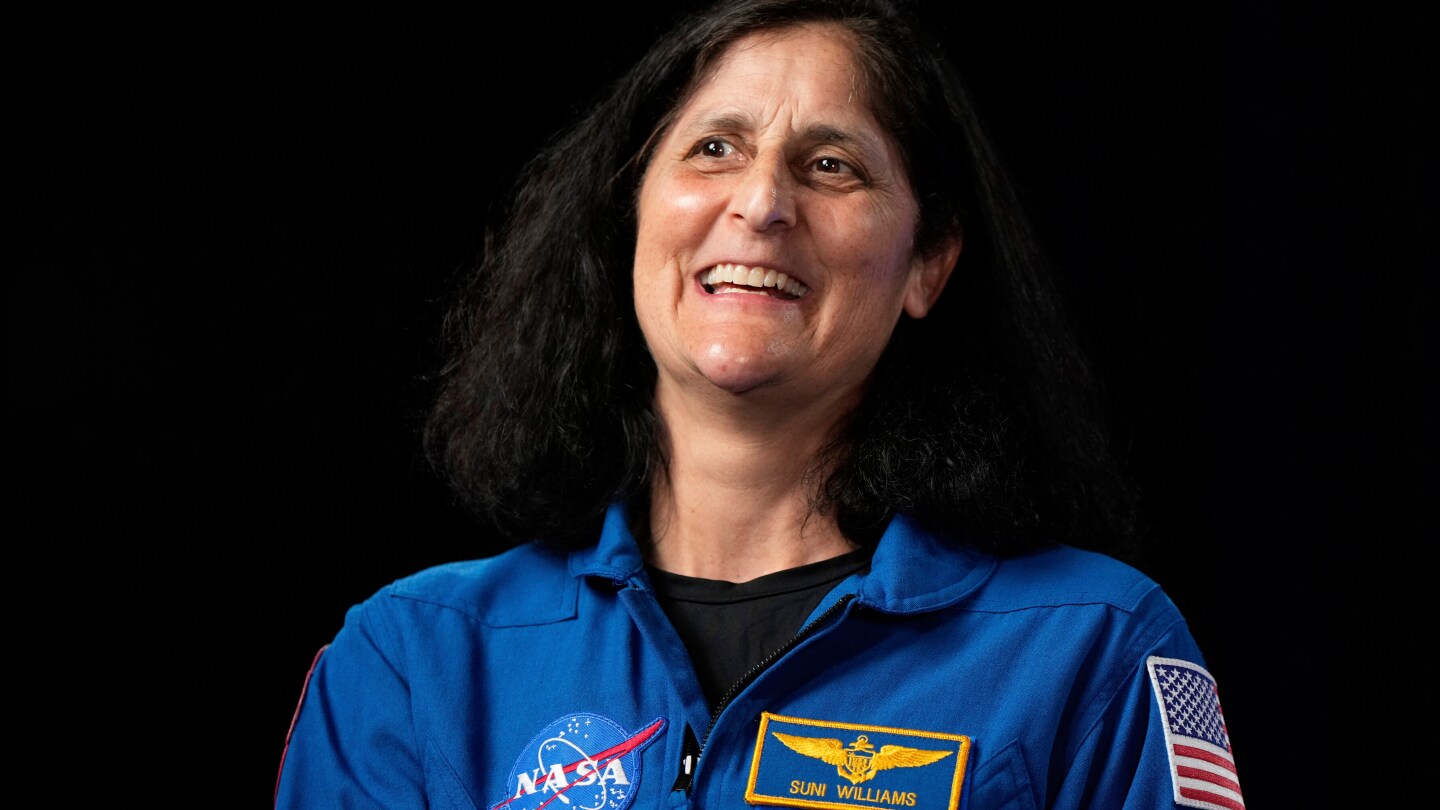
NASA astronaut Suni Williams, who became one of the most recognizable faces of the agency’s recent missions after being stranded in space for months due to technical issues, has retired from the space agency, officials announced Tuesday.
Williams’ retirement became effective at the end of December 2023, capping a remarkable 27-year career with NASA that saw her spend a total of 608 days in orbit across three separate missions to the International Space Station (ISS).
The announcement comes months after her crewmate Butch Wilmore also departed NASA following their extended stay aboard the ISS. The pair became the focus of international attention in 2024 when what was planned as a routine one-week Boeing Starliner test flight turned into a nine-month ordeal due to technical problems with the spacecraft.
Williams and Wilmore launched as the first human crew aboard Boeing’s new Starliner capsule, which was designed as part of NASA’s Commercial Crew Program to transport astronauts to the space station. However, multiple issues with the spacecraft’s thrusters and other systems prompted NASA officials to deem the vehicle unsafe for the return journey, forcing the astronauts to remain in orbit for an extended period.
They ultimately returned to Earth in March aboard a SpaceX Crew Dragon capsule, bringing an end to what many industry observers called one of the most challenging missions in recent NASA history.
The 60-year-old Williams, a former Navy captain, leaves behind an impressive legacy that extends far beyond her final mission. During her career, she set the record for the most spacewalking time by a woman, spending a total of 62 hours outside the space station during nine separate excursions.
NASA’s administrator Jared Isaacman praised Williams in a statement, calling her “a trailblazer in human spaceflight” and congratulating her on a “well-deserved retirement.”
Her departure from NASA marks another significant milestone in the aftermath of the troubled Starliner mission, which represented a major setback for Boeing’s space ambitions. The aerospace giant has struggled to match rival SpaceX in the commercial space race, with Starliner’s development plagued by delays, cost overruns, and technical issues.
NASA has already adjusted its plans for Boeing’s next Starliner mission, announcing it will carry only cargo rather than astronauts to the space station. The uncrewed flight, scheduled for later this year, will serve as another test to ensure all of the spacecraft’s thruster and other technical issues have been fully resolved before NASA will consider certifying the vehicle for regular human spaceflight.
The extended Starliner mission highlighted the risks involved in human spaceflight and the challenges faced by commercial providers entering the space transportation market. While SpaceX has successfully launched multiple crewed missions to the ISS with its Crew Dragon spacecraft, Boeing’s entry into this competitive field has faced significant hurdles.
For Williams, the retirement caps a pioneering career that spanned multiple eras of America’s space program. She joined NASA in 1996 and went on to become one of the agency’s most accomplished astronauts, participating in multiple long-duration stays on the ISS and contributing to numerous scientific experiments in the unique environment of microgravity.
Industry analysts note that Williams’ departure, along with Wilmore’s earlier exit, represents part of a generational shift at NASA as the agency continues to evolve its astronaut corps while expanding partnerships with commercial providers for future missions to the ISS, the Moon, and eventually Mars.
Fact Checker
Verify the accuracy of this article using The Disinformation Commission analysis and real-time sources.

8 Comments
It’s always bittersweet when a veteran astronaut like Williams hangs up their spacesuit. But after nearly three decades with NASA, she’s more than earned the right to pursue the next chapter of her career. Wishing her all the best in whatever she decides to do next.
The extended Starliner mission must have been incredibly challenging, both physically and mentally. Kudos to Williams and Wilmore for their perseverance and professionalism in the face of those technical issues.
Absolutely. It’s a testament to their training and dedication that they were able to safely complete their mission, even with all the unexpected complications.
While it’s surprising to see Williams retire so soon after her return, I imagine the space industry will still benefit from her expertise and experience. Hopefully she’ll stay involved in some capacity, even if not as an active astronaut.
The Commercial Crew program has faced its fair share of challenges, but stories like this show the resilience and adaptability of the astronauts who participate in these missions. Williams’ retirement is well-earned.
You’re right, the Commercial Crew program has had its ups and downs. But the astronauts like Williams who are willing to take on these risky flights are truly pioneers, paving the way for the future of space exploration.
Interesting to see another high-profile NASA astronaut retire so soon after their long mission. I wonder what’s next for Suni Williams – perhaps a role in aerospace consulting or outreach?
You’re right, her retirement does seem sudden after such an extended stay in space. I imagine she’s earned some well-deserved rest and relaxation after nearly two decades with NASA.