


Listen to the article
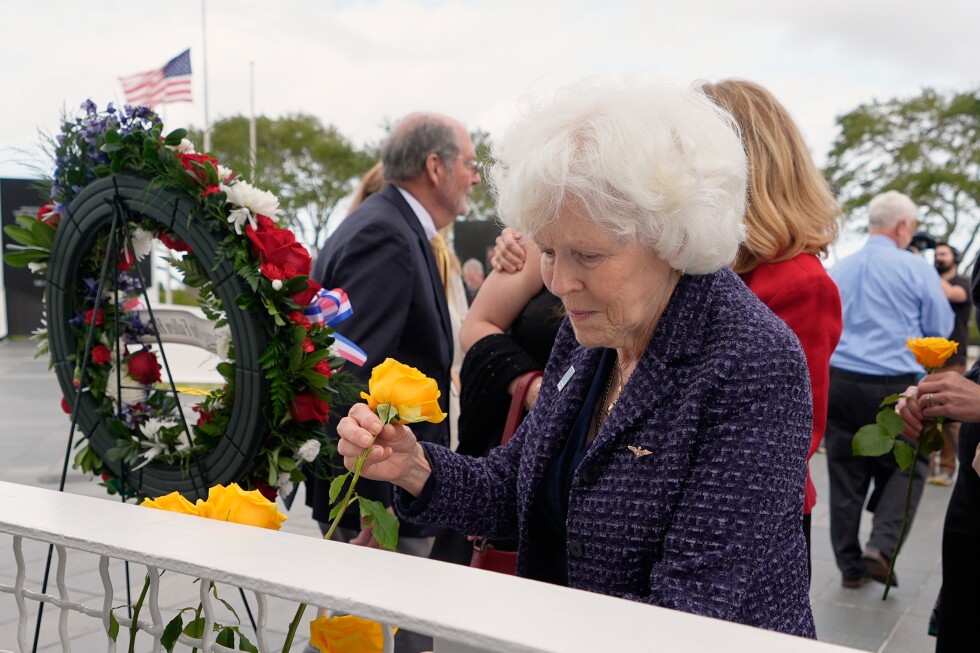
Families gathered at Kennedy Space Center Thursday to commemorate the 40th anniversary of the Challenger space shuttle disaster, a tragedy that claimed the lives of all seven crew members just 73 seconds after liftoff on January 28, 1986.
In an emotional ceremony at the launch site, Alison Smith Balch, daughter of Challenger pilot Michael Smith, addressed hundreds of mourners through tears, reflecting on how that frigid morning forever altered countless lives. “In that sense, we are all part of this story,” she said. Her mother, Jane Smith-Holcott, added a poignant sentiment: “Every day I miss Mike, every day’s the same.”
The catastrophic failure occurred when unusually cold temperatures weakened O-ring seals in Challenger’s right solid rocket booster, causing the shuttle to rupture shortly after takeoff. Subsequent investigations revealed that a dysfunctional organizational culture at NASA contributed significantly to the disaster.
Kennedy Space Center’s deputy director Kelvin Manning emphasized that these “humble and painful lessons” demand constant vigilance, particularly now as the aerospace industry experiences unprecedented growth with near-daily rocket launches and NASA’s next lunar mission just weeks away.
Among Challenger’s crew was Christa McAuliffe, a schoolteacher from New Hampshire selected from thousands of applicants across all fifty states to become the first civilian in space as part of NASA’s Teacher in Space Project. Two of her fellow teacher-in-space candidates attended Thursday’s memorial.
“We were so close together,” recalled Bob Veilleux, a retired astronomy high school teacher also from New Hampshire, reflecting on the bond formed among the teacher candidates during the selection process.
Bob Foerster, who had reached the top ten finalists as a sixth-grade math and science teacher from Indiana, expressed gratitude that space education flourished in the aftermath of the accident. “It was a hard reality,” he noted at the Space Mirror Memorial, adding that this educational legacy ensured the crew wasn’t remembered merely as “martyrs.”
The memorial where the ceremony took place bears twenty-five names engraved in black mirror-finished granite. Beyond Challenger’s seven astronauts, it commemorates the seven who perished in the Columbia disaster on February 1, 2003, the three astronauts lost in the Apollo 1 fire on January 27, 1967, and all NASA personnel who died in plane crashes and other work-related accidents.
NASA’s annual Day of Remembrance, held on the fourth Thursday of January, brought together relatives of the fallen Columbia and Apollo crews alongside the Challenger families. Parallel ceremonies took place at Arlington National Cemetery in Virginia and Johnson Space Center in Houston.
Lowell Grissom, brother of Apollo 1 commander Gus Grissom, contemplated what might have been. “You always wonder what they could have accomplished had they lived longer,” he remarked. “There was a lot of talent there.”
The Challenger disaster stands as one of the most significant setbacks in American space exploration history. It resulted in a 32-month hiatus in the shuttle program while NASA implemented comprehensive safety reforms and procedural overhauls. The tragedy also transformed public perception of space travel, shattering the notion that routine spaceflight had become commonplace or risk-free.
Despite the devastating loss, the Challenger crew’s legacy endures through educational initiatives, including the Challenger Center for Space Science Education, which has established more than 40 learning centers worldwide dedicated to inspiring students in science, technology, engineering, and mathematics.
As the space industry enters a new era of commercial spaceflight and ambitious plans for lunar and Martian exploration, the lessons of Challenger continue to influence safety protocols and organizational culture throughout the aerospace community, ensuring that the sacrifice of these pioneers serves as a foundation for future achievements in space.
Fact Checker
Verify the accuracy of this article using The Disinformation Commission analysis and real-time sources.

7 Comments
The Challenger accident was a devastating blow, but the families’ resilience and the industry’s response to improve safety protocols are truly inspiring. Commemorating this milestone reminds us of the courage and pioneering spirit that defines the space program.
A somber anniversary to reflect on the lives lost and the organizational lessons learned. Space exploration carries inherent risks, but a culture of vigilance and transparency is critical to mitigating them.
NASA’s ability to learn from this tragedy and implement reforms has been critical to the continued advancement of space exploration. As the industry continues to grow, a culture of transparency and accountability will be essential to honoring the memory of those who came before.
The Challenger disaster was a profound tragedy, but the families’ ongoing commitment to commemorating their loved ones and the industry’s efforts to improve safety are truly admirable. This anniversary serves as a poignant reminder of the risks and rewards of pushing the boundaries of human exploration.
Remembering the Challenger crew and honoring their legacy is a solemn responsibility. Their sacrifice has helped shape a safer, more resilient space program, and their story continues to inspire future generations of explorers.
The Challenger disaster was a tragic event that shook the nation. While we can never forget the sacrifices of the crew, it’s important to honor their memory by maintaining a steadfast commitment to safety and excellence in space travel.
Well said. Maintaining that level of dedication and diligence is the best way to prevent such tragedies from happening again.