


Listen to the article
Myanmar’s Scam Compound Crackdown: Genuine Reform or Smoke and Mirrors?
A recent raid on KK Park, a notorious scam compound in Myanmar, appeared to signal a turning point in the global fight against cybercrime. Myanmar’s military leadership, responding to mounting international pressure, vowed to eliminate the industrial-scale scam centers flourishing within its borders.
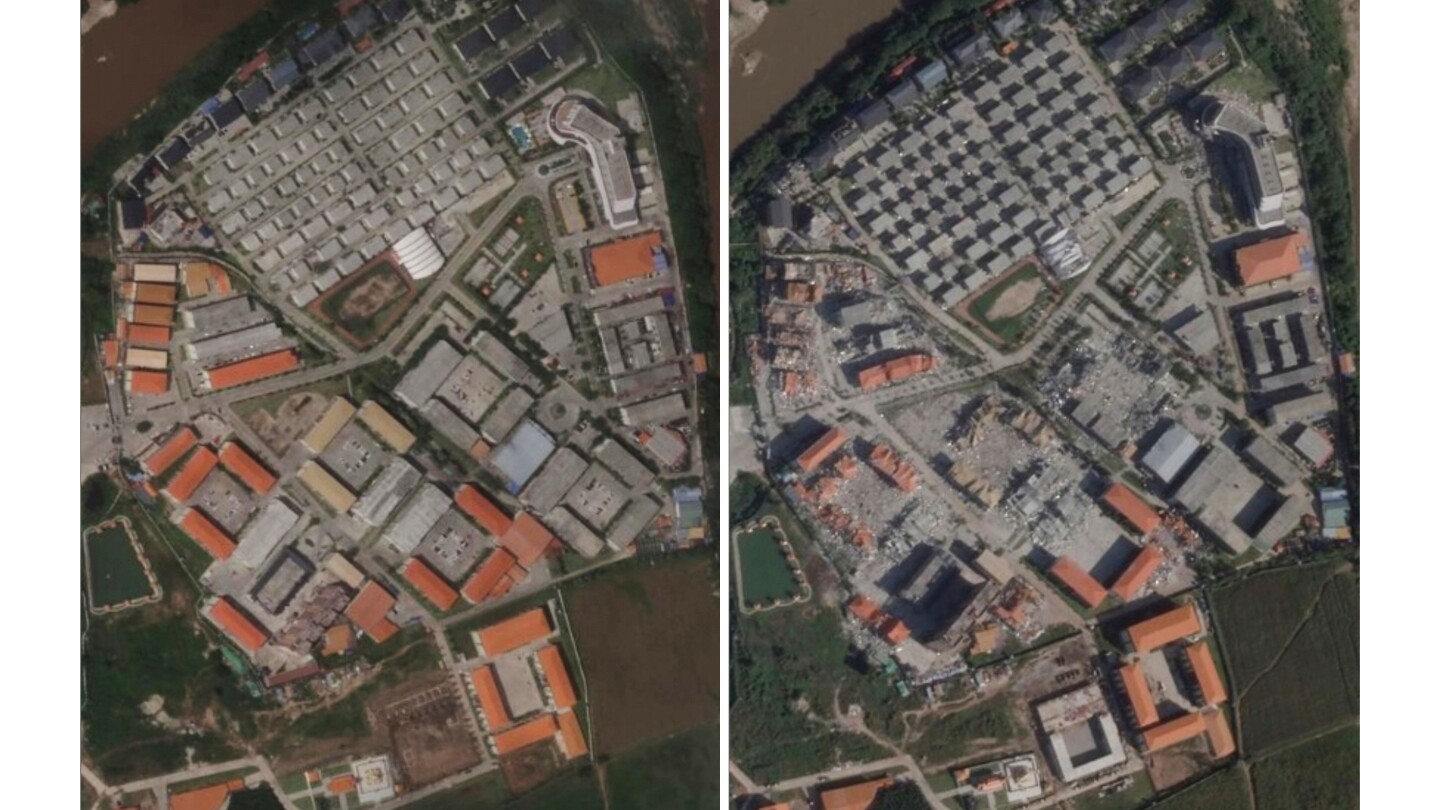
The military’s campaign began with raids on KK Park, followed by weeks of demolition efforts at the facility that had become emblematic of impunity in one of the world’s most lucrative criminal industries. State media broadcast dramatic images of soldiers standing amid rubble and seized Starlink terminals.
By mid-December, officials claimed 413 buildings in KK Park had been “demolished” with plans to clear the remaining 222 structures. However, detailed analysis by the Center for Information Resilience reveals a less comprehensive operation: only 31 structures were completely flattened, with about 78 others partially damaged.
“Most of the buildings were damaged by heavy machinery, which often left roofs, ceilings and floor layers intact,” said Guy Fusfus, an investigator at Myanmar Witness. “There may be an intention to reconstruct and reuse these buildings.”
The military government’s crackdown extended beyond KK Park. Authorities raided Shwe Kokko, another notorious compound that had drawn the attention of U.S. authorities. SpaceX announced it had terminated service to over 2,500 Starlink units in Myanmar, where scammers heavily relied on the technology. Meta reported removing 2,000 Facebook accounts linked to scam operations in the country.
These actions coincided with Myanmar preparing for national elections, widely criticized as an attempt to legitimize the army’s 2021 power seizure. The timing suggests the crackdown may be more about international optics than substantive reform.
“Even if you destroy buildings, if you haven’t arrested the heads of the transnational syndicates behind this, seized their wealth and put them in jail, it’s not a real crackdown yet,” said Jay Kritiya, coordinator of the Civil Society Network for Human Trafficking Victim Assistance.
Evidence indicates the scam industry is adapting rather than dissolving. Thousands of workers scattered from KK Park to other scam operations in Myanmar and abroad. Telegram channels are flooded with job advertisements targeting displaced workers. Meanwhile, operations continue uninterrupted at many other scam centers throughout the country.
The Associated Press discovered that at least two compounds still use Starlink internet services despite SpaceX’s announced service termination. At Deko Park, 35 miles south of KK Park, and at the Apollo compound, online operations continue.
Myanmar’s history of enforcement raises doubts about lasting change. Earlier raids this year in response to Chinese pressure failed to contain the growth of scam compounds. C4ADS, a U.S.-based nonprofit focused on conflict analysis, found that 14 of 21 known scam compounds in Myawaddy Township, including KK Park, showed signs of construction or expansion since January.
“This continued growth of scam compounds is emblematic of the junta’s inability to rein in the industry within Myanmar,” said Michael Di Girolamo, a C4ADS analyst specializing in cybercrime.
Complicating matters, some of the same officials leading the current raids have reportedly profited from scam operations. KK Park, like most scam compounds along the Thai border, operates under the protection of the Karen Border Guard Force, an armed militia affiliated with Myanmar’s military.
“There’s no real political will to crack down,” said Jason Tower from the Global Initiative Against Transnational Organized Crime. “The action at KK Park was a way for Myanmar’s military leadership to relieve pressure, primarily from the U.S. and China, while continuing to host highly lucrative criminal activity.”
The fate of the thousands of workers from these compounds remains unclear. Thai military officials report only about 1,500 people who worked at KK Park have escaped through official channels—a fraction of the workforce estimated to be in the tens of thousands.
Former workers report some colleagues have relocated with their bosses to other compounds or countries. One Filipino worker described how his company quickly relocated dozens of staff, computers, and Wi-Fi equipment to a nearby compound called Huanya to resume their scam targeting American investors.
In contrast to the military’s operations, forces of the Karen National Union, a rebel group opposed to Myanmar’s military leadership, stormed a scam compound called Shunda Park in November. Rather than destroying evidence, they collected over 600 mobile phones, bank cards, computers, and other materials, turning them over to Thai authorities for investigation.
As the dust settles on the demolished sections of KK Park, the impact of this crackdown on the global scam industry remains questionable. For many victims still trapped in these compounds, the government’s zero-tolerance rhetoric has yet to translate into freedom or justice.
Fact Checker
Verify the accuracy of this article using The Disinformation Commission analysis and real-time sources.

7 Comments
The mining and commodities sectors are ripe targets for cybercriminals, so it’s good to see Myanmar taking action. However, the reports indicate the demolition efforts were not as comprehensive as initially claimed. Genuine reform will require a more sustained, holistic approach to dismantle these fraud networks.
Interesting to see Myanmar taking a ‘zero tolerance’ stance on cyberscams. Though the results so far seem mixed, it’s a step in the right direction to address this pervasive issue. Curious to see if they can truly crack down on the fraud networks operating within their borders.
The mining and commodities sectors are particularly vulnerable to cybercriminal activity, so it’s important for countries like Myanmar to address this problem head-on. However, the mixed results so far highlight the need for a more comprehensive, long-term strategy to dismantle these scam networks.
This crackdown on Myanmar’s scam compounds is an interesting development, though the details suggest a less than complete operation. Cybercrime is a complex, global issue, and it will take sustained, coordinated efforts to truly curb the fraud and exploitation taking place.
Cybercrime is a global challenge, and it’s good to see Myanmar trying to tackle the scam compounds that have flourished there. However, the reports suggest the demolition efforts were more symbolic than comprehensive. Genuine reform will require sustained action and international cooperation.
While Myanmar’s ‘zero tolerance’ policy is a bold move, the reality on the ground seems more complex. Partially damaged buildings and intact structures suggest the scam operations may continue, despite the high-profile raids. Tackling cybercrime requires a multi-pronged approach beyond just visible demolitions.
While the ‘zero tolerance’ policy sounds promising, the reality on the ground points to a more nuanced situation. Partial demolitions and intact structures suggest the scam operations may still be ongoing. Addressing cybercrime requires a multifaceted approach beyond just high-profile raids.