


Listen to the article
U.S. businesses face continued trade uncertainty after the Supreme Court on Friday struck down tariffs imposed by President Donald Trump under an emergency powers law. Within hours of the ruling, Trump pledged to circumvent the decision by imposing new tariffs under different legal authority.
The Supreme Court ruled 6-3 that the International Emergency Economic Powers Act did not give the president authority to tax imports, a power constitutionally reserved for Congress. The decision invalidated an estimated $133 billion to $175 billion in previously collected tariffs.
Despite the ruling, Trump immediately announced plans to impose a 10% tariff on all imports for 150 days, creating fresh concerns among businesses already struggling with years of trade volatility.
“Any boost to the economy from lowering tariffs in the near-term is likely to be partly offset by a prolonged period of uncertainty,” said Michael Pearce, an economist at Oxford Economics. “With the administration likely to rebuild tariffs through other, more durable means, the overall tariffs rate may yet end up settling close to current levels.”
For many business owners, the ruling creates more questions than answers. Daniel Posner, owner of Grapes The Wine Co. in White Plains, New York, wonders if wine shipments currently crossing the Atlantic would face Trump’s newly announced 10% tariff upon arrival.
“We’re reactive to what’s become a very unstable situation,” Posner said.
Ron Kurnik, who owns Superior Coffee Roasting Co. in Michigan near the Canadian border, has been hit from multiple directions—U.S. tariffs on imports and Canadian retaliatory tariffs on his exports. His company has raised prices by 6% twice since the tariffs went into effect.
“It’s like a nightmare we just want to wake up from,” Kurnik said, adding that he remains skeptical about ever receiving refunds for tariffs now deemed illegal.
The court’s decision does not automatically trigger refunds, and the process for reclaiming paid tariffs remains unclear. Legal experts suggest larger companies with significant resources will likely have advantages in pursuing claims, while individual consumers are unlikely to see compensation.
Many businesses have already joined lawsuits seeking to reclaim tariff payments. Jay Foreman, CEO of Basic Fun, a Florida-based toy manufacturer of brands like Lincoln Logs and Tonka trucks, recently joined such litigation but expects “some type of perpetual fight over this, at least for the next three years.”
The ruling’s economic impact varies significantly across sectors. The National Retail Federation has advocated for a “seamless process” to refund tariffs, though the court did not address this issue. Retailers have employed various strategies to offset tariff costs, including absorbing expenses, cutting costs elsewhere, and diversifying supply chains—but have still passed some increases to inflation-weary consumers.
Technology companies, which rely heavily on global supply chains, expressed hope that the decision might bring stability to trade policy. “With this decision behind us, we look forward to bringing more stability to trade policy,” said Jonathan McHale, vice president for digital trade at the Computer & Communications Industry Association, which represents technology firms employing more than 1.6 million people.
The ruling offers no relief for some sectors because it only affects tariffs imposed under the emergency powers law. Steel, upholstered furniture, kitchen cabinets, and bathroom vanities remain subject to tariffs imposed under other legal authorities.
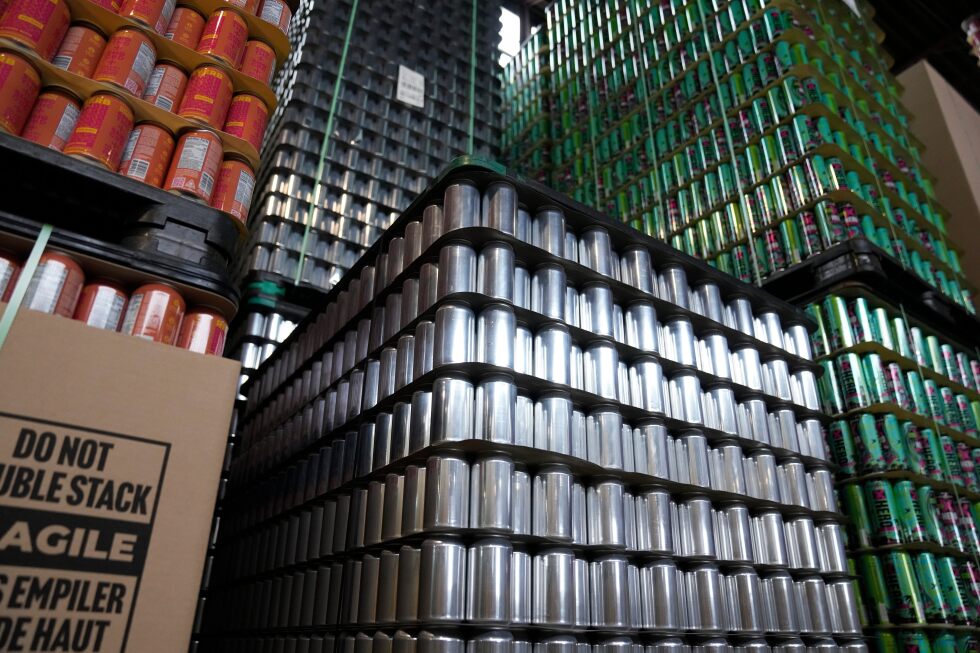
Josh Deth, managing partner at Revolution Brewing in Chicago, notes that aluminum for their cans—sourced from Canada—costs as much as the ingredients that go inside them because of metal tariffs unaffected by the ruling.
“Everything kind of adds up,” Deth said. “The beverage industry needs relief here. We’re getting crushed by the prices of aluminum.”
The Business Roundtable, representing more than 200 major U.S. companies, urged the administration to limit future tariffs to addressing specific unfair trade practices and national security concerns, rather than using them as broad economic tools.
Internationally, the reaction has been cautious. Italian winemakers, who count the U.S. as their largest export market, expressed skepticism about whether the ruling would provide lasting relief.
“There is a more than likely risk that tariffs will be reimposed through alternative legal channels, compounded by the uncertainty this ruling may generate in commercial relations between Europe and the United States,” said Lamberto Frescobaldi, president of UIV, which represents over 800 Italian winemakers.
European economists echoed these concerns. “Europe should not be mistaken, this ruling will not bring relief,” said Carsten Brzeski, an economist at ING bank. “The legal authority may be different, but the economic impact could be identical or worse.”
As businesses and trade partners brace for Trump’s next moves, the ruling highlights the ongoing tension between executive trade actions and their economic consequences for global commerce.
Fact Checker
Verify the accuracy of this article using The Disinformation Commission analysis and real-time sources.

7 Comments
The back-and-forth on trade policy is frustrating for businesses. They need stability and predictability to make sound investment decisions.
The administration’s response is disappointing but not entirely surprising. Businesses will need clear, consistent policies if they are to invest and grow in this climate.
This ruling adds further uncertainty to an already volatile trade environment. Businesses will need to stay nimble and prepared for potential policy shifts in the coming months.
It’s concerning to see the administration moving to reimpose tariffs through alternative means. This could undermine the intended benefits of the Supreme Court’s decision.
I agree. Prolonged trade uncertainty makes it very difficult for businesses to plan and invest with confidence.
This is a tricky situation. While the ruling provides some relief, the threat of new tariffs casts a shadow over the economic outlook. Businesses will have to closely monitor developments.
The administration’s pledge to work around the court ruling raises concerns. Businesses may be stuck in a prolonged period of trade uncertainty, which is the last thing they need right now.