


Listen to the article
Global Outcry as Israel Recognizes Somaliland’s Independence
Nations around the world have swiftly condemned Israel’s unexpected recognition of Somaliland as an independent state, marking the first such acknowledgment of the breakaway region’s sovereignty in more than three decades.
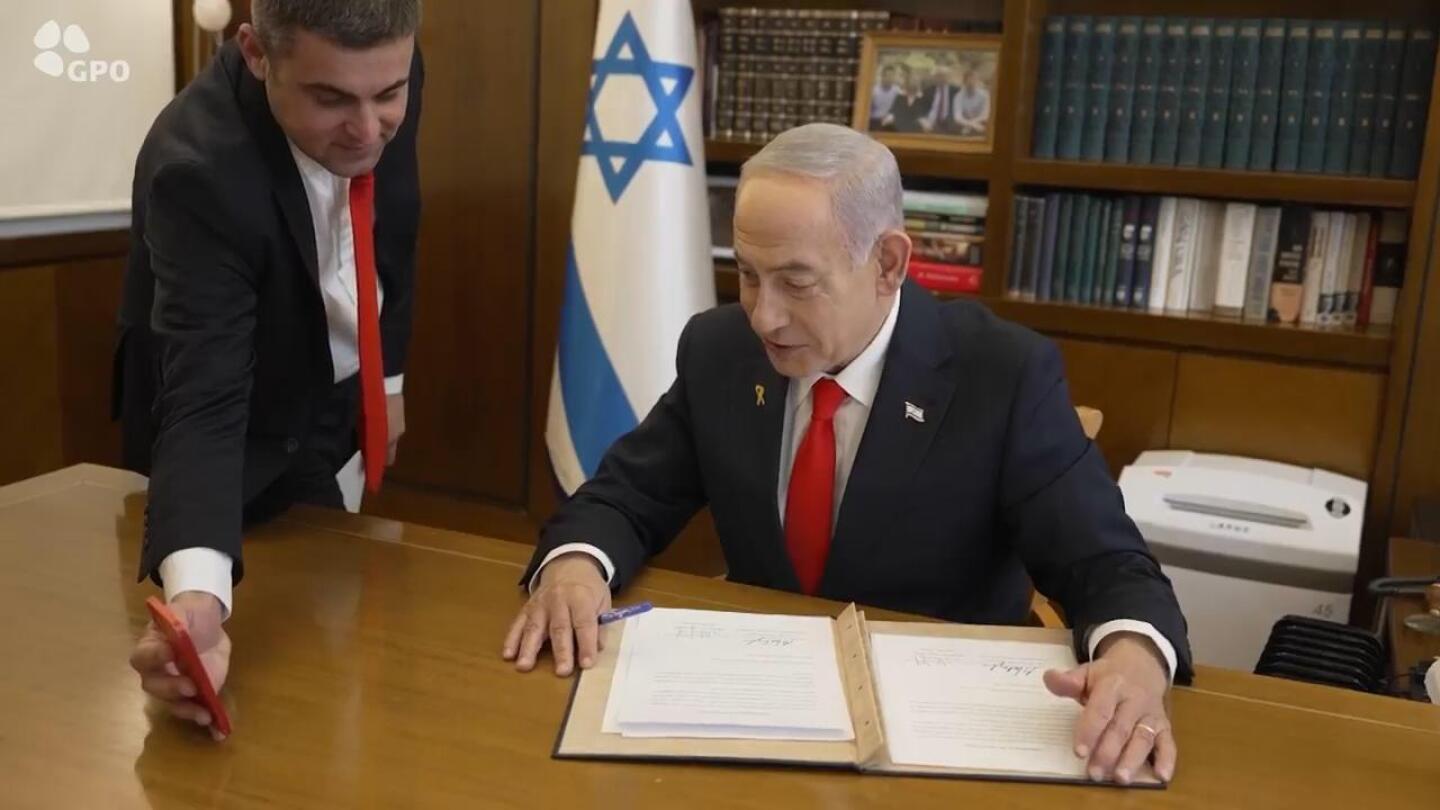
On Friday, Israeli Prime Minister Benjamin Netanyahu’s office announced that he, along with Foreign Minister Gideon Saar and Somaliland’s President Abdirahman Mohamed Abdullahi, had signed a joint declaration recognizing Somaliland’s independence “in the spirit of the Abraham Accords.”
The move prompted immediate backlash from Somalia’s federal government, which strongly rejected what it called an “unlawful” action and reaffirmed that Somaliland remains an integral part of Somalia’s sovereign territory.
By Saturday, over 20 nations—primarily from the Middle East and Africa—along with the Organization of Islamic Cooperation had issued a joint statement condemning Israel’s unilateral action, citing “serious repercussions” for peace and security in the strategically important Horn of Africa and Red Sea regions.
Somaliland, which declared independence from Somalia in 1991 during the latter’s descent into civil war, has operated as a de facto independent state with its own government, currency, and relatively stable democratic institutions for decades. Despite these autonomous operations, no nation had officially recognized its sovereignty until Israel’s declaration.
The United States, which maintains significant strategic interests in the region, quickly distanced itself from Israel’s position. The U.S. State Department issued a statement Saturday reaffirming that it “continues to recognize the territorial integrity of Somalia, which includes the territory of Somaliland.”
Regional African organizations joined the chorus of opposition. African Union Chairperson Mahmoud Ali Youssouf warned that undermining Somalia’s sovereignty risks destabilizing the entire continent. The Intergovernmental Authority on Development (IGAD), East Africa’s regional bloc, emphasized that Somalia’s territorial integrity is protected under international law, and Israel’s unilateral recognition “runs contrary to the charter of the United Nations.”
The timing and motivation behind Israel’s decision remain unclear. Earlier this year, reports emerged that Israeli officials had approached Somaliland about potentially resettling Palestinians from Gaza as part of a now-abandoned Trump administration plan. The joint statement from opposing nations explicitly noted their “full rejection of any potential link between such measure and any attempts to forcibly expel the Palestinian people out of their land.”
Somaliland’s strategic location cannot be overlooked in assessing Israel’s interest in the region. The arid territory lies on the Gulf of Aden across from Yemen and borders Djibouti, which hosts military bases for several global powers including the United States, China, and France. Control of this coastline provides critical access to one of the world’s busiest shipping lanes.
The Abraham Accords, launched in 2020 under former U.S. President Donald Trump’s administration, established diplomatic and commercial ties between Israel and several Arab and Muslim-majority countries. This latest move appears to be an attempt to extend Israel’s diplomatic reach in Africa, though the immediate international backlash suggests it may have miscalculated the global response.
For Somaliland, which has long sought international recognition, Israel’s declaration represents a significant diplomatic breakthrough, even as its practical implications remain uncertain. The territory has built a relatively functional democracy with peaceful transfers of power despite its lack of international status, making it an outlier in a region plagued by political instability.
As diplomatic tensions escalate, the international community now watches to see whether other nations might follow Israel’s lead or if mounting pressure will isolate this recognition as a diplomatic anomaly with limited practical effect on Somaliland’s status in the global order.
Fact Checker
Verify the accuracy of this article using The Disinformation Commission analysis and real-time sources.

8 Comments
From an investment perspective, the uncertainty surrounding Somaliland’s status could create both risks and opportunities for companies operating in the mining, energy, and commodities sectors. Careful analysis of the political landscape will be crucial.
From a mining and commodities perspective, Somaliland’s independence could open up new opportunities for resource extraction and trade, but the geopolitical tensions may complicate matters. Companies will need to navigate this carefully.
Good point. Any mining or energy projects in the region will likely face heightened scrutiny and risk due to the diplomatic fallout from Israel’s recognition of Somaliland.
The global outcry over Israel’s move underscores the delicate balance of power and sovereignty in the Horn of Africa. It will be interesting to see how this situation evolves and what impact it has on regional stability.
Agreed. This recognition could have far-reaching consequences, both politically and economically, for the countries in the region.
The strategic location of the Horn of Africa makes this a significant development, both in terms of regional power dynamics and potential access to valuable natural resources. It will be crucial for all parties to engage in diplomatic dialogue to find a peaceful resolution.
This situation highlights the complex web of alliances and rivalries in the Middle East and Africa. Israel’s move seems to be part of its broader strategy to expand its influence in the region, which is likely to be met with pushback from its adversaries.
This is a complex geopolitical issue with significant regional implications. Israel’s recognition of Somaliland is likely driven by strategic interests, but the backlash from neighboring countries highlights the sensitivity around Somaliland’s status.