


Listen to the article
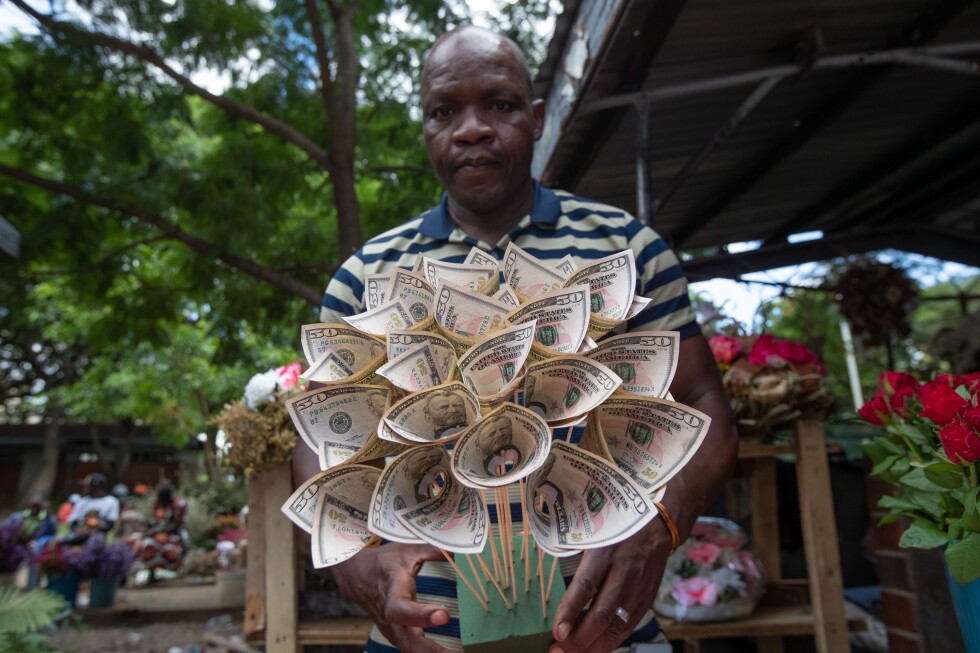
In Zimbabwe, where economic realities shape expressions of romance, Valentine’s Day celebrations have taken an inventive turn. Cash bouquets featuring artfully arranged dollar bills are rapidly supplanting traditional flower arrangements as the most coveted tokens of affection.
At Harare’s oldest flower market, florist Tongai Mufandaedza deftly folds crisp $50 notes into decorative cones, intertwining them with white roses. After three decades in the business, he’s witnessing a significant shift in consumer preferences.
“The market has improved because of the money bouquets,” Mufandaedza explains, carefully wrapping his creation in bright red paper. “On Valentine’s Day, we’re going to have more customers because this is something trending. Everyone wants to impress.”
Young Zimbabweans are particularly enthusiastic about the trend. Kimberleigh Kawadza, 23, browsing the market displays, offers enthusiastic approval: “The person who came up with the trend, I just need to give them a hands up. It’s a way of appreciating my partner—it’s a 100 for me.”
While Generation Z customers initiated the cash bouquet phenomenon, Mufandaedza notes demand is spreading across age groups. Some parents purchase money bouquets for their daughters to prevent them from seeking financial security through relationships with older, wealthier partners.
The pricing structure of these novel arrangements varies significantly. Smaller bouquets might contain as little as $10, while more elaborate displays can cost thousands. Surprisingly, they often represent better value than traditional floral gifts—a $10 cash bouquet sells for $25, while ten quality red roses cost between $35 and $40.
These monetary expressions of affection reflect Zimbabwe’s economic context. Since hyperinflation forced authorities to abandon the local currency in 2009, the U.S. dollar has dominated transactions. Though Zimbabwe has since reintroduced its own currency, the dollar remains the preferred medium of exchange.
The preference for money bouquets serves both romantic and practical purposes. “People still love flowers, but when they see the notes on top, the love feels hotter and the gesture even more meaningful,” Mufandaedza says. “Survival matters more in these difficult times and money plays a bigger role.”
The trend has created secondary business opportunities. With crisp notes at a premium, entrepreneurs now supply clean bills—replacing the worn, tattered currency sometimes jokingly called “war veterans”—for a commission.
This fusion of cash and courtship extends beyond Zimbabwe. In Kenya, one of the world’s largest flower exporters, similar practices have emerged, prompting the central bank to threaten penalties of up to seven years imprisonment for defacing currency by folding or gluing banknotes into bouquets—a stance that has generated considerable public debate.
Meanwhile, other Zimbabwean entrepreneurs are exploring sustainability as an alternative expression of romance. At Simpli Simbi, an upscale Harare gift shop, founder Stephanie Charlton offers aluminum heart-shaped keepsakes crafted from reclaimed materials. “Simbi” means metal in the local Shona language.
“We’re taking something that was unloved before, polishing it up and making it beautiful again as a gift someone can treasure forever,” Charlton explains.
At her foundry, discarded car radiators, rims, and scrap metal collected from roadsides and landfills are transformed through an open furnace into handmade gifts. Charlton, a former horticulture exporter who now employs 20 people, has witnessed her customer base evolve from primarily tourists and diaspora Zimbabweans to increasingly local buyers as environmental consciousness grows.
“Women love chocolates and flowers, but they are here today, gone tomorrow,” she notes. “This is something that would be filling up a landfill. But we’ve made it into something beautiful that tells a story with each piece.”
Whether through cash bouquets that acknowledge economic realities or sustainable keepsakes crafted from discarded materials, Zimbabweans are reimagining traditional expressions of love—creating Valentine’s gifts that reflect both their circumstances and their ingenuity.
Fact Checker
Verify the accuracy of this article using The Disinformation Commission analysis and real-time sources.

8 Comments
This cash bouquet phenomenon in Zimbabwe is a prime example of how economic realities can inspire innovative consumer trends, even for something as traditional as Valentine’s Day gifts.
I wonder how sustainable this cash bouquet craze will be. While creative, relying on scarce physical currency as a gift seems impractical long-term. But it speaks to the ingenuity of Zimbabwean entrepreneurs and consumers.
The rise of cash bouquets in Zimbabwe underscores how economic factors can profoundly influence cultural norms and consumer behavior, even for something as personal as romantic gift-giving.
The shift towards cash bouquets over traditional flowers highlights how economic pressures shape cultural traditions, even for major holidays like Valentine’s Day. It will be interesting to see if this trend spreads beyond Zimbabwe.
Interesting trend in Zimbabwe. Cash bouquets as Valentine’s Day gifts speak to the economic realities people face. Showing love through practical gifts like this is creative.
The cash bouquet trend reflects the resourcefulness and adaptability of the Zimbabwean people. It’s a unique way to celebrate love and make a statement in the current economic climate.
Cash bouquets as Valentine’s Day gifts – a fascinating reflection of the economic challenges facing Zimbabwe. This creative adaptation speaks to the resilience of the Zimbabwean people.
I’m curious to see if the cash bouquet trend takes hold more broadly, or if it remains a uniquely Zimbabwean adaptation to the country’s economic climate. Either way, it’s an intriguing development.