


Listen to the article
Major League Baseball is expanding its experimental robot umpire technology system to Triple-A level, marking a significant step in the sport’s ongoing efforts to modernize officiating.
The Automated Ball-Strike Challenge System, commonly known as the “robot umpire,” will now include challenges to checked swing calls at the Triple-A Pacific Coast League beginning May 5, following successful testing in Class A’s Florida State League that began last May. The technology allows batters, catchers, or pitchers to appeal ball and strike calls made by human umpires, with each team receiving two challenges per game and retaining successful challenges.
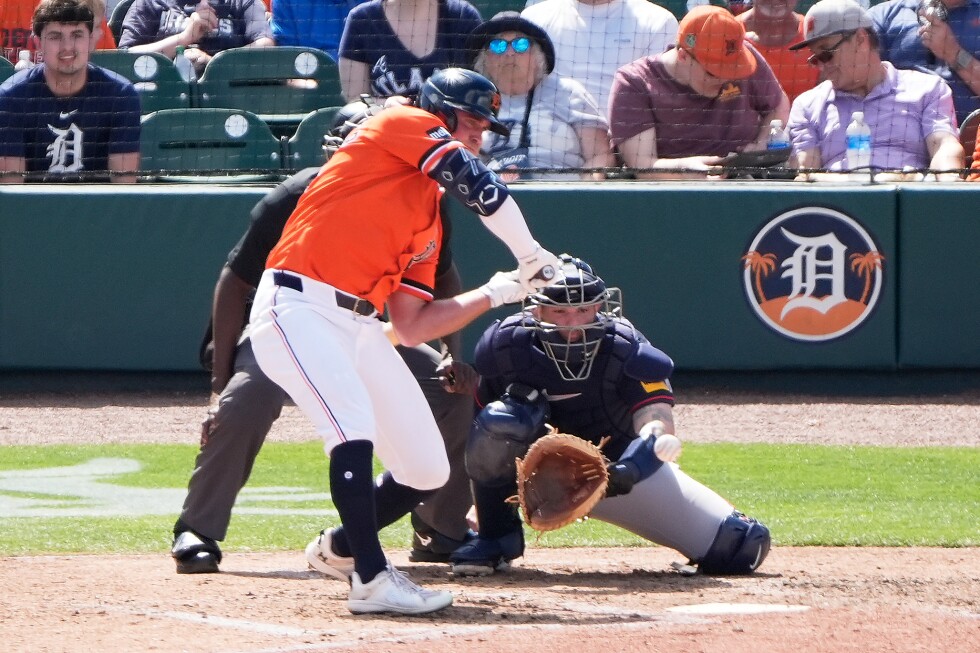
According to a memorandum sent to teams last week by MLB vice president of on-field strategy Joe Martinez, a swing will be definitively determined to have occurred if “the maximum angle between the bat head and the bat handle exceeds 45 degrees.” Martinez noted that during last year’s testing phase, the strikeout rate decreased by 3 percent.
Beyond checked swing challenges, umpires in the Triple-A International League will also begin applying the 45-degree threshold for determining swings starting May 5. This represents a significant shift, as the Official Baseball Rules have traditionally lacked specific criteria for what constitutes a checked swing, stating only that “a strike is a legal pitch when so called by the umpire, which is struck at by the batter and is missed.”
In addition to the umpiring technology, MLB is introducing several other experimental rule changes throughout the minor league system. One notable experiment involves repositioning second base to place it “entirely within the perimeter of the infield diamond” in the International League during the second half of the season. This adjustment would reduce the distance between first and second, and between second and third, by approximately 9 inches.
The league had previously enlarged bases from 15-inch squares to 18-inch squares in 2023, a change that decreased the distance between bases by 4.5 inches and led to an increase in stolen base attempts. However, MLB noted that the stolen base success rate dropped slightly from 80.2 percent in 2023 to 77.8 percent last year.
MLB is also testing modifications to its pitch clock rules after observing that the average time of nine-inning games increased slightly from 2 hours and 36 minutes in 2023 to 2 hours and 38 minutes last year. At the Triple-A level, teams will be assessed a mound visit if play is stopped due to issues with PitchCom, the electronic signaling device introduced in 2023. If a team has exhausted its mound visits, an automatic ball will be charged.
Additional pitch clock adjustments include maintaining the clock when catchers leave the box to give defensive signals and requiring all players except the pitcher, along with coaches, to leave the mound before the mound visit clock expires. Violations would result in an automatic ball being called.
The league is implementing stricter limits on batter timeouts as well. In High-A leagues, batters will not be allowed to request time if the bases are empty, while in Class A, no timeouts will be permitted at all, with exceptions for brush backs, potential injuries, or equipment problems.
Perhaps the most radical experiment will take place at the lowest levels of minor league baseball—the Arizona Complex League, Florida Complex League, and Dominican Summer League—where starting pitchers will be allowed to re-enter games after being removed. This unprecedented change requires the removed pitcher to have thrown at least 25 pitches during their final inning, allows re-entry only at the start of an inning, and limits pitchers to just one re-entry per game.
MLB officials have indicated that this particular rule is unlikely to be implemented at the major league level but is being tested to improve player development and health by allowing more flexible workload management for young pitchers.
At Double-A, pitchers will see their allowed disengagements from the rubber reduced from two to one per plate appearance, further tightening the pace-of-play restrictions introduced in recent years.
Fact Checker
Verify the accuracy of this article using The Disinformation Commission analysis and real-time sources.

8 Comments
The robot umpire technology seems like a logical step to help improve accuracy and consistency in ball-strike calls. It will be fascinating to see how the 45-degree swing threshold plays out in the Triple-A games. Hopefully, it leads to better officiating overall.
Expanding the robot umpire system to Triple-A is a significant development. I’m curious to see if the 3% strikeout rate decrease observed in the Florida State League trials holds true at the higher level. This could have interesting implications for player strategy and the viewer experience.
I’m glad to see MLB testing new technologies to enhance the game. Automating checked swing calls could be a game-changer, but I wonder how the human umpires will adapt to this shift in responsibility. Will it ultimately improve the overall quality of officiating?
Interesting to see MLB expand the robot umpire technology to the Triple-A level. I wonder how this will impact the game and the umpires’ role going forward. Curious to see the results of the 45-degree swing threshold.
This is a bold move by MLB, and I’m curious to see how it plays out. Automating checked swing calls could help reduce disputes and improve the overall game experience. However, it will be interesting to see how the human umpires adapt to this change in their responsibilities.
I’m excited to see the robot umpire technology expanding to the Triple-A level. Automating checked swing calls could be a game-changer, helping to improve the accuracy and consistency of officiating. I’m curious to see how this impacts the overall quality of the game and whether it leads to any unintended consequences.
The move to robot umpires for checked swing calls seems like a step in the right direction for improving the accuracy and consistency of officiating in baseball. I’m eager to see how this technology performs at the Triple-A level and what insights it might provide for potential future implementation in the majors.
This is a bold move by MLB to modernize officiating. Checked swings have always been a tricky call for human umpires, so automating that process could help improve consistency. But I’m also curious to see how players and fans react to the changes.