


Listen to the article
Massive Power Outage Plunges Western Cuba Into Darkness
A widespread blackout left millions of people without electricity across Havana and western Cuba on Wednesday, marking the latest crisis for an island nation already struggling with dwindling oil reserves and a deteriorating electric grid.
Government radio station Radio Rebelde reported that restoring operations at one of Cuba’s largest thermoelectric power plants, where a shutdown triggered the outage, could take at least 72 hours. The affected area stretched from the western town of Pinar del Rio to the central town of Camaguey, according to the government’s electric utility.
Energy and Mines Minister Vicente de la O Levy stated on social media that authorities were working to power critical infrastructure including hospitals and medical clinics while two power plants came back online.
“We are working to restore the National Electric System amid a complex energy situation,” Levy wrote on X, formerly Twitter.
The U.S. Embassy warned people to “prepare for significant disruptions” and conserve fuel, water, food and mobile phone batteries. “Cuba’s national power grid is increasingly unreliable, and scheduled and unscheduled power outages are prolonged and a daily occurrence across the country, including Havana,” the embassy stated.
By late Wednesday afternoon, the government reported that power had been restored to just 2.5% of Havana, approximately 21,100 customers. Officials emphasized that restoration efforts would be gradual and dependent on system conditions.
“We trust in the experience and effort of the electrical workers to overcome this situation in the shortest possible time,” Prime Minister Manuel Marrero Cruz wrote on social media.
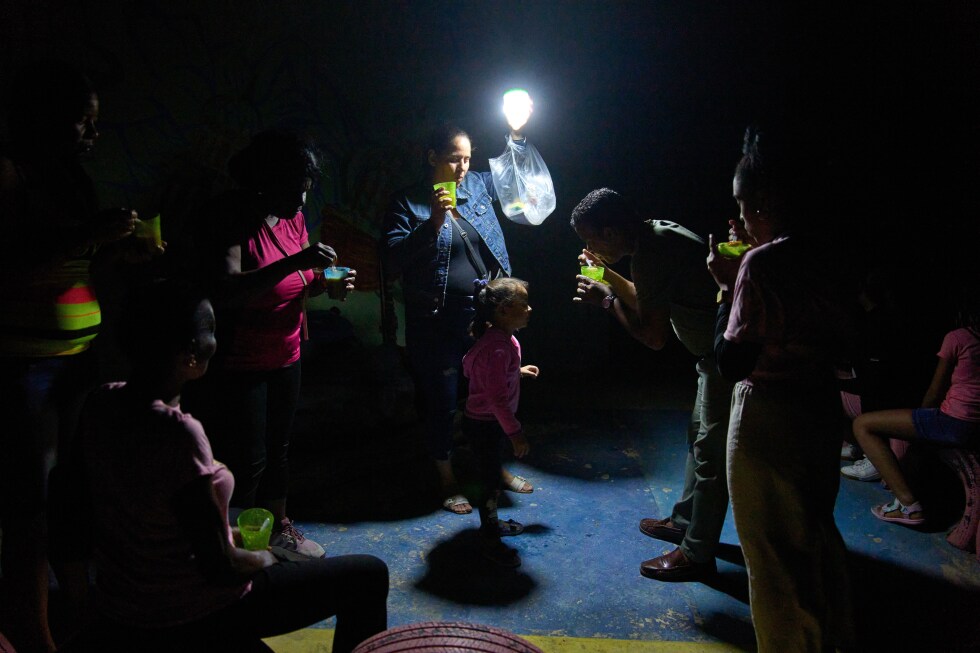
As darkness fell over the capital, Havana residents adapted to the situation in familiar ways. Many gathered on doorsteps or prepared “caldosas,” a popular communal soup where neighbors contribute ingredients like vegetables and meat, cooking over wood or charcoal fires. Along the city’s famous seawall, musicians played into the night while others entertained themselves with games of dominoes by rechargeable lights.
“With the power outages, this is the only thing we young people have to distract ourselves,” said Jeferson Silvera, a local resident.
For many Cubans, frequent power outages have become a fact of life. Genoveva Torres, 66, had been waiting for electricity to return at its usual time to prepare dinner and was dismayed to learn about the widespread blackout.
“My God, until when?” she exclaimed. “Then we won’t eat. We’ll have to eat bread again.”
According to state media, the outage was caused by a shutdown at the Antonio Guiteras thermoelectric power plant east of Havana following a leak in its boiler. Radio Rebelde quoted the plant’s technical director, Román Pérez Castañeda, saying crews needed to locate the fault before making repairs and restarting the unit. He explained that a pipe burst in the boiler, causing a water leak and subsequent fire, though the blaze was extinguished without major damage.
The blackout severely disrupted transportation, compounding problems for residents trying to navigate daily life. Without functioning traffic signals or public transport, approximately 200 people were observed waiting at a bus stop, trying to secure rides through hitchhiking or other means as buses weren’t operating due to fuel shortages.
“I need to be able to get home to see what I can do,” said 63-year-old Odalis Sánchez, who was caught out with her grandson. “Without power, you can’t do anything. My grandson also is studying and I have to make him food. Public transportation isn’t helping.”
This marks the second major outage to affect western Cuba in just three months. In early December, a blackout lasted nearly 12 hours after a fault in a transmission line linking two power plants caused an overload and led to the collapse of the energy system’s western sector.
Cuban authorities have acknowledged that some thermoelectric plants have been operating for over 30 years with minimal maintenance due to high costs. Officials also point to U.S. sanctions as preventing the government from purchasing new equipment and specialized parts.
The situation has been exacerbated by Cuba’s struggles with diminishing oil reserves. In January, U.S. actions against Venezuela disrupted critical petroleum shipments from the South American country. Later that month, U.S. President Donald Trump threatened to impose tariffs on any country selling or supplying Cuba with oil.
Last month, Cuba’s government implemented stringent fuel-saving measures and announced that jet fuel wouldn’t be available at nine airports until mid-March.
Despite the challenges, many Cubans maintain a resilient attitude. Ernesto Couto Martínez, 76, who was searching for transportation home, said he would face the latest outage “with the spirit that all Cubans have.”
“We must keep fighting. There’s no other way,” he said. “We have to move forward, blockade or no blockade.”
Fact Checker
Verify the accuracy of this article using The Disinformation Commission analysis and real-time sources.

11 Comments
A major blackout affecting millions is very disruptive. I’m glad to see the government working to bring key facilities back online, but a more resilient, flexible power system is needed to avoid such widespread outages in the future.
Agreed. Investing in renewable energy, smart grid technologies, and energy storage could help improve Cuba’s grid reliability and reduce vulnerability to single points of failure.
The outage highlights the importance of diversifying energy sources and modernizing grid infrastructure, especially in developing economies. Investing in renewable energy, smart grid technologies, and backup systems could help mitigate future disruptions.
Absolutely. Cuba’s reliance on aging fossil fuel plants makes the grid vulnerable to breakdowns. Exploring solar, wind, and other renewables could provide more sustainable and resilient power.
This blackout is a stark reminder of Cuba’s aging and fragile energy infrastructure. Restoring power quickly is the immediate priority, but the government should also develop a long-term strategy to modernize the grid and diversify generation sources.
This widespread power outage is a major challenge for Cuba. Maintaining reliable electricity is crucial, especially for critical services. I hope they can restore full operations quickly and take steps to upgrade the grid’s infrastructure and diversify energy sources.
Blackouts on this scale can have serious impacts on hospitals, businesses, and daily life. I hope the Cuban government can stabilize the situation and get the grid back to full operation soon. Strengthening the country’s energy resilience should be a top priority moving forward.
This outage comes at a difficult time for Cuba, compounding existing energy and economic woes. Restoring critical infrastructure like hospitals should be the top priority. Long-term, diversifying the energy mix and modernizing the grid will be crucial.
This is a challenging situation for Cuba’s energy infrastructure. Maintaining reliable power supply is crucial, especially for critical services like hospitals. I hope they can restore full operations quickly and take steps to strengthen the grid’s resilience.
A blackout of this magnitude is highly disruptive. I’m glad to see the government working to bring key facilities back online, but a more resilient and flexible power system is needed to avoid such widespread outages in the future.
It’s concerning to see such a widespread blackout in Cuba, which already faces economic challenges. Reliable electricity is essential for hospitals, businesses, and people’s daily lives. I hope the government can restore power quickly and take steps to strengthen the grid.