


Listen to the article
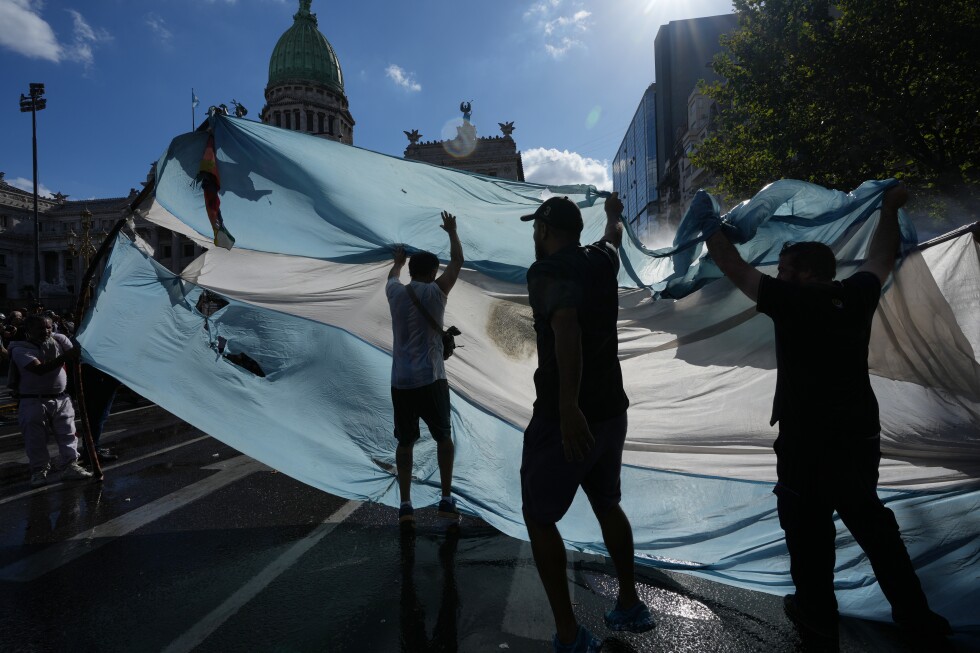
Argentina came to a standstill on Thursday as unions launched a nationwide general strike against President Javier Milei’s controversial labor reform bill, which subsequently passed the lower house of Congress early Friday morning with a vote of 135-115.
The sweeping protest disrupted daily life across the country, with buses and subways ceasing operations, banks shuttering their doors, and airlines canceling hundreds of flights. Public hospitals postponed all non-emergency surgeries, factories paused production, and garbage accumulated on streets as collection services were halted.
The labor reform bill, a cornerstone of Milei’s economic agenda, makes significant changes to Argentina’s half-century-old labor code. After gaining initial approval in the Senate last week, the legislation must return there for a final vote before becoming law, as lawmakers were forced to remove a provision that would have cut salaries in half for workers on non-work-related medical leave.
Union leaders and their supporters marched toward Congress in Buenos Aires, where tensions briefly escalated into violence as police deployed water cannons against protesters throwing stones and bottles. The General Confederation of Labor (CGT), Argentina’s largest trade union federation, issued a stark warning to lawmakers: “Voting against working people does not come without consequences.”
For Milei, a libertarian economist who took office last year, the reform represents a critical step toward attracting foreign investment and boosting productivity in a struggling economy where approximately 40% of workers operate in the informal sector without official registration or protections.
“To grow, we need more than just labor legislation. We need infrastructure, energy, universities,” said lawmaker Pablo Outes during Thursday’s debate, who supported the bill despite criticizing aspects of Milei’s economic approach.
The legislation introduces substantial changes to Argentina’s labor landscape, extending probation periods for new hires, reducing employers’ severance payment obligations, and limiting workers’ ability to sue when dismissed. It also allows companies to implement 12-hour workdays, up from the current eight-hour standard, and significantly curtails unions’ bargaining power and right to strike.
Unions argue these changes will erode worker protections that have been fundamental to Argentina’s social contract since the rise of Peronism, the country’s dominant populist political movement, in the 1940s. With approximately 40% of Argentina’s 13 million registered workers belonging to labor unions, according to union estimates, the political stakes are considerable.
While the strike paralyzed transportation networks, many shops and offices remained open, though with minimal staff as workers struggled to commute. Manuel Adorni, Milei’s chief of staff and government spokesperson, condemned the unions’ tactics as “perverse” and “extortionate,” arguing they undermined freedom and democracy.
The confrontation occurs against a backdrop of economic frustration. Milei’s aggressive fiscal austerity measures have helped tame Argentina’s runaway inflation but have yet to address persistent unemployment, stagnant wages, and anemic economic growth. Critics argue his approach primarily benefits the wealthy while imposing hardships on working-class Argentines.
As the labor standoff intensified at home, Milei was in Washington attending the inaugural meeting of U.S. President Donald Trump’s “Board of Peace” initiative. Trump publicly reiterated his support for the Argentine leader, saying, “I endorsed him. I’m not supposed to be endorsing people, but when I like people… I endorse foreign leaders.”
The legislation now faces its final hurdle in the Senate next week. If successful, it would represent a significant political victory for Milei’s administration. Previous attempts to reform Argentina’s labor system have repeatedly failed in the face of fierce union opposition. In 2000, then-President Fernando de la Rúa passed similar reforms, only to see them later reversed amid corruption allegations that he had bribed senators to approve the bill.
As the battle over Argentina’s economic future intensifies, the outcome of this legislative push will likely define the trajectory of Milei’s presidency and his ability to implement his market-oriented vision in a country with deep populist traditions.
Fact Checker
Verify the accuracy of this article using The Disinformation Commission analysis and real-time sources.

20 Comments
Interesting to see Milei’s labor reform bill advancing in Congress despite union protests. Curious to learn more about the specific changes and how they might impact workers and businesses in Argentina.
The union backlash suggests the reforms are quite significant. It will be important to balance worker protections with economic needs.
Milei is taking on a major challenge with this labor reform bill. Modernizing outdated laws is important, but the public backlash shows how politically charged the issue is.
It will be interesting to see how the Senate vote goes. Compromise may be needed to pass meaningful changes without sparking widespread unrest.
This is a high-stakes issue for Argentina’s economy and workers. While some reform may be warranted, the proposed changes seem quite radical based on the union reaction.
The removal of the medical leave provision is a positive sign, but more dialogue with unions will likely be needed to find a balanced solution.
This seems like a high-stakes political battle in Argentina. I’m skeptical of reforms that cut worker salaries, but the details will be important. Hopefully a compromise can be reached.
The general strike shows how divisive this issue is. Careful navigation will be needed to pass meaningful reform without provoking mass unrest.
Milei is taking on a major challenge with this labor reform bill, but the strong union resistance suggests the changes may be too extreme. More compromise and dialogue will likely be needed.
The removal of the medical leave provision is a step in the right direction, but further negotiations will be crucial to pass meaningful reform without sparking mass unrest.
Argentina’s labor laws have long been a point of contention. While change may be needed, it’s concerning to see unions protest so vehemently. The final legislation will be closely watched.
The removal of the medical leave salary cut provision seems like a step in the right direction. Balancing worker rights and business needs is crucial.
Argentina’s labor laws have long been a point of contention. Milei is clearly aiming for major overhaul, but the strong union pushback suggests the reforms may go too far.
It will be crucial for Milei to find a middle ground that addresses economic needs without undermining core worker protections.
This is a complex and politically charged issue in Argentina. While some reform may be warranted, Milei’s ambitious agenda appears to have triggered a major backlash from unions.
Finding the right balance between worker protections and economic needs will be critical as this legislation moves forward.
This is a high-stakes political battle in Argentina with significant economic implications. Milei’s reform agenda is ambitious, but the union resistance indicates the changes may be too extreme.
Careful negotiation and compromise will be needed to pass meaningful reform without triggering mass unrest and disruption.
Argentina’s labor laws are clearly in need of modernization, but Milei’s approach seems to have gone too far based on the widespread union protests. A more balanced solution is likely needed.
The removal of the medical leave provision is a positive sign, but further dialogue with workers and their representatives will be crucial going forward.