


Listen to the article
Middle East Airspace Closures Strand Thousands as Conflict Escalates
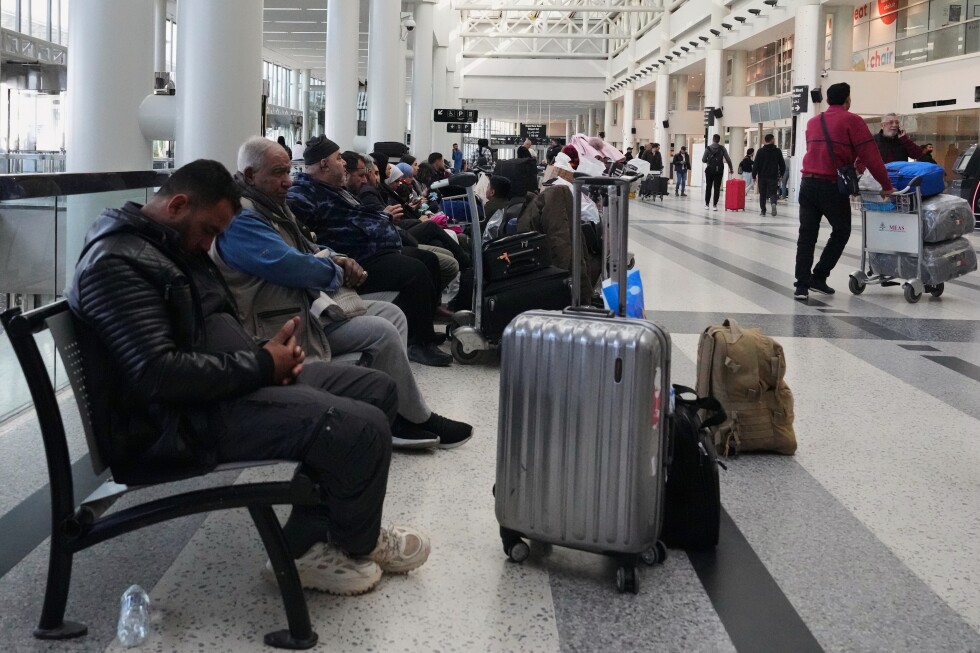
The attack on Iran by the United States and Israel has triggered massive flight disruptions across the Middle East, stranding tens of thousands of travelers as key hub airports shut down operations amid safety concerns.
More than 3,400 flights were canceled Sunday across seven major airports in the region, according to flight tracker Flightradar24. Major international hubs including Dubai and Abu Dhabi in the United Arab Emirates, Doha in Qatar, and Manama in Bahrain were among those closed as countries implemented airspace restrictions.
Emirates Airlines suspended all flights to and from Dubai until at least Sunday afternoon, while Qatar Airways announced Doha’s airport would remain closed until Monday morning at the earliest. Israeli airspace also remained closed, with national carrier El Al preparing recovery operations to repatriate stranded Israeli citizens once restrictions lift.
The closures affected airspace in multiple countries including Israel, Qatar, Syria, Iran, Iraq, Kuwait, and Bahrain. The UAE also announced what it called a “temporary and partial closure” of its airspace, effectively shutting down operations at crucial international hubs.
The impact is particularly severe given the strategic importance of these airports. The three major carriers operating from Dubai, Abu Dhabi and Doha — Emirates, Etihad, and Qatar Airways — typically handle approximately 90,000 passengers daily just for connecting flights, according to aviation analytics firm Cirium. When including passengers with final destinations in the Middle East, the number is significantly higher.
Airports Under Attack
The situation grew more serious after reports of attacks on airport facilities. Officials at Dubai International Airport — among the world’s busiest air hubs — reported four injuries, while Zayed International Airport in Abu Dhabi confirmed one fatality and seven injuries from what was described as a drone strike. Kuwait International Airport also reported being targeted.
The UAE government issued a statement condemning what it called a “blatant attack involving Iranian ballistic missiles.” While Iran has not publicly claimed responsibility, the strikes appeared to extend beyond the American military bases that Iran had previously indicated as potential targets.
“For travelers, there’s no way to sugarcoat this,” said Henry Harteveldt, airline industry analyst and president of Atmosphere Research Group. “You should prepare for delays or cancellations for the next few days as these attacks evolve and hopefully end.”
Operational and Economic Impact
Airlines still operating in the region must now implement substantial route changes, primarily diverting southward over Saudi Arabia. These diversions will add hours to flight times and significantly increase fuel consumption, driving up operational costs that could quickly translate to higher ticket prices if the conflict continues.
The increased traffic over alternative routes will also strain air traffic control systems in countries like Saudi Arabia, potentially requiring reduced traffic flow to maintain safety. Meanwhile, countries that have closed their airspace will lose substantial revenue from overflight fees normally paid by airlines.
Mike McCormick, a former Federal Aviation Administration air traffic control executive now teaching at Embry-Riddle Aeronautical University, suggested that partial reopenings might occur within the next 24-36 hours once military officials share information about operational zones and threat assessments.
“Those countries will be able to assess which portions of airspace can safely reopen while keeping high-risk areas closed,” McCormick explained. “The situation should evolve as military activity becomes more well-defined and as Iran’s capability to launch missiles is potentially diminished by the attacks.”
However, the duration of these disruptions remains uncertain. For context, a previous joint U.S.-Israeli operation against Iran in June 2025 resulted in airspace restrictions lasting 12 days.
Global Reverberations
The impact extends far beyond the Middle East. In Bali, Indonesia, authorities reported more than 1,600 tourists stranded after five flights to Middle Eastern destinations were canceled or postponed. Airlines have begun issuing travel waivers allowing affected passengers to rebook without additional fees.
British traveler Jonathan Escott described arriving at Newcastle Airport in England only to discover his Emirates flight to Dubai was canceled. “No one knows what’s happening,” Escott said. “Emirates doesn’t have a clue. No one has a clue about what’s going on with the conflict.”
Harteveldt’s advice to travelers is blunt: “If you haven’t left home yet, chances are you won’t be departing if your itinerary includes these destinations for at least several days, perhaps longer. And if you’re trying to return home, you’ll need to be extremely creative about finding alternative routes.”
Airlines are urging all passengers to verify flight status before heading to airports as the situation continues to evolve rapidly.
Fact Checker
Verify the accuracy of this article using The Disinformation Commission analysis and real-time sources.

8 Comments
The ripple effects of these airspace closures will likely be far-reaching. Not only are thousands of travelers stranded, but the disruption to logistics and supply chains could have significant impacts on the global economy, especially in the mining and energy sectors.
This is a complex and rapidly evolving situation. I hope the parties involved can de-escalate tensions and find a diplomatic solution to reopen the airspace as soon as possible. The human and economic costs of these closures are substantial.
This is a concerning escalation of tensions in the Middle East. The closure of key airports and disruption to air travel will have significant economic and humanitarian impacts. I hope the situation can be resolved quickly and safely.
This attack on Iran is deeply concerning. The closure of airspace across multiple countries will severely disrupt the movement of people, goods, and resources. I worry about the potential for further escalation and the impacts on global energy and commodity markets.
I share your concerns. Geopolitical tensions in this region have a way of spilling over into the economic realm. Investors will be closely monitoring developments for any signs of volatility in oil, metals, and other key commodity prices.
The airspace closures are a stark reminder of the fragility of global transportation networks. Thousands of travelers are now stranded, with ripple effects that will be felt far beyond the region. I wonder how long it will take to restore normal operations.
As an investor in the commodities and mining space, I’m closely watching how this situation unfolds. Geopolitical instability can have major implications for supply, demand, and pricing across a range of key resources. I hope the affected countries can reach a peaceful resolution.
As someone invested in the mining and commodities sectors, I’m closely watching how this situation unfolds. Geopolitical instability can have major implications for supply chains and commodity prices. I hope the affected countries can reach a diplomatic solution soon.