


Listen to the article
Big Tech’s data centers have become a flashpoint in communities across America, where residents are increasingly concerned about the strain these massive AI facilities place on local resources. Microsoft is taking a proactive approach to address these growing tensions.
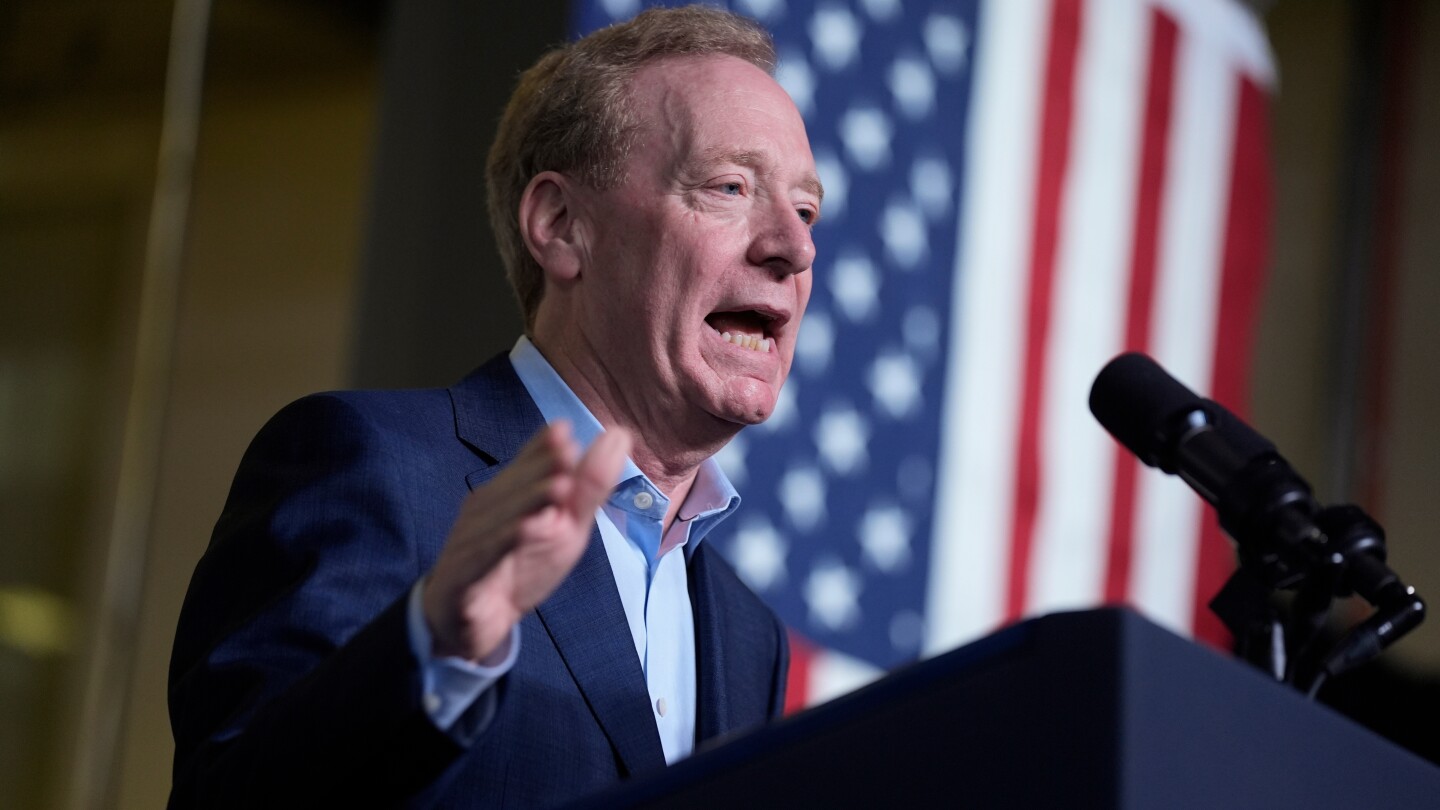
Microsoft President Brad Smith met with federal lawmakers Tuesday to advocate for an industry-funded model where tech companies, not taxpayers, would bear the full costs of the expansive computing infrastructure required to power AI systems like ChatGPT, Google’s Gemini, and Microsoft’s Copilot.
“Local communities naturally want to see new jobs but not at the expense of higher electricity prices or the diversion of their water,” Smith told The Associated Press in a recent interview.
The initiative gained unexpected support from President Donald Trump, who wrote on Truth Social that he does not want Americans to “pick up the tab” for these data centers or face higher utility costs as a result.
Smith’s campaign comes at a critical moment as data center developers increasingly face resistance in communities where they seek to build. Municipal boards across the country have rejected zoning applications and construction permits amid growing public concern.
Rising electricity prices represent a major concern. In the mid-Atlantic power grid region spanning 13 states, ratepayers have experienced higher bills since at least June due to data center demand, according to utilities and analysts. Experts predict these costs will continue to climb as payments to power plant owners increase to encourage construction of new generation capacity in hotspots like Virginia, Ohio, and Pennsylvania.
Water usage presents another contentious issue. Data centers require significant water resources to cool their electronic equipment, raising fears among residents about depleted wells and increased water utility bills. The combination of resource concerns has prompted communities to demand greater compensation from tech companies seeking approval for new facilities.
“People are asking not just pointed questions but completely reasonable questions,” Smith acknowledged. “It’s our job to address them head on and show that we can pursue this expansion in a way that fully meets their needs.”
Critics also point to the lack of transparency in power agreements. Data center operators often negotiate confidential bulk power deals with local utilities, making it difficult to determine whether these companies are truly covering their costs or shifting the burden to other ratepayers.
In Hobart, Indiana, the dynamics of these negotiations were on display last week when the City Council approved a tax-abatement package for Amazon’s multibillion-dollar data center. The deal includes two $5 million payments for building permits and an additional $175 million over three years at various project milestones. Opponents argue such financial arrangements unduly influence local officials’ decision-making.
Microsoft has encountered similar challenges in Wisconsin, where Smith grew up. The company has designated the area near Lake Michigan as the home of “the world’s most powerful AI datacenter,” with promises of hundreds of new jobs. While Democratic Governor Tony Evers has championed these projects as putting Wisconsin “on the very cutting edge of AI power,” environmental and consumer groups have raised alarms.
Clean Wisconsin, an environmental organization, has called for a pause on data center approvals until the state develops a comprehensive regulatory framework. Gubernatorial candidate Francesca Hong has proposed a moratorium on construction through her “CONTROL ALT DELETE” initiative until communities can better understand and mitigate environmental and energy impacts.
Despite these challenges, Smith remains confident in Microsoft’s approach. The company has committed to being carbon-negative by 2030, requiring both a reduction in emissions and the removal of more carbon than it emits annually. Microsoft has also pledged to invest in bringing new sources of carbon-free energy to regional grids, including nuclear, solar, and hydropower.
In Wisconsin specifically, Microsoft supports developing a comprehensive electricity plan but opposes pausing its current projects. The company has proposed a rate tariff to the public utility commission that would impose additional costs on Microsoft to help improve the state’s electricity grid, along with investments in renewable energy, including a 150-megawatt solar farm.
As data centers continue their expansion across America, the debate over their resource usage, environmental impact, and community benefits shows no signs of subsiding. Microsoft’s initiative represents an early attempt by Big Tech to address these concerns directly, potentially setting a precedent for how the industry navigates community relations in the AI era.
Fact Checker
Verify the accuracy of this article using The Disinformation Commission analysis and real-time sources.

10 Comments
Interesting update on Microsoft’s Brad Smith pushes Big Tech to ‘pay our way’ for AI data centers amid rising opposition. Curious how the grades will trend next quarter.
Good point. Watching costs and grades closely.
Good point. Watching costs and grades closely.
Production mix shifting toward Business might help margins if metals stay firm.
If AISC keeps dropping, this becomes investable for me.
Good point. Watching costs and grades closely.
Good point. Watching costs and grades closely.
Production mix shifting toward Business might help margins if metals stay firm.
Uranium names keep pushing higher—supply still tight into 2026.
Good point. Watching costs and grades closely.