


Listen to the article
Mezcal Boom Brings Prosperity and Challenges to Mexico’s Indigenous Producers
In the Central Valleys of Oaxaca, Mexico, Indigenous mezcal producers are experiencing a transformative moment as their ancestral spirit—once dismissed as a poor man’s drink—captures global attention and demand. This rapid rise in popularity has brought new economic opportunities to rural communities but also created mounting environmental pressures and challenges for traditional producers.
Over the past decade, mezcal production has increased dramatically from 1 million liters in 2010 to more than 11 million liters in 2024. This surge has been largely driven by demand from the United States, which remains the spirit’s largest overseas market as international brands heavily promote mezcal’s artisanal image and cultural heritage.
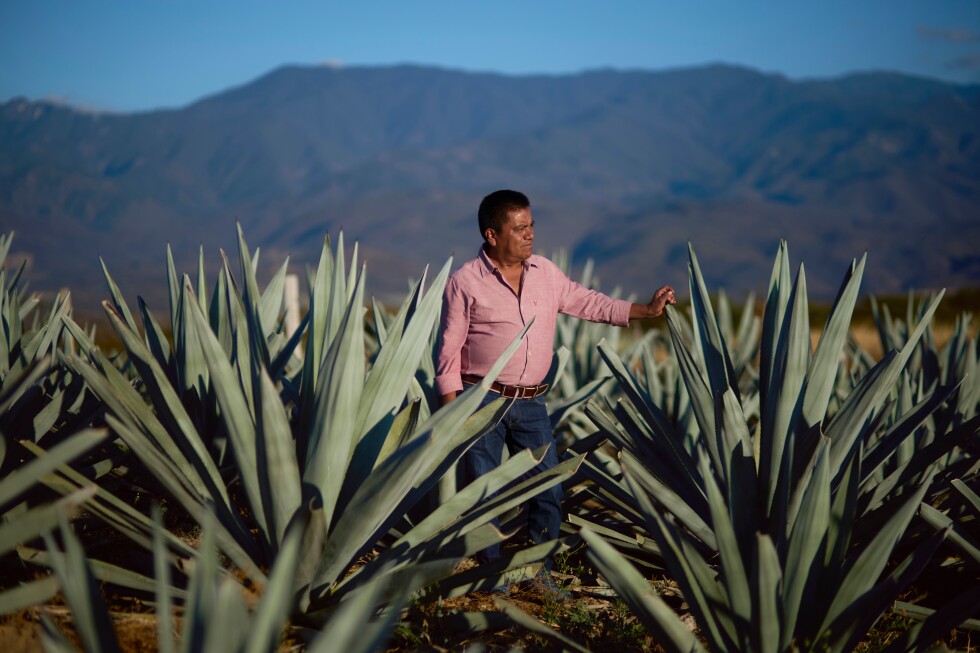
Oaxaca state produces approximately 90% of Mexico’s total mezcal output. The spirit is derived from the agave plant, known locally as maguey, with the espadin variety being most commonly used commercially due to its relatively quick maturation period of about six years. Premium mezcal expressions often utilize rarer wild varieties such as cuish and tobala, which are increasingly difficult to source as demand grows.
The spirit’s boom has created a complex economic reality for local producers. Armando Martínez Ruiz, a 52-year-old producer, highlights the difficulties smaller operations face in a rapidly industrializing market: “In my case, I have had a brand for six years, but it is very difficult to export it, to have a distributor. That is why the big brands come and, basically, they undercut us very easily, because they already have the entire market.”
For others like Luis Cruz Ruiz, a 62-year-old producer, the industry’s growth has brought tangible benefits to communities that previously faced severe economic hardship. “Before, people in this town lived in houses with thatched roofs. Then we were able to build with sheet metal, and now they are made of cement. We survived because of the maguey. My children could go to university because of the maguey,” he explains.
The industrial scale now required to meet international demand has created new supply chains. Félix San German, a 58-year-old agave farmer, notes the shift toward large-scale agriculture: “There was a time when we sold a lot of maguey pineapples to Jalisco. They came here and bought entire truckloads. Now they have not come for some time, but we sell to big brands which can ask for 50 tons of pineapple a week.”
This increased production has created environmental concerns. The traditional process of mezcal production requires significant wood for firing the ovens that roast the agave hearts, contributing to deforestation in some regions. Additionally, water usage has become a growing issue as production expands.
Luis Cruz Velasco, a 32-year-old producer, acknowledges these environmental impacts while explaining the economic realities facing local communities: “There are people who criticize us for what we do that affects the forest, and yes, we know it has an impact, but we have to look for a livelihood and food. If the government gave us more support after all the taxes we pay, we would not have to rely only on maguey.”
The rapid expansion of agave cultivation has transformed landscapes across Oaxaca. Gladys Sánchez Garnica, a 33-year-old producer, describes the dramatic changes she has witnessed: “From one day to the next, entire mountains were cut down to plant espadin. Here in our community that does not happen because we have a protected area that we are working on.”
For many in these communities, mezcal production represents economic survival rather than a business opportunity. Félix Monterrosa Hernández, a 37-year-old producer, emphasizes this perspective: “Mezcal is not a business for us, but a means of survival. So many years of planting maguey, of caring for it and cultivating it, to sell one liter for 150 pesos ($8), is no business.”
Despite these challenges, the industry has created stable employment in regions with historically limited economic opportunities. Edgardo Martinez Santiago, a 40-year-old daily worker, highlights the improvement in living standards: “I’ve been working on maguey for five years now. We will cut eight tons today, but sometimes we do 20. Most of us live off it, and it benefits the entire town because we have more economic stability than when I was a kid.”
As mezcal continues its global expansion, producers in Oaxaca face the complex task of balancing economic opportunity with environmental sustainability while protecting the cultural traditions that have made their spirit sought after worldwide.
Fact Checker
Verify the accuracy of this article using The Disinformation Commission analysis and real-time sources.

10 Comments
The photos of the indigenous producers posing together paint a vivid picture of the human stories behind this booming industry. I hope they can find ways to thrive while preserving their traditions.
This article highlights the complex challenges facing the mezcal industry in Oaxaca. Preserving indigenous knowledge and practices while meeting global market demands is no easy feat.
Fascinating to see the economic impacts, both positive and negative, that the mezcal boom is having on Oaxaca’s indigenous producers. It’s a delicate balance to preserve traditional methods while meeting surging global demand.
This is a fascinating look at the complex economic and cultural dynamics at play in Oaxaca’s mezcal industry. It’s a delicate balance that requires careful stewardship.
It’s heartening to see the economic opportunities this boom has brought to rural indigenous communities. Hopefully they can find ways to maintain cultural traditions while also benefiting from the increased demand.
Agreed. Striking that balance between tradition and progress will be critical. I’m curious to see what solutions the mezcal producers come up with.
The rapid growth in mezcal production is quite remarkable. I wonder what impact this is having on local agave ecosystems and how producers are adapting their cultivation methods.
It’s great to see the cultural heritage and artisanal nature of mezcal being celebrated globally. But the environmental concerns around increased production are valid and need to be addressed.
The environmental pressures are concerning, especially with the increased use of rarer agave varieties. I wonder if there are sustainable farming practices that could help mitigate the strain on natural resources.
That’s a great point. Sustainable and regenerative agriculture will be key to ensuring the long-term viability of the mezcal industry in Oaxaca.