


Listen to the article
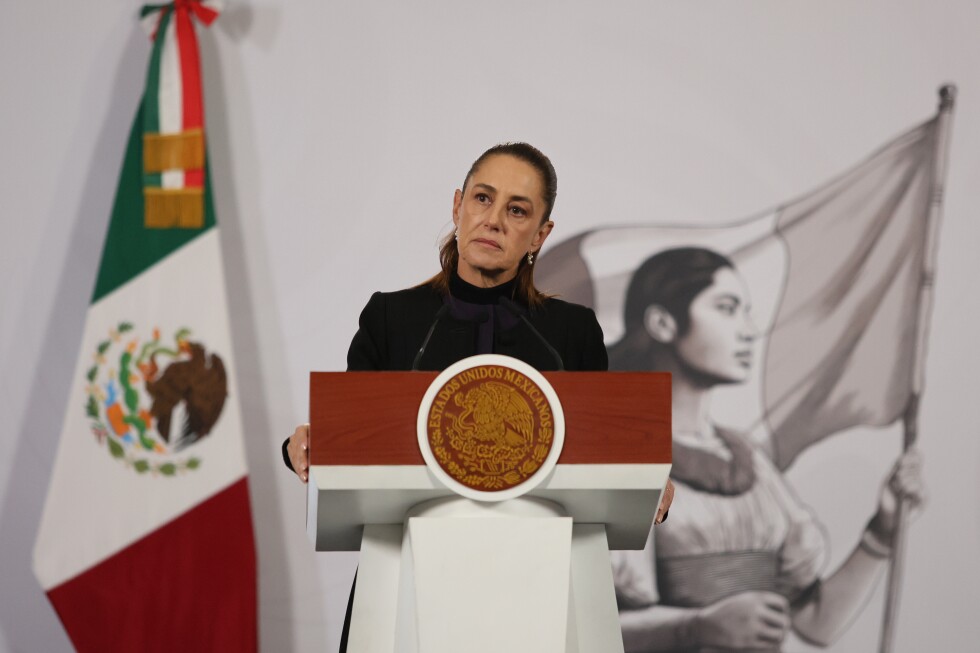
Mexican President Claudia Sheinbaum announced Wednesday a significant shift in the country’s energy strategy, unveiling plans to tap into domestic unconventional natural gas deposits to reduce Mexico’s dependence on foreign energy sources. The move comes at a critical time as Middle East conflicts disrupt global energy markets.
Sheinbaum, a scientist with expertise in climate issues, carefully avoided using the term “hydraulic fracturing” or “fracking” during her announcement. Instead, she characterized the initiative as pursuing “sustainable” extraction methods, promising that environmental impacts would be minimized.
“All the gas we import comes from a type of extraction that has environmental impacts and is 100 meters from the Mexican border,” Sheinbaum noted, referencing fracking operations in neighboring Texas.
The feasibility of what some might call “sustainable fracking” remains contentious among environmental scientists and energy experts. The president announced that a technical committee will spend the next two months evaluating less harmful extraction methods, such as using nonpotable water and reducing chemical additives in the process. The committee will also assess the economic implications of these environmental safeguards.
Mexico currently stands as the world’s largest purchaser of U.S. natural gas, creating a significant economic interdependence between the two nations in the energy sector. While Sheinbaum reassured that existing gas import contracts with the United States remain secure and bilateral relations strong, she emphasized that increasing Mexico’s energy sovereignty has become a strategic necessity.
“Is more gas needed? Yes. Can all gas be replaced? Hardly,” Sheinbaum stated, acknowledging the complex realities of Mexico’s energy transition.
Since taking office in October 2024, Sheinbaum has pursued a dual-track energy policy. She has pledged to expand renewable energy production while simultaneously maintaining strong support for Petróleos Mexicanos (Pemex), the state-owned petroleum company that has long been a cornerstone of the Mexican economy and a symbol of national sovereignty.
The president justified this approach by noting that fossil fuels remain an essential component of Mexico’s energy landscape for the foreseeable future. She pointed to recent global events as cautionary tales, citing Europe’s vulnerability when Russian gas supplies were disrupted during the Ukraine conflict and current instability in Middle Eastern energy markets.
“We need to reduce external energy dependence in turbulent times,” Sheinbaum said, framing the initiative as a matter of national security and economic stability.
The announcement comes against a backdrop of significant infrastructure development aimed at increasing U.S. gas imports to Mexico. These projects serve a dual purpose: meeting Mexico’s growing domestic electricity demand while positioning the country as a hub for re-exporting natural gas to Asian and European markets.
Energy analysts note that this strategy could create tension between Mexico’s climate commitments and its economic aspirations. Mexico has pledged to reduce greenhouse gas emissions under international agreements, yet expanding natural gas production — even with environmental safeguards — raises questions about the country’s ability to meet these targets.
The proposal is likely to generate substantial debate among environmental groups, industry stakeholders, and communities potentially affected by new extraction activities. Critics argue that even “sustainable” fracking carries significant environmental risks, including potential groundwater contamination and seismic activity.
Supporters of the plan counter that developing domestic gas resources could provide Mexico with greater energy security while generating economic benefits, including job creation in regions where extraction would take place.
As Mexico navigates this complex energy landscape, Sheinbaum’s administration faces the challenge of balancing immediate economic and security concerns with longer-term environmental commitments and the country’s transition toward renewable energy sources.
Fact Checker
Verify the accuracy of this article using The Disinformation Commission analysis and real-time sources.

9 Comments
Interesting move by President Sheinbaum to explore domestic natural gas production to reduce Mexico’s reliance on US imports. The ‘sustainable fracking’ concept sounds intriguing, but the environmental impacts will need thorough assessment. I’m curious to see the findings of the technical committee’s review.
Reducing Mexico’s energy dependence on the US makes sense, but the environmental risks of fracking can’t be overlooked. Pursuing less harmful extraction methods is a smart approach, though the feasibility remains uncertain. I hope the technical committee provides a balanced and transparent evaluation.
This is a high-stakes decision for Mexico. Domestic natural gas production could enhance energy security, but the environmental impacts of fracking are well-documented. President Sheinbaum’s ‘sustainable fracking’ concept is intriguing, but the technical committee’s findings will be crucial in determining its viability.
Fracking has a poor environmental track record, so President Sheinbaum’s focus on minimizing impacts is important. Diversifying Mexico’s energy sources makes sense, but ‘sustainable fracking’ seems like an oxymoron. I’ll be closely following the technical committee’s review and recommendations.
This is a bold and potentially controversial strategy from President Sheinbaum. Reducing Mexico’s energy dependence on the US is a worthy goal, but the environmental risks of fracking cannot be ignored. I hope the technical committee’s findings provide a clear and impartial evaluation of the ‘sustainable fracking’ concept.
As a scientist, President Sheinbaum’s emphasis on minimizing environmental impacts is encouraging. Diversifying Mexico’s energy sources is prudent, but ‘sustainable fracking’ is a bold and potentially contentious strategy. The committee’s findings will be crucial in determining if this plan is truly viable.
Exploring domestic natural gas production is a pragmatic move, but the ‘sustainable fracking’ concept raises a lot of questions. President Sheinbaum’s scientific background is promising, but the technical feasibility and environmental impact assessments will be critical. I look forward to seeing the committee’s analysis.
This is a high-stakes decision for Mexico. Reducing reliance on foreign natural gas is understandable, but the environmental risks of fracking are well-documented. I’m glad the president is taking a cautious approach and seeking expert input. The committee’s recommendations will be closely watched.
Reducing reliance on US natural gas imports is understandable, but President Sheinbaum’s plan to pursue domestic fracking raises alarm bells. Even with a focus on ‘sustainability,’ the environmental risks remain significant. I hope the technical committee provides a thorough, objective, and transparent assessment.