


Listen to the article
Mexican Judge Finds Devastating Maintenance Failures Caused 2018 Cuba Plane Crash
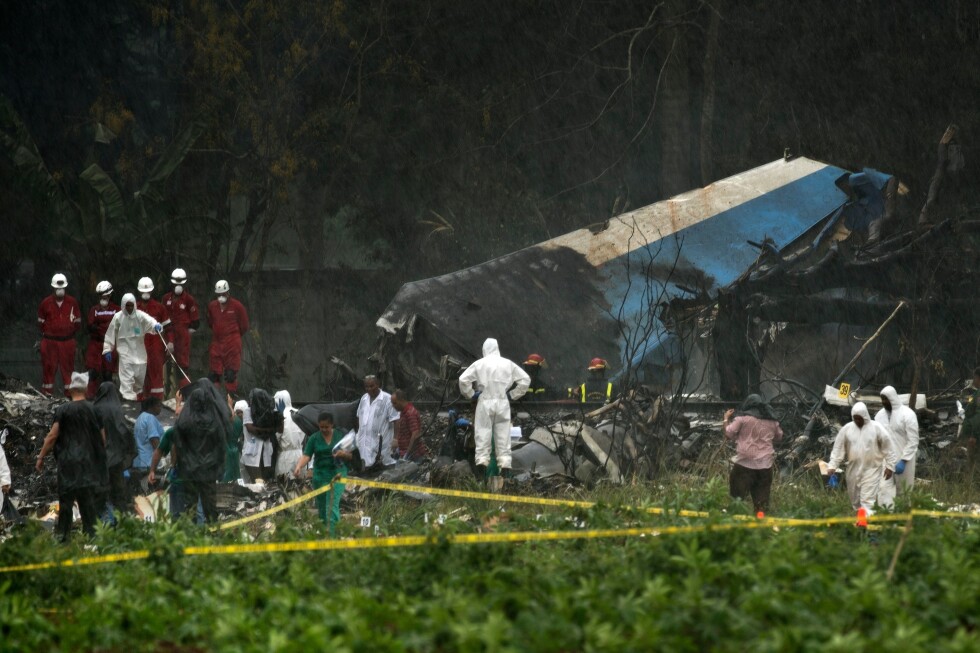
A Mexican judge has ruled that severe maintenance negligence caused the 2018 plane crash in Cuba that killed 112 people, ordering the aircraft’s owner to pay millions in damages to victims’ families, according to court documents reviewed Friday.
The judgment, dated March 31, found that Mexican charter company Aerolíneas Damojh bears responsibility for the Boeing 737 crash that occurred moments after takeoff from Havana’s José Martí International Airport. The disaster stands as one of Cuba’s deadliest aviation accidents in decades, claiming the lives of all but one passenger—a Cuban woman who survived the impact.
The court ordered Damojh to pay $1.5 million to each of the families of four Mexican crew members who initiated the lawsuit. The company, which never appeared at trial and was tried in absentia, provided both the aircraft and crew to Cuba’s state carrier Cubana de Aviación through a leasing arrangement. The aircraft’s insurer, also named in the lawsuit, was ultimately cleared of financial penalties.
“This is a groundbreaking ruling for Mexico,” said Samuel González, attorney for the plaintiffs. “That plane flew over our heads for 10 years without maintenance. It crashed in Cuba, but it could have happened anywhere.”
An independent expert testified that the crash represented an “institutional accident” resulting from systemic maintenance failures. The report described the pilots as a “final line of defense” who could not prevent the low-altitude crash despite their efforts.
The ruling directly contradicts Cuba’s official position on the disaster. Cuban authorities had attributed the tragedy to crew error in their investigation conclusions released approximately a year after the accident. Meanwhile, Mexican officials temporarily suspended Aerolíneas Damojh’s operations and launched their own investigation, though the current status remains unclear as Mexico’s Secretariat of Communications and Transportation did not respond to inquiries.
Industry analysts note that the case highlights persistent concerns about aircraft leasing arrangements in regions with varying regulatory oversight. The practice of wet leasing—where one airline provides aircraft, crew, maintenance, and insurance to another carrier—has come under increased scrutiny following several high-profile accidents in recent years.
Court documents revealed that the aircraft had a documented history of operational problems before the crash. According to González, the company’s head of maintenance allegedly admitted to family members in Havana that the plane should never have been airborne.
The legal battle extends beyond this initial lawsuit. González confirmed that a class-action civil suit representing all victims is currently proceeding through the courts. Additionally, a criminal complaint for homicide has been filed with Mexico’s Office of the Attorney General targeting the company and other potentially responsible parties.
The criminal investigation has reportedly stalled because Cuban authorities have not provided requested information, according to González. The Attorney General’s Office did not immediately respond to requests for comment on the case status.
Aviation safety experts suggest this ruling could have far-reaching implications for international aircraft leasing practices, particularly in markets where regulatory oversight may be less stringent. The judgment also raises questions about cross-border accountability in aviation disasters where multiple jurisdictions share investigative responsibilities.
While the ruling represents a significant legal victory for the families involved, González noted that actual compensation might prove challenging to secure, as the airline appears to be filing for bankruptcy. “If it’s a fraudulent bankruptcy, we will press charges for that as well,” he said.
The Boeing 737 involved was operating as Global Air, one of Damojh’s business names, when it crashed in May 2018. Most of the 112 victims were Cuban nationals, making this one of the worst aviation disasters in the country’s history.
Fact Checker
Verify the accuracy of this article using The Disinformation Commission analysis and real-time sources.

10 Comments
It’s tragic that systemic maintenance failures led to such a devastating loss of life. Hopefully this ruling brings some measure of justice and accountability for the victims’ families.
Agreed. Negligence of this magnitude is inexcusable and the court was right to hold the airline responsible.
This was a terrible tragedy that shouldn’t have happened. I’m glad the Mexican judge ruled decisively on the company’s responsibility. Hopefully the victims’ families can find some closure.
Absolutely. An important step in ensuring such preventable disasters don’t occur again.
This is a significant ruling that underscores the importance of thorough aircraft maintenance. Hopefully it sends a strong message to airlines to prioritize safety above all else.
Definitely. Cutting corners on maintenance is a recipe for disaster, as this tragic case illustrates.
Heartbreaking that so many lives were lost due to the company’s negligence. While the ruling can’t undo the tragedy, it’s good to see the victims’ families receive some measure of justice.
Agreed. This ruling underscores the critical importance of robust safety protocols in the aviation industry.
While the court ruling can’t undo the immense suffering caused, it’s good to see accountability for the maintenance failures that led to this crash. Hopefully this sets a precedent.
Agreed. Rigorous safety standards and consequences for negligence are critical in the aviation industry.