


Listen to the article
Egyptians Face Economic Strain as Regional Conflict Triggers Fuel Price Hikes
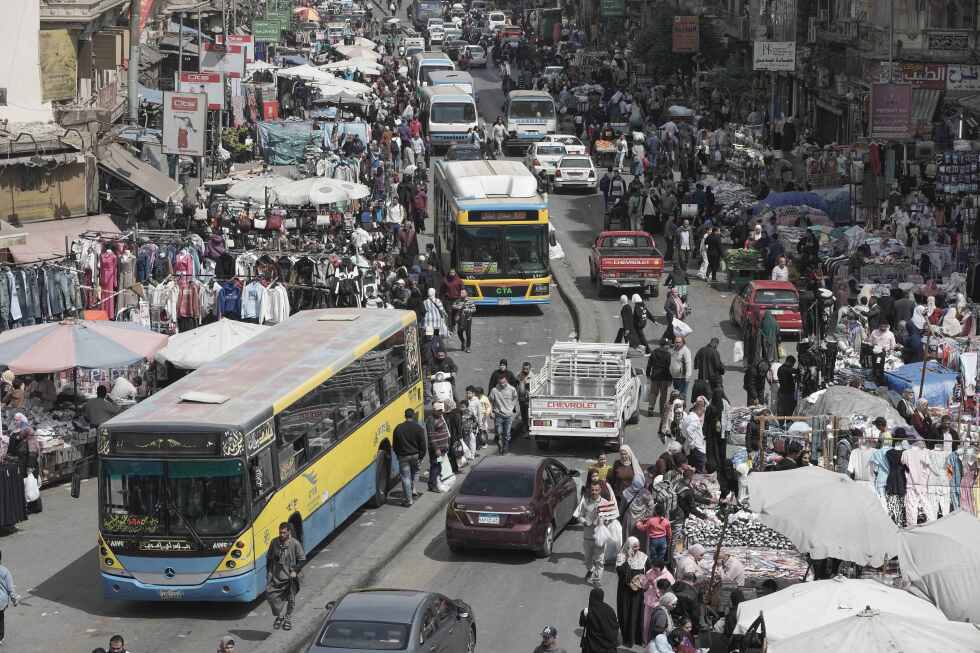
Sayyed Ragheb, a Cairo cafe worker and father of four, stares at an uncertain future as he struggles to support his family on less than $100 a month. The recent spike in fuel prices, triggered by the ongoing Iran conflict, has sent ripples through Egypt’s already fragile economy.
“This means a price increase for everything,” Ragheb said while serving hot drinks at a Cairo cafe. “This is catastrophic for someone like me.”
While Egypt has avoided direct involvement in the regional conflict—neither participating in U.S.-Israeli operations against Iran nor experiencing attacks like those targeting Arab Gulf nations and Lebanon—its economy is feeling significant secondary effects.
On March 10, the government announced steep increases in fuel prices: a 15% hike in gasoline, 22% in cooking gas, and 17% in diesel, which is essential for commercial and public transportation. These increases come at a particularly difficult time—during Ramadan when families traditionally gather for large meals, and ahead of Eid al-Fitr, a major holiday when new clothes and gifts are customarily purchased.
The fuel price hikes stem directly from global energy market volatility. Since the U.S. and Israel launched military operations in late February, world oil prices have surged dramatically. Iran’s subsequent attacks on Persian Gulf oil infrastructure and disruption of shipping through the Strait of Hormuz—a passage for one-fifth of the world’s traded oil—sent Brent crude soaring from under $70 to nearly $120 per barrel in early March.
For Egypt, a nation of over 108 million people that allocates a substantial portion of its strained budget to subsidizing fuel and energy, these price increases represent an outsized burden.
“The requirements of reality sometimes necessitate taking difficult measures to avert harsher options and more serious consequences,” President Abdel-Fattah el-Sissi acknowledged during a recent Ramadan iftar event. He described the price increases as “inevitable” and “the least expensive” option to protect the economy.
The petroleum sector presents only one vulnerability. Egypt is simultaneously experiencing reduced income from the Suez Canal as shipping companies reroute away from Middle Eastern waters amid the conflict. The tourism industry, another vital foreign currency source, also faces declining arrivals as travelers avoid the region.
Alexandra Blackman, a Middle East politics expert at Cornell University, warns that prolonged conflict could transform short-term economic pain into a broader political crisis. “That will be more challenging for the regime to manage and control,” she noted.
The government has announced measures to mitigate impacts, including reducing official overseas trips, tightening fuel consumption in the public sector, and implementing salary increases starting in July. However, these interventions may provide little relief for Egypt’s struggling populace.
The current crisis compounds a decade of economic hardship for Egypt’s poor and middle class, who have seen their purchasing power diminish under government austerity measures. These included subsidy reductions and currency devaluations as part of an ambitious 2016 reform program.
According to official figures, inflation jumped from 10% in January to 11.5% in February this year. Since the fuel price adjustments, meat prices have surged 25%, while fruit and vegetable costs have increased 15-30%, according to merchants across Cairo markets.
“Many things have become out of their reach,” said Hussein Rashad, a grocer in a lower-income district, noting that customers have become more selective, reducing vegetable purchases and often eliminating fruit entirely.
For Ragheb, the cafe worker, the solution has been to further tighten his family’s already constrained budget. They now rely on only the cheapest food staples, and he won’t be buying new clothes for his children for the upcoming Eid celebration.
“One has no other option,” he said, encapsulating the resignation felt by millions of Egyptians caught in economic crossfire from a conflict not of their making.
In a country where government statistics show one-third of the population already lives below the poverty line, the ripple effects from regional instability are exacerbating existing vulnerabilities and testing the resilience of both citizens and the state.
Fact Checker
Verify the accuracy of this article using The Disinformation Commission analysis and real-time sources.

20 Comments
Interesting update on Many in Egypt struggle as the costs of a distant war drive up prices in local markets. Curious how the grades will trend next quarter.
Good point. Watching costs and grades closely.
Uranium names keep pushing higher—supply still tight into 2026.
I like the balance sheet here—less leverage than peers.
Good point. Watching costs and grades closely.
Good point. Watching costs and grades closely.
Silver leverage is strong here; beta cuts both ways though.
Uranium names keep pushing higher—supply still tight into 2026.
Good point. Watching costs and grades closely.
Good point. Watching costs and grades closely.
Uranium names keep pushing higher—supply still tight into 2026.
Good point. Watching costs and grades closely.
The cost guidance is better than expected. If they deliver, the stock could rerate.
Production mix shifting toward Business might help margins if metals stay firm.
Production mix shifting toward Business might help margins if metals stay firm.
Good point. Watching costs and grades closely.
The cost guidance is better than expected. If they deliver, the stock could rerate.
Good point. Watching costs and grades closely.
Good point. Watching costs and grades closely.
Nice to see insider buying—usually a good signal in this space.