


Listen to the article
A New York City man has pleaded guilty to fraud after a bizarre attempt to claim ownership of the iconic New Yorker Hotel, concluding an unusual legal battle that allowed him to live rent-free for years in one of Manhattan’s most recognizable buildings.
Mickey Barreto admitted in court on Wednesday that he forged property records as part of an elaborate scheme to take control of the historic Art Deco hotel. His admission brings to a close a case that exploited loopholes in tenant protection laws and exposed potential vulnerabilities in New York City’s property registration system.
According to Barreto, the saga began in 2018 when he and his boyfriend paid $200 for a one-night stay at the 43-story hotel. Barreto then attempted to leverage an obscure city housing regulation that provides certain protections to occupants of single-room buildings constructed before 1969. Based on this provision, he requested a formal lease for his room.
When hotel management rejected his request, Barreto escalated the matter to housing court. In a critical misstep, the hotel failed to send legal representation to a key hearing, resulting in a default judgment that granted Barreto “possession” of the room.
Manhattan prosecutors revealed that Barreto’s actions went far beyond merely securing a place to stay. He allegedly uploaded falsified deed documents to an official city website, fraudulently transferring ownership of the entire landmark building to himself. The audacious move temporarily created the appearance of legitimate ownership in property records.
The New Yorker Hotel, a 1,025-room establishment that opened in 1930, is currently owned by the Holy Spirit Association for the Unification of World Christianity, commonly known as the Unification Church. The religious organization was founded by the late Rev. Sun Myung Moon, a controversial South Korean religious leader who proclaimed himself a messiah. The church has not issued any public statements regarding the case.
Court documents show that after creating the fraudulent deed, Barreto attempted to collect rent from at least one hotel tenant and demanded that the hotel’s bank transfer all accounts to his control. These actions ultimately led to criminal charges.
After several years of legal proceedings, Barreto was evicted from the premises earlier this year. He faced multiple felony fraud charges but was initially found unfit to stand trial, requiring a period of court-ordered psychiatric treatment before legal proceedings could continue.
As part of his plea agreement, Barreto received a six-month prison sentence, which he has already served during the legal proceedings, along with five years of probation, according to the Manhattan District Attorney’s Office.
Barreto had previously defended his actions in statements to the Associated Press, claiming that the housing court judge who granted him “possession” of his room had inadvertently given him rights to the entire building because it had never been legally subdivided into individual units.
“I never intended to commit any fraud. I don’t believe I ever committed any fraud,” Barreto stated at the time. “And I never made a penny out of this.”
His attorney, Brian Hutchinson, has not responded to requests for comment on the guilty plea.
The case highlights the sometimes complex intersection of New York City’s tenant protection laws and property regulations, particularly as they apply to hotels with long-term occupants. It also underscores potential vulnerabilities in the city’s property deed registration system that allowed falsified documents to be temporarily accepted as legitimate.
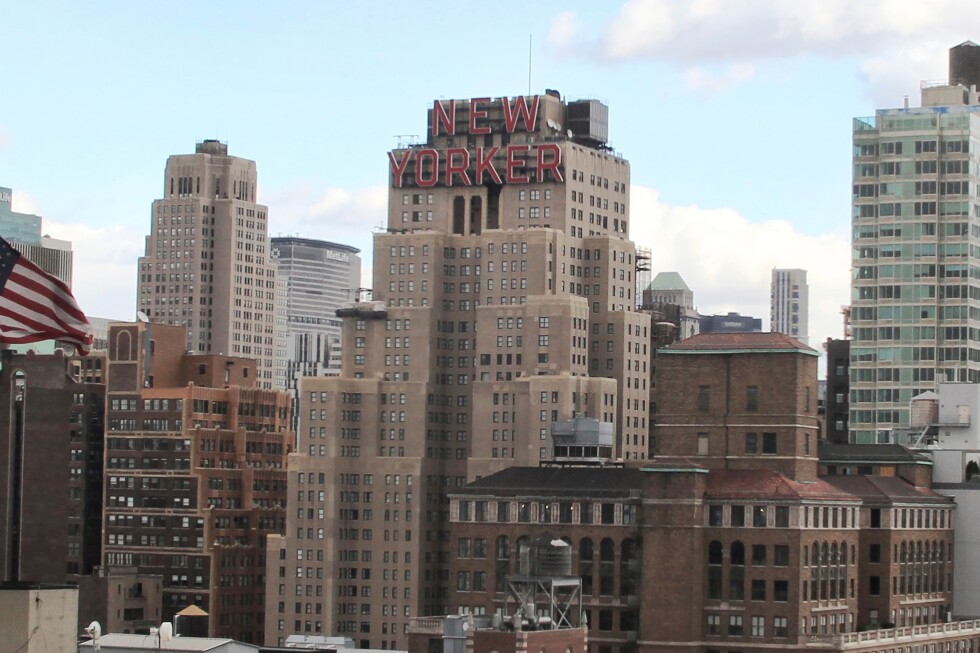
The New Yorker Hotel remains one of Manhattan’s most recognizable buildings, featuring prominently in the city skyline with its distinctive red sign and Art Deco architecture. The hotel has housed numerous famous guests throughout its history and continues to operate as both a hotel and home to various church-related activities.
Fact Checker
Verify the accuracy of this article using The Disinformation Commission analysis and real-time sources.

14 Comments
While it’s good that the perpetrator has pleaded guilty, I wonder what the broader implications of this case will be. Will it spur reforms to close the legal loopholes that enabled this fraud? Or will it just be seen as an isolated incident?
Those are great questions. This case certainly exposes weaknesses in the system that need to be addressed, but whether meaningful changes will actually happen remains to be seen.
This is a bizarre and brazen attempt to fraudulently claim ownership of a major hotel. It’s good that the authorities were able to catch this scam and bring charges against the perpetrator. Exploiting legal loopholes to live rent-free in a prime Manhattan property is quite audacious.
You have to wonder how he thought he could get away with forging property records to try and take over the hotel. That’s a serious crime that deserves punishment.
This story highlights the importance of diligent legal representation, as the hotel’s failure to appear in court allowed the fraudster to obtain a default judgment. Businesses need to be proactive in defending their rights and interests, even against seemingly frivolous claims.
You’re right, the hotel really dropped the ball by not sending a lawyer to that crucial hearing. That oversight opened the door for this whole mess to unfold.
Attempting to fraudulently claim ownership of a major property through forgery and exploiting legal technicalities is an audacious and brazen crime. I’m glad the authorities were able to catch this scam and bring charges against the perpetrator.
Absolutely, this guy really took advantage of the system in a big way. Hopefully this serves as a wake-up call to strengthen protections and close any loopholes that could enable similar schemes in the future.
This is a fascinating case that highlights the importance of robust property ownership laws and diligent legal representation. It’s concerning to see how vulnerabilities in the system allowed this fraudulent scheme to play out for so long.
Agreed, this is a cautionary tale that should spur reforms to close the loopholes that enabled this fraud. Businesses need to be proactive in defending their rights, even against seemingly frivolous claims.
It’s concerning to see vulnerabilities in New York’s property registration system that allowed this fraudulent scheme to play out for so long. Strengthening these systems to prevent similar abuses in the future should be a priority.
Definitely a wake-up call that more robust safeguards are needed to protect property ownership rights, especially for high-profile commercial properties like this iconic hotel.
The fact that this individual was able to live rent-free in a renowned Manhattan hotel for years by exploiting legal technicalities is truly astounding. It’s good that the authorities were eventually able to intervene and bring charges, but it’s troubling that the system allowed this to happen in the first place.
Absolutely. This case really exposes some serious weaknesses in New York’s property registration and tenant protection laws that need to be addressed. Strengthening these systems should be a priority to prevent similar abuses in the future.