


Listen to the article
Japan’s Carbon Export Plan to Malaysia Sparks Debate on Climate Solutions
Japan is preparing to embark on a groundbreaking project to ship carbon emissions to Malaysia, marking the first cross-border carbon capture and storage initiative in Southeast Asia. The plan, which could set a precedent for similar projects across the region, has ignited a heated debate among environmental experts and activists about its effectiveness in addressing climate change.
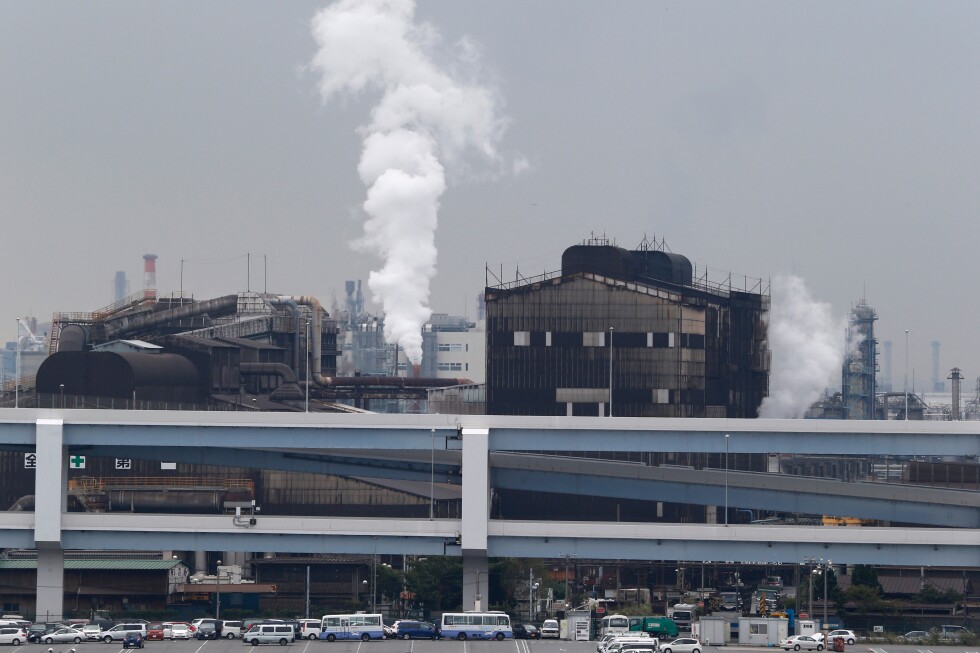
The ambitious project would capture carbon dioxide from Japan’s heavily polluting industries, including electric power, oil refining, cement, shipping and steel sectors. These emissions would then be transported to Malaysia within the next few years for permanent storage in depleted gas fields off the coast of Sarawak on Borneo island.
Malaysia is actively positioning itself as Southeast Asia’s hub for this alternative technology. Last year, the country passed legislation to promote the carbon capture industry, with the Ministry of Economy projecting the sector could contribute up to $250 billion to Malaysia’s economy over the next three decades.
At the heart of this initiative is Petronas, Malaysia’s state-owned oil and gas company, which is investing $1.1 billion to construct what will become the world’s largest offshore carbon storage facility. The project is scheduled to begin operations by the end of the decade, representing a significant bet on carbon capture technology.
For Japan, one of the world’s top five carbon emitters with fossil fuels generating most of its energy, the project represents a potential path toward meeting climate commitments. The country is investing in nine carbon storage sites globally, with three in Malaysia, aiming to store approximately 20 million tons of carbon annually by 2030 – roughly 2% of Japan’s yearly emissions.
The technical process involves capturing emissions directly from industrial sources, separating the carbon dioxide from other gases, liquefying it, and then transporting it in specially designed ships to burial sites. Once injected underground, these sites require ongoing monitoring to prevent leaks.
Despite support from major fossil fuel companies like Exxon Mobil and Shell, who promote carbon capture as a viable climate solution, critics remain deeply skeptical. Rachel Kennerley, a carbon capture specialist with the Center for International Environmental Law, argues that the plan “dangerously shifts the burden of climate change onto Malaysia rather than onto Japan.”
Environmental advocates describe the arrangement as “carbon colonialism,” allowing Japan to continue polluting while outsourcing the consequences. Ayumi Fukakusa of Friends of the Earth Japan has voiced strong opposition to the practice of exporting emissions to other countries, suggesting it perpetuates global inequities in climate responsibility.
The effectiveness of carbon capture technology itself remains contentious. While the International Energy Agency includes carbon capture in its toolkit for addressing climate change, its latest Net Zero Emissions scenario forecasts the technology will contribute less than 5% of emission reductions by 2050.
Grant Hauber from the Institute for Energy Economics and Financial Analysis describes the surge in carbon capture interest as “an almost fantastical theoretical uptick” that “offers a tantalizing promise that just won’t deliver.”
Local opposition in Malaysia centers on financial concerns as well. Eqram Mustaqeem, who has campaigned against carbon capture initiatives in the country, questions the substantial investment in “a technology that is under-delivering and unproven” rather than directing resources toward established decarbonization methods like solar energy deployment or grid improvements.
If successful, experts suggest the Japan-Malaysia project could establish a template for other Southeast Asian nations with carbon storage potential, such as Indonesia and Thailand. However, detractors worry it will ultimately slow progress on global efforts to reduce emissions, which are already falling short of targets needed to limit catastrophic climate change.
The arrangement would likely involve Japan paying Malaysia per ton of emissions stored, allowing Japan to subtract those emissions from its carbon accounting. However, specific financial details and implementation plans have not yet been publicly disclosed by either country’s government agencies.
As this pioneering project moves forward, it highlights the complex tensions between technological solutions, economic opportunities, and environmental justice in the global response to climate change.
Fact Checker
Verify the accuracy of this article using The Disinformation Commission analysis and real-time sources.

6 Comments
Cross-border carbon capture is a novel approach, but the concerns around its effectiveness in tackling climate change are valid. I hope the project is rigorously evaluated to ensure it delivers meaningful emissions reductions without creating other environmental issues. The devil will likely be in the details.
Interesting initiative, though the climate benefits remain uncertain. Seems like a complex undertaking with logistical and environmental challenges to navigate. I wonder how the project’s costs and emissions savings will compare to other carbon mitigation options.
This joint Japan-Malaysia carbon capture project seems like a bold attempt to address industrial emissions, but I agree the climate benefits are debatable. I’d be curious to learn more about the specific emissions sources being targeted and the storage plans. Transparency on the project’s performance will be key.
This cross-border carbon capture project is an ambitious move, but I’m curious to see the details on how it will be implemented and what the long-term environmental impacts might be. Capturing and storing emissions is a promising concept, but the execution is key.
You raise a good point. The long-term viability and scalability of this technology will be crucial factors in determining its climate impact. I hope rigorous analysis is done upfront to assess the full lifecycle costs and benefits.
Malaysia positioning itself as a carbon capture hub is an interesting strategic move. However, I share the concerns about the overall climate benefits, given the inherent challenges and uncertainties around CCS technology. Careful monitoring and transparent reporting will be essential.