


Listen to the article
For the Louvre Museum in Paris, the discovery of a decade-long ticket fraud scheme worth an estimated €10 million ($11.8 million) represents an unfortunate but “statistically inevitable” reality for an institution of its size and global prominence, according to senior leadership.
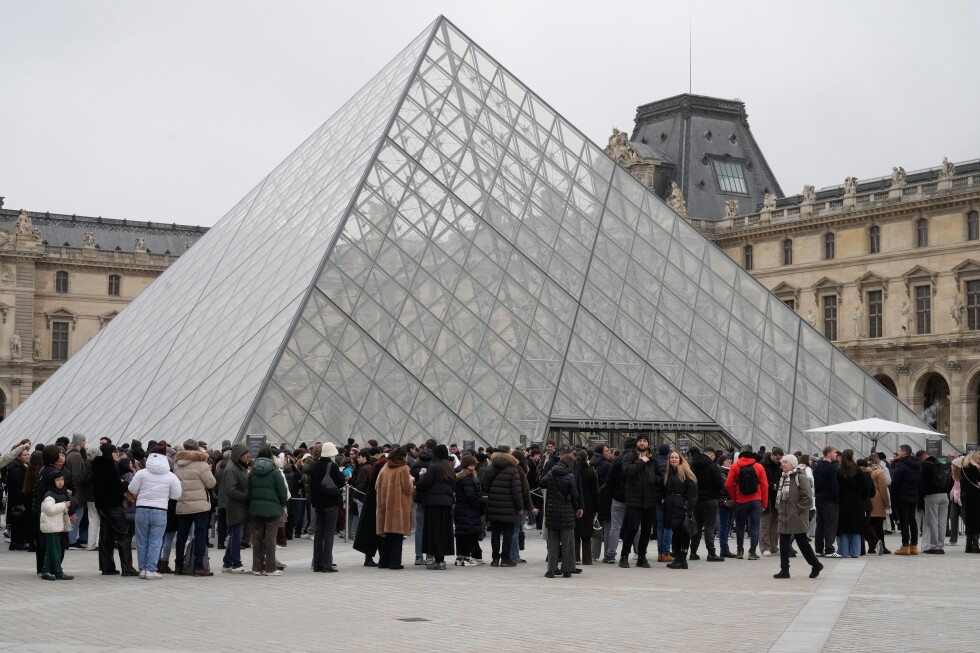
“Which museum in the world, with this level of attendance, would not at certain moments have some issues of fraud,” said Kim Pham, the Louvre’s general administrator and second-in-command, in an interview with The Associated Press. Pham, who oversees the museum’s day-to-day operations, pointed to the institution’s sheer scale as a factor in its vulnerability – 86,000 square meters of exhibition space displaying 35,000 artworks to approximately 9 million visitors annually.
Paris prosecutors revealed last week that nine individuals have been formally charged and brought before investigating judges in connection with the scheme. Among those detained are two Chinese tour guides accused of fraudulently reusing the same tickets multiple times for different tourists, allegedly with assistance from Louvre employees.
Investigators believe the operation may have brought up to 20 guided groups per day into the museum illicitly. The alleged fraud also involved tour guides splitting larger groups to avoid paying required “speaking fees” – commissions the museum charges tour operators.
The Louvre itself initiated the investigation by filing a complaint in December 2024. While declining to confirm the €10 million loss figure cited by prosecutors due to the ongoing investigation, Pham emphasized that it was the museum that alerted authorities to the suspected fraud.
The ticket scheme adds to a challenging period for the world’s most visited museum. Within the past year alone, the Louvre has weathered the high-profile theft of the French Crown Jewels from its Apollo Gallery in October 2025, water damage to valuable books, and multiple staff walkouts protesting poor working conditions, overtourism, and understaffing.
When asked if these incidents suggest an institution struggling to maintain control, Pham defended the museum by pointing to its complex history and architecture. “The Louvre is a historic building that began to emerge at the start of the 13th century and has had many historical layers up to the 20th century,” he said. “It is normal that in this complexity we have difficulties.”
Pham acknowledged imperfections in the museum’s security measures but rejected the notion that staffing shortages – a central complaint in recent labor actions – contributed to the ticket fraud. “Staffing is at the right level for those functions,” he insisted.
The administrator described ticket fraud as an evolving challenge in an increasingly digital environment. “Ninety percent of tickets today are bought online, on the web,” he explained. “So that is where major fraud takes place.” He cited fraudulent purchases with stolen credit cards as a significant issue in 2023, along with the theft and resale of free tickets and the production of counterfeit tickets.
Pham suggested that visitor caps implemented after the COVID-19 pandemic inadvertently created conditions ripe for fraud. “When you limit the number of people who can enter a museum each day, you increase the scarcity of the ticket and that brings fraudsters,” he said. “It was like for a concert with a star — it’s when places are limited that it creates even more fraud.”
In response to the ticket scheme, the Louvre has tightened its validation procedures. Individual tickets are now limited to two scans, while group tickets can only be scanned once – changes designed to prevent guides from repeatedly using the same tickets for multiple visitors. The museum has also implemented additional security checks both before visitors enter and inside the galleries.
The two Louvre employees implicated in the investigation have been suspended pending the outcome of the case, though Pham emphasized their presumption of innocence.
Meanwhile, the Louvre continues to grapple with the aftermath of October’s crown jewels heist, in which thieves stole treasures valued at approximately €88 million ($104 million). While several suspects have been arrested, the stolen items remain missing.
Fact Checker
Verify the accuracy of this article using The Disinformation Commission analysis and real-time sources.

8 Comments
The Louvre fraud scheme is deeply troubling. A museum of this significance should have robust safeguards in place to prevent such large-scale abuse. Hopefully this investigation leads to much stronger anti-fraud measures being implemented. Cultural institutions must be protected from exploitation.
This is a concerning case of fraud at a major museum. While some level of fraud is perhaps inevitable at institutions of such scale, it’s troubling that employees may have been involved in enabling this scheme. Rigorous oversight and controls are crucial to protect the integrity of cultural institutions.
You’re right, the Louvre’s size and volume of visitors likely make it vulnerable to some fraud. But the fact that employees allegedly assisted is especially egregious. Stronger safeguards and accountability are needed to prevent this from happening again.
It’s disappointing to see fraud occur at a renowned institution like the Louvre. While the museum’s scale may make it vulnerable, the involvement of employees is particularly concerning. Hopefully this case serves as a wake-up call to tighten controls and ensure the Louvre’s ticketing system is secure.
This is a troubling development for the Louvre. While the museum’s vast size and visitor numbers may make it prone to some fraud, the fact that employees allegedly colluded in this multimillion-euro scheme is especially disturbing. Rigorous oversight and accountability will be critical going forward.
Absolutely. The Louvre must take decisive action to shore up its ticketing systems and internal controls. Preserving the integrity of this renowned cultural institution should be the top priority.
The Louvre is an iconic institution that attracts millions of visitors annually. While some fraud is statistically inevitable, the scale and duration of this scheme is quite alarming. I hope the authorities get to the bottom of it and institute robust measures to secure the museum’s ticketing processes.
Agreed. The Louvre holds such immense cultural value, so it’s critical they get this situation under control. Improved oversight and security protocols should be a top priority to protect the museum’s assets and reputation.