


Listen to the article
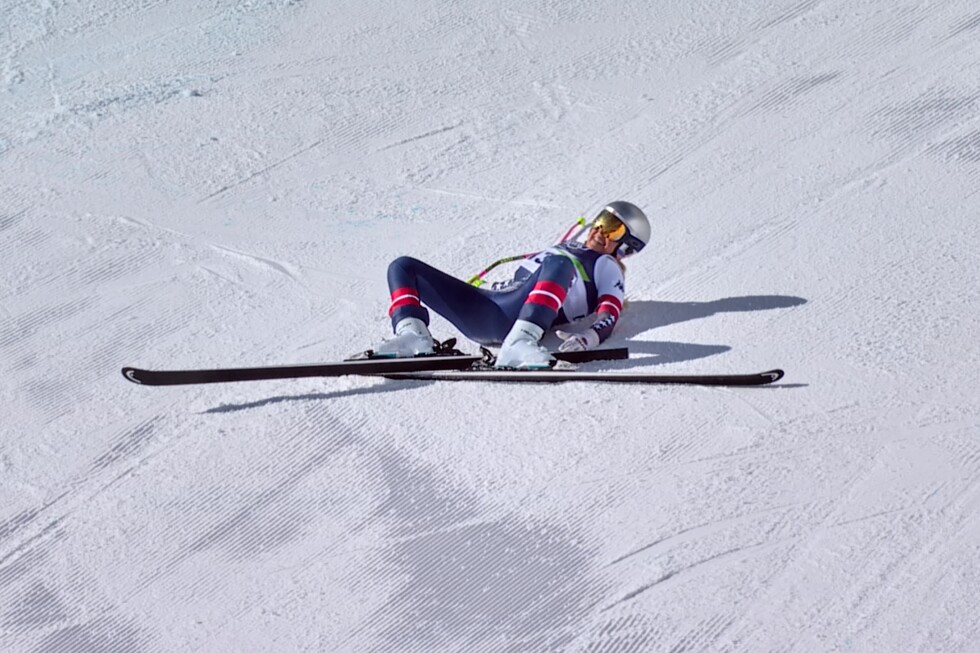
The harrowing images of Lindsey Vonn’s Olympic crash in Cortina d’Ampezzo have reignited urgent discussions about skiing safety, particularly the decades-old technology behind ski bindings. As the decorated American skier was airlifted off the course after suffering a complex tibia fracture, one detail stood out starkly to safety experts: her skis remained firmly attached throughout her violent fall.
This critical detail has launched renewed scrutiny of binding technology that has remained fundamentally unchanged for nearly half a century. Despite the sophisticated advancements in other aspects of winter sports, the basic mechanism that connects boots to skis relies on principles developed generations ago.
“Unfortunately, sometimes it does take horrific accidents to shine even more of a light on what can be done,” said Sophie Goldschmidt, president and CEO of the U.S. Ski and Snowboard Association. She emphasized that addressing this safety concern requires cooperation across national teams and governing bodies rather than competitive development.
Industry officials confirmed to The Associated Press that a “smart binding” system designed to automatically release skis when a racer loses control remains in development after years of stalled progress. Peter Gerdol, the International Ski and Snowboard Federation (FIS) women’s race director, was unequivocal in his assessment that such technology “would have surely” helped prevent Vonn’s severe leg fracture.
“Her skis would have definitely popped off,” Gerdol explained. “We’ve seen a lot of other cases in which the bindings don’t open and it results in knee issues, especially when the still-attached ski acts as a lever.”
This wasn’t Vonn’s first binding-related injury. Just nine days before her Olympic crash, she tore her ACL in Switzerland when her skis remained attached during another fall into safety nets.
The proposed smart binding system would borrow technology from the recently mandated safety air bag systems. “The idea is that the binding would be triggered by the same algorithm that prompts the air bag to inflate,” Gerdol said. “The heel piece would slide back and the athlete’s skis would pop off.”
Dainese and its sister company D-Air Lab, which developed the air bag algorithm after years of research, are now sharing their data with major binding manufacturers including Look, Tyrolia, Salomon, Atomic and Marker. However, the adaptation process presents significant challenges.
Marco Pastore, a Dainese representative, explains the complexity: “If you release a binding, you’ve got to be absolutely sure you do it at the right moment. For the air bag you can look at the rotations and the entire body position. But with the bindings you’ve got to examine how the feet move, what the trajectory of the skis is — plus a series of other variables.”
Financial obstacles also complicate implementation. “These are very costly projects and to be honest Dainese has not made much from the air bags,” Pastore admitted. “Right now it’s costing us money. Everyone wants these great things but at the end of the day someone has to pay for it.”
Sasha Rearick, former head coach of the U.S. men’s ski team, recalled similar discussions nearly a decade ago when he led the World Cup coaches’ work group. The primary challenge remains who will fund the substantial research and development required for such sophisticated safety systems.
Current estimates suggest implementation could be anywhere from two to six years away, according to Gerdol. Meanwhile, the stark reality is that elite racers continue to compete with bindings set to extreme resistance levels.
Leo Mussi, ski technician for American downhillers, revealed he sets racers’ bindings at up to 200 kilograms (440 pounds) of pressure—more than double what consumer bindings can handle. This virtually locks racers into their skis, prioritizing performance over the ability to release during falls.
Not all athletes are convinced more technology is the answer. Austrian racer Marco Schwarz, who suffered a serious knee injury when his skis didn’t release during a crash in Bormio last December, expressed hesitation. “The best way is to keep it simple,” Schwarz said. “I don’t want to push too much into more technology.”
The pace of safety advancements in ski racing has historically been gradual. The air bag system was first tested in 2013 but only became mandatory this season. Similarly, cut-resistant undergarments just became required equipment this year.
Safety concerns intensified following the tragic death of Italian skier Matteo Franzoso in a preseason training crash in Chile. “Unfortunately, it always takes something serious to happen for people to say, ‘No. Now we need to do something,'” Pastore observed.
While the smart-bindings system development continues, Rearick suggests more immediate safety improvements, such as standardized racing suits “that’s a little bit warmer, that’s a little bit slower, that’s cut-proof. That will make the sport a lot safer for everybody.”
For athletes like Vonn, whose career and health have been repeatedly impacted by equipment-related injuries, these developments may come too late. But their experiences are driving a renewed focus on updating safety standards in a sport where traditional technologies often lag behind the extreme performance demands placed on elite competitors.
Fact Checker
Verify the accuracy of this article using The Disinformation Commission analysis and real-time sources.

16 Comments
The fact that Lindsey Vonn’s skis didn’t come off during her Olympic crash is certainly concerning, as it highlights the limitations of the current binding technology. While it may have prevented even more severe injuries, it’s clear that the industry needs to invest in developing more advanced, ‘smart’ binding systems that can better adapt to high-impact crashes.
You’re absolutely right. This incident should serve as a wake-up call for the ski industry to prioritize innovation in binding technology. The cooperation of national teams, governing bodies, and equipment manufacturers will be crucial in driving the development of these new safety-focused systems. Skier safety should be the top priority, even at the elite levels of competition.
Interesting to hear that Lindsey Vonn’s skis didn’t come off during her crash. This highlights the need for continued innovation in ski binding technology to improve safety, even in the elite levels of the sport.
Agreed, the current binding systems have limitations that need to be addressed. Hopefully, cooperation across organizations can lead to the development of more advanced ‘smart bindings’ that can better protect skiers during high-speed crashes.
The fact that Vonn’s skis stayed on during her crash is both a blessing and a curse. On one hand, it likely prevented even more severe injuries, but on the other, it highlights the limitations of the current binding technology. Hopefully, this incident will spur greater innovation in this area.
You make a good point. While the skis staying on likely mitigated the severity of Vonn’s injuries, it also reveals the need for more advanced binding systems that can better adapt to high-impact crashes. This is a complex challenge, but one that deserves greater attention and investment from the industry.
It’s surprising to learn that ski binding technology has remained largely unchanged for decades, despite advancements in other winter sports equipment. Lindsey Vonn’s crash highlights the need for the industry to invest in the research and development of more sophisticated binding systems that can better protect athletes.
I agree. This incident is a wake-up call for the ski industry to collaborate and prioritize innovations that enhance skier safety. The fact that Vonn’s skis remained attached during her violent fall is both a blessing and a curse – it prevented even more severe injuries, but also reveals the limitations of the current technology. Addressing this safety concern should be a top priority.
It’s concerning that the fundamental binding technology has remained largely unchanged for decades, despite advancements in other areas of winter sports equipment. This incident reinforces the importance of prioritizing skier safety and exploring new binding designs.
You’re right, this accident serves as a wake-up call for the industry to invest more resources into developing innovative binding solutions that can better protect athletes at the highest levels of competition.
The fact that Lindsey Vonn’s skis didn’t release during her dramatic crash is certainly concerning. While it may have prevented even more severe injuries, it also underscores the limitations of the current binding technology. This is a critical safety issue that deserves urgent attention from the industry.
You’re absolutely right. This incident should serve as a catalyst for the ski industry to prioritize the development of more advanced, ‘smart’ binding systems that can better detect and respond to the forces involved in high-speed crashes. Skier safety should be the top priority, even at the elite levels of competition.
While it’s fortunate that Lindsey Vonn’s skis stayed on during the crash, the fact that the binding technology is outdated is worrying. I hope this incident spurs greater collaboration and a renewed focus on improving ski safety.
Absolutely. With the sophistication of modern sports equipment in other areas, it’s surprising that ski bindings have remained so static. This is a clear opportunity for the industry to make meaningful advancements in this critical safety aspect of the sport.
It’s remarkable that the basic ski binding mechanism has remained largely unchanged for decades, especially given the advancements in other winter sports equipment. Vonn’s accident is a stark reminder that this technology needs to evolve to better protect elite athletes.
Agreed. This incident highlights the importance of collaboration between national teams, governing bodies, and equipment manufacturers to develop innovative binding solutions that can enhance safety without compromising performance. The time for incremental improvements has passed – a more radical approach is needed.