


Listen to the article
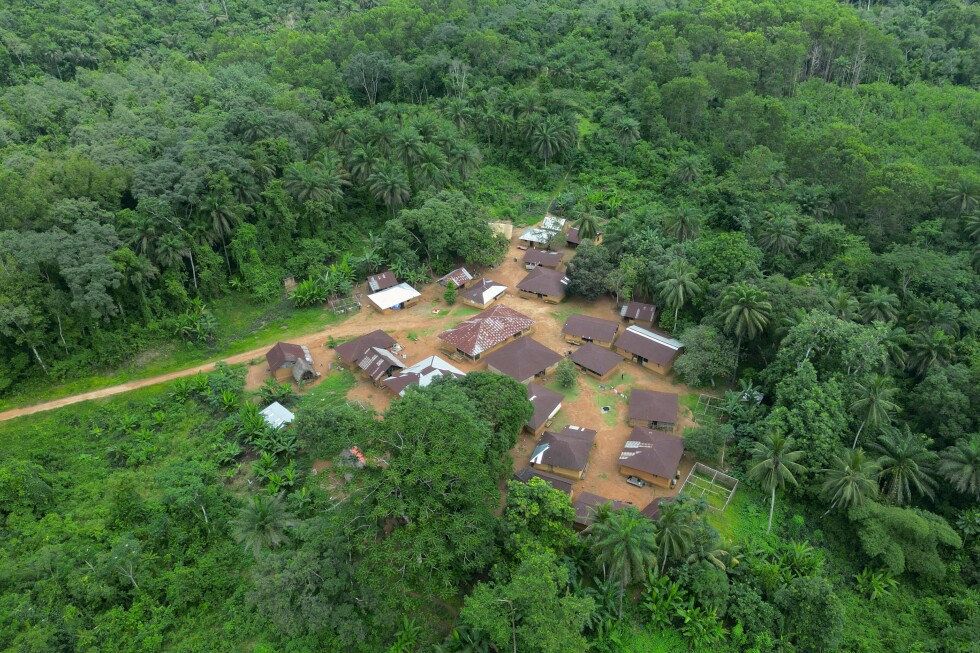
For generations, villagers in Jikandor, Liberia, relied on the local river for drinking water and fishing. Today, they’re abandoning their homes to escape what they describe as deadly pollution from the country’s largest gold mining operation.
“If we don’t move, we will die,” says Mustapha Pabai, the village chief, as he describes the community’s plight.
According to environmental reports and interviews with government officials, Bea Mountain Mining Corporation has repeatedly released toxic chemicals including cyanide, arsenic, and copper at levels exceeding Liberia’s legal limits. These revelations come from Environmental Protection Agency documents that were removed from the agency’s website but later recovered, along with testimonies from former company employees.
The documents paint a troubling picture of corporate negligence and regulatory failure. In one 2022 incident, Bea Mountain failed to promptly alert authorities after a spill, and on previous occasions, blocked government inspectors from accessing its laboratory to review water testing results.
“The incidents point to failures in corporate responsibility that can only be described as sustained negligence,” said Mandy Olsgard, a Canadian toxicologist who reviewed the EPA reports obtained during the investigation by The Associated Press and The Gecko Project.
These spills highlight the challenges facing Liberia, where the government holds a 5% stake in the mining operations but struggles with enforcement. Under Liberian law, the state can suspend or terminate licenses when miners fail to fulfill obligations, but the World Bank has cited limited government capacity as a barrier to effective oversight.
The gold extracted by Bea Mountain finds its way to Swiss refiner MKS PAMP, which supplies major global technology companies including Nvidia and Apple, though the investigation couldn’t confirm which companies ultimately used this particular gold. When contacted, MKS PAMP said it had commissioned an independent assessment of Bea Mountain’s largest operation, the New Liberty mine, in early 2025, but declined to share the findings, citing confidentiality. The company stated it would terminate its relationship if improvements aren’t made.
Between July 2021 and December 2022 alone, Bea Mountain exported more than $576 million worth of gold from Liberia while contributing $37.8 million to government coffers. The company is controlled by Murathan Günal through Avesoro Resources. Murathan is the son of Turkish billionaire Mehmet Nazif Günal, whose business interests include the Mapa Group. Neither Avesoro Resources nor Mapa Group responded to requests for comment.
Warning signs about environmental risks existed years before the Günals acquired Bea Mountain in 2016. Between 2012 and 2015, three separate consultancies flagged concerns about potential contamination. Canadian firm Golder Associates identified risks to local rivers from the New Liberty mine’s tailings dam, while Digby Wells consultancy specifically highlighted cyanide and arsenic as key threats. Before production began, SRK warned that arsenic could exceed World Health Organization drinking water standards without proper management.
Despite these warnings and pledges to adopt strict water management protocols including the Cyanide Management Code (a global standard requiring independent audits), Bea Mountain experienced its first documented spill in March 2016, during its first month of full production. Dead fish were reported downstream, and residents complained of skin rashes, though the company publicly stated “there has been no adverse impact on any human settlement.”
This marked the first of four EPA-confirmed cases where Bea Mountain exceeded government pollution limits. In June 2020, EPA inspectors discovered an unapproved wastewater system and were denied access to the company’s laboratory. That same month, Bea Mountain withdrew from the Cyanide Management Code without ever having undergone an audit—a move described as “uncommon” by Eric Schwamberger, a senior official at the International Cyanide Management Institute.
A particularly troubling incident occurred in May 2022, when dead fish appeared in Marvoe Creek, which flows past Jikandor village and into the Mafa River. The EPA reported that a spill from the company’s tailings dam had suffocated fish “due to exposure to higher than permissible limits” of cyanide. The company failed to notify authorities until after downstream communities began reporting dead fish, violating the requirement to report spills within 72 hours.
Villagers in Wangekor, more than 10 miles downstream, collected and ate the fish before any warning reached them, believing the sudden abundance was “a gift from God,” according to Philip Zodua, who represents communities along the river. Six residents claimed they and their families fell ill after consuming fish from the river in June 2022.
“They all were sick, vomiting, throwing up and going to the toilet the whole night,” said Korto Tokpa, describing children who had eaten the fish. Without medical testing, however, experts note there’s insufficient evidence to definitively link these illnesses to pollution.
EPA inspectors arriving days after the spill found arsenic and cyanide levels well above legal limits. Schwamberger stated that the cyanide concentrations reported were more than 10 times what “would typically be considered to be lethal to fish.”
Another spill in February 2023 involved “a huge quantity of raw copper sulfate” leaking into the environment. Six of nine water samples exceeded legal limits for cyanide and copper.
Despite these repeated violations, the EPA issued only one fine—$99,999 in 2018, which was later reduced to $25,000 for reasons that remain unclear. The current EPA leadership, which took office in 2024, has ordered Bea Mountain to hire an EPA-certified consultant and reinforce the tailings dam, stating firmly that “no entity is above the law.”
Following years of contamination, a legally binding agreement was finally reached in May 2025 for Bea Mountain to relocate and compensate Jikandor village, the community closest to the mine. Meanwhile, the company continues to explore new gold reserves elsewhere in Liberia.
Fact Checker
Verify the accuracy of this article using The Disinformation Commission analysis and real-time sources.

7 Comments
This is a concerning pattern of spills and regulatory violations by Bea Mountain Mining. I hope the relevant authorities in Liberia take decisive action to investigate these incidents, impose appropriate penalties, and ensure the company is held fully responsible for remediating any environmental damage and protecting public health.
I’m curious to know more about the specific legal and regulatory framework governing mining operations in Liberia. What gaps or weaknesses in the system allowed these repeated violations to occur without more serious consequences for the company?
That’s a good question. It seems like there are some significant enforcement and oversight issues that need to be addressed to better protect local communities from the environmental and health impacts of mining in Liberia.
Reliable access to clean water is a fundamental human right, so it’s extremely troubling to see a mining company putting an entire village’s water supply at risk through its negligent actions. This is an important story that highlights the urgent need for stronger environmental regulations and corporate accountability in the mining sector.
While mining can be an important economic driver, it’s clear that Bea Mountain Mining has prioritized profits over responsible environmental stewardship. The local communities shouldn’t have to bear the health and safety costs of the company’s negligence. I hope this story leads to meaningful reforms and stronger oversight of the mining industry in Liberia.
This is a disturbing report on the environmental and public health impacts of Liberia’s largest gold mining operation. It’s deeply concerning to see a major company repeatedly violate regulations and fail to properly address spills of toxic chemicals. The local communities deserve better protection and accountability from this industry.
Absolutely, this kind of corporate negligence is unacceptable. The regulatory agencies need to take stronger enforcement action to hold Bea Mountain Mining accountable and ensure they clean up the contamination.