


Listen to the article
Brazilian Courts Find Belo Monte Dam Failed to Meet Environmental Promises
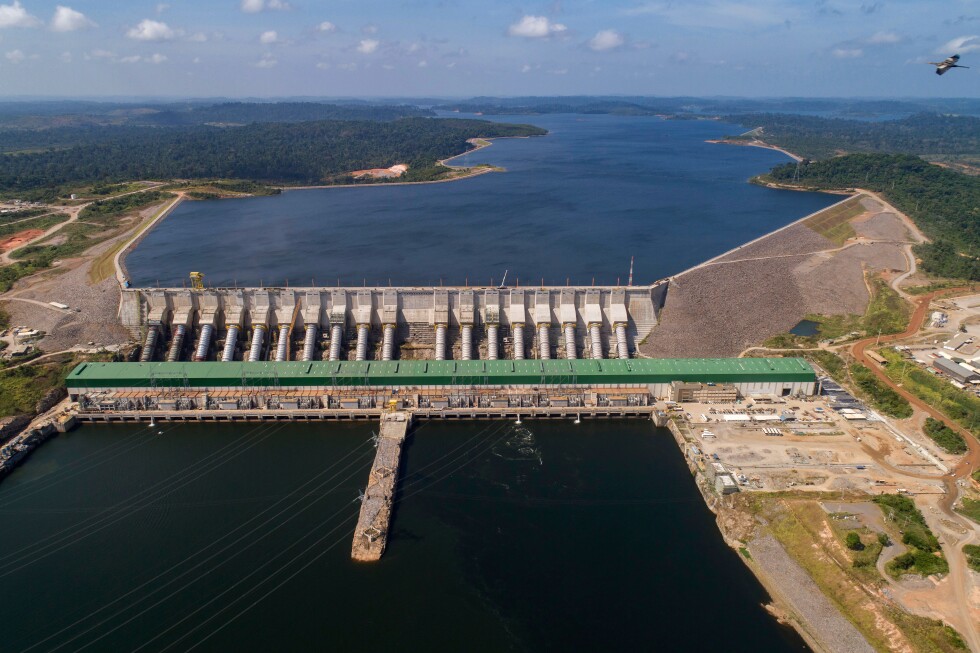
The Belo Monte hydropower plant in Brazil’s Amazon region, one of the world’s largest, has been found by Brazilian courts to have fallen short of its environmental and social commitments, confirming what local communities have claimed for years.
Initially designed to channel water from the Xingu River without requiring large reservoirs that would flood surrounding areas, the dam received approval on the condition that it wouldn’t threaten ecosystems or Indigenous communities along the river. A decade after operations began in 2016, courts have ruled that these requirements weren’t met.
“They were just confirming what we already knew,” said Ana Laíde Barbosa, a member of Movimento Xingu Vivo, which has fought against the project since 2008. “There was research, experience. There was ancestry and inherited knowledge.”
In December, Brazil’s Supreme Court ordered the federal government to pay 19 million reais ($3.6 million) in compensation to affected Indigenous communities. A local court also ordered Norte Energia, the dam’s operator, to supply clean water to communities whose natural sources dried up after construction.
Most significantly, a federal judge ordered the company to reassess how much water it diverts from the Xingu River to run its turbines. Norte Energia claims this ruling could reduce power output but notes no immediate changes will occur until all appeals are exhausted. The company has begun delivering water to some affected families, though local leaders report not all households have been registered.
The Belo Monte project represents a critical component of Brazil’s energy infrastructure, supplying approximately 10% of the country’s electricity. Though originally planned during the 1970s military dictatorship, the project was pushed forward by President Luiz Inácio Lula da Silva in 2010 during his second term.
The dam’s construction faced numerous legal challenges. In 2012, construction was temporarily halted after courts determined potentially affected communities hadn’t been properly consulted. Norte Energia has denied causing damages and maintains the dam didn’t displace or flood Indigenous communities.
The legal rulings come as Brazil prepares to implement new legislation passed by Congress last year that will fast-track approval of strategic infrastructure projects. Starting in February, licensing processes that previously took six to seven years will be completed within 12 months.
“That clearly means less rigorous scrutiny of social and environmental impacts,” warned Suely Araújo, policy coordinator at Climate Observatory, a network of environmental nonprofits.
The Juruna, one of more than two dozen Indigenous and traditional communities living along a 130-kilometer stretch of the affected Xingu River, have experienced profound changes to their way of life. The dam diverts 70-80% of the river’s flow, causing widespread fish die-offs, making navigation nearly impossible, and restricting access to neighboring communities, schools, and healthcare.
“The impact was huge — environmental, social, cultural. And psychological, too. Some people, like my father, suffered deeply in ways I had never seen before,” said Josiel Jacinto Pereira Juruna, a 33-year-old Indigenous leader.
Indigenous communities began monitoring the dam’s impacts in 2013, even before the river was dammed. The Indigenous monitoring group MATI later partnered with scientists from Brazilian universities and the National Institute for Amazonian Research, collecting evidence that helped prosecutors build their case.
The situation highlights the contradictions facing Brazil’s energy policy. Recent studies show that due to the Xingu River’s characteristics and intensifying droughts, the plant rarely operates at full capacity. Norte Energia has argued that revising water diversion could increase electricity prices and force greater reliance on thermal power plants, leading to higher carbon emissions.
Meanwhile, local residents face ongoing challenges. Raimundo da Cruz Silva, a fisherman who switched to cocoa farming after the dam’s construction, lives in the world’s largest rainforest and river basin yet struggles with water scarcity. Wells that once reached water at 2-3 meters now must be dug to depths of 15 meters, and even then “some still produce nothing.”
Natalie Unterstell, president of Brazilian climate think tank Talanoa, said Belo Monte demonstrates how impacts like altered river flows—often intensified by climate change—are frequently underestimated in planning.
“Belo Monte is a reminder that climate leadership is not just about curbing deforestation or making speeches at COP summits,” said Unterstell. “It is also about how the state plans, operates and corrects infrastructure in an era of climate change.”
While shutting down Belo Monte isn’t currently under consideration, experts suggest that future renewal of its operating license should be contingent on measures to reduce environmental and social impacts.
“Brazil’s history with hydropower must be a learning process,” Araújo said. “We can’t accept that social and environmental impacts are ignored. They must be assessed with the highest level of rigor.”
Fact Checker
Verify the accuracy of this article using The Disinformation Commission analysis and real-time sources.

13 Comments
This is a complex issue with valid concerns about environmental and social impacts of large dams. The courts’ rulings suggest the project failed to adequately address Indigenous communities’ needs and protect the local ecosystem. It raises questions about Brazil’s reliance on hydropower and the balance between energy development and sustainability.
This is a cautionary tale about the unintended consequences of large infrastructure projects, even when approved with certain conditions. The courts’ findings suggest the environmental and social impacts of the Belo Monte dam were not adequately assessed or addressed. It’s a wake-up call for more rigorous oversight.
Brazil’s hydropower ambitions are understandable given its abundant river resources, but this case shows the risks of prioritizing energy production over environmental and community protections. A more balanced, sustainable approach is needed to develop the country’s resources responsibly.
While hydropower is a valuable renewable energy source, the Belo Monte case shows that projects must be designed and implemented with robust safeguards. The courts’ rulings indicate that the social and ecological impacts were not adequately addressed, which is concerning.
The Belo Monte dam controversy illustrates the tensions between economic development and environmental/social justice. While Brazil needs reliable energy, projects like this that damage ecosystems and displace Indigenous people are concerning. A more holistic, collaborative planning process seems warranted.
The legal setbacks against the Belo Monte dam underscore the challenges of balancing economic development and environmental protection, especially in sensitive regions like the Amazon. Brazil will need to re-evaluate its approach to large-scale hydropower projects to ensure they don’t cause unacceptable harm.
Agreed. The courts’ rulings indicate that the initial approval process for this project was flawed and failed to properly consider the long-term impacts. More transparent, inclusive, and evidence-based decision-making is needed for major infrastructure projects in the Amazon.
This case highlights the need for rigorous, independent monitoring and enforcement of environmental and social commitments for large projects like the Belo Monte dam. The courts’ findings suggest the operator and regulators failed to uphold the conditions of the original approval.
The legal setbacks against the Belo Monte dam are a reminder that economic development cannot come at the expense of environmental and community wellbeing. Brazil’s reliance on hydropower in the Amazon deserves closer scrutiny to ensure a more sustainable, equitable approach.
The legal setbacks against the Belo Monte dam are a wake-up call about the need for much more rigorous environmental and social impact assessments for major infrastructure projects, especially in biodiverse regions. Brazil must find a more sustainable path forward for its energy development.
This is a complex issue without easy solutions. Brazil needs reliable energy, but the Belo Monte dam’s failures to meet environmental and social commitments raise serious questions about the country’s heavy reliance on hydropower, especially in sensitive regions like the Amazon.
Interesting that the dam was approved with the condition it wouldn’t threaten ecosystems or Indigenous communities, but a decade later the courts found it did not meet those requirements. This highlights the importance of robust environmental and social impact assessments upfront, and ongoing monitoring to ensure commitments are upheld.
Absolutely, the long-term effects of large infrastructure projects like this need to be carefully considered. Relying on promises and projections is not enough – the actual impacts must be rigorously evaluated over time.