


Listen to the article
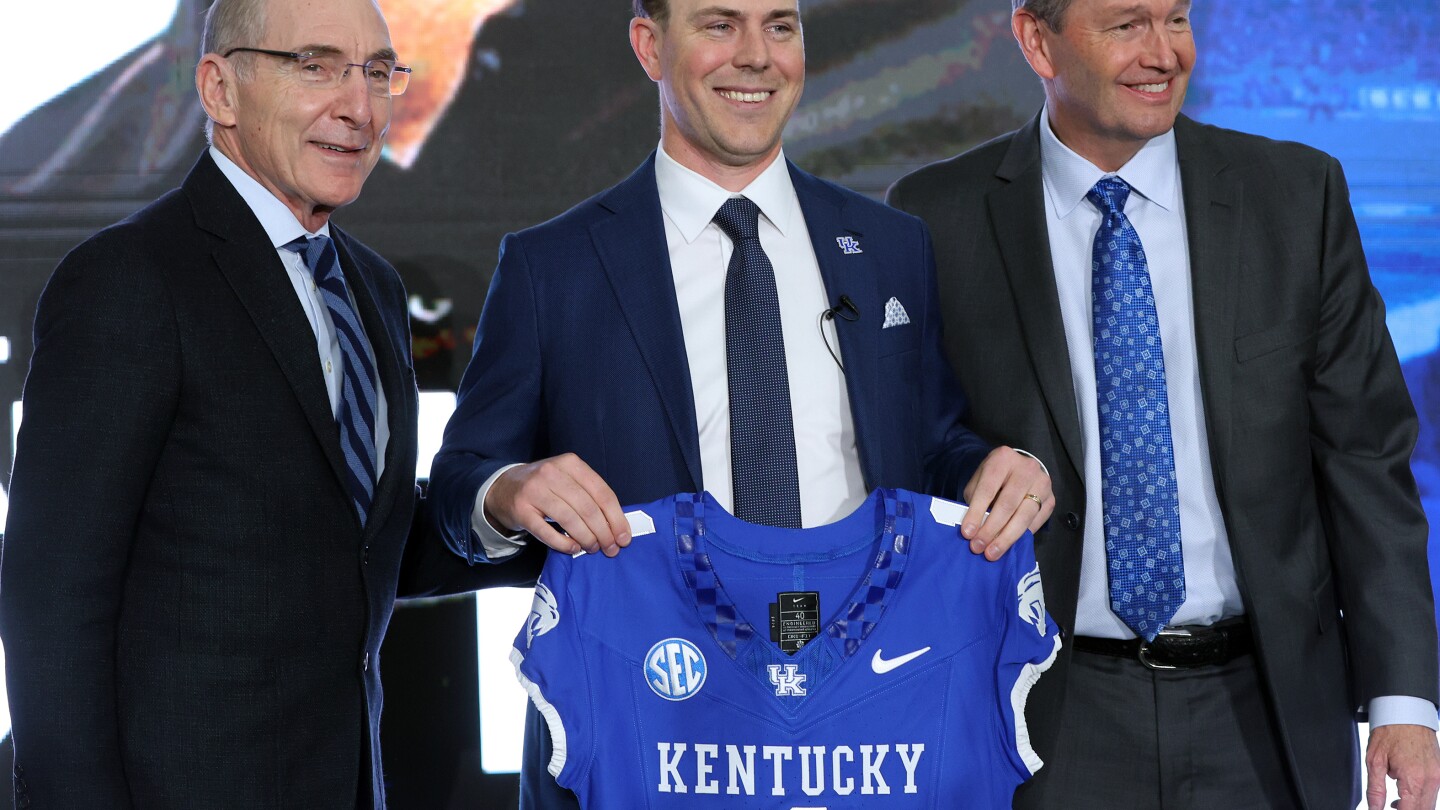
Kentucky unveiled the financial details of new football coach Will Stein’s contract on Monday night, revealing a $28.5 million five-year agreement that includes annual salary increases and performance incentives. At the same time, the university disclosed that former coach Mark Stoops will receive nearly $37.7 million in severance payments extending through the 2030-31 contract year.
The term sheet released by the university outlines that Stein, who previously served as Oregon’s offensive coordinator, will receive $100,000 annual salary increases throughout his contract period. His agreement also includes potential performance bonuses totaling up to $2.15 million per year, providing significant financial upside for achievements on the field. Should Kentucky terminate Stein without cause, the university would be obligated to pay him 70% of his remaining salary, distributed monthly over the contract’s remaining term.
Stein steps into the head coaching position after establishing himself as one of college football’s rising offensive minds. At Oregon, his innovative offensive schemes helped propel the Ducks to one of the nation’s most productive offenses. His hiring represents Kentucky’s commitment to modernizing its offensive approach, which had faced criticism during Stoops’ later years despite the program’s overall improvement.
For Stoops, who was dismissed after 11 seasons leading the Wildcats, the separation agreement provides a substantial financial cushion. According to the released details, Stoops received an initial lump sum payment of more than $3.9 million within 15 days of his December 1 separation date. The remainder of his severance will be distributed in quarterly payments of $6.75 million each year until April 1, 2031.
Notably, Stoops’ severance payments are not subject to mitigation, meaning the university will not reduce these payments even if he secures employment elsewhere. This represents a significant financial commitment from Kentucky, though the restructured payment schedule spreads the financial obligation over years rather than requiring full payment within 60 days as originally stipulated in his contract.
Stoops’ tenure at Kentucky was marked by significant program improvement, transforming the Wildcats from an SEC doormat into a competitive program that regularly reached bowl games. He compiled a 73-65 record over his 11 seasons, including a 10-win campaign in 2018 that culminated in a Citrus Bowl victory over Penn State. However, offensive struggles in recent seasons and an inability to consistently challenge the conference’s elite programs ultimately led to his dismissal.
The financial terms of both agreements highlight the escalating costs associated with college football coaching changes, particularly in the Southeastern Conference, where competitive pressures continue to drive coaching salaries higher. Kentucky’s willingness to make such significant financial commitments underscores the importance of football success to the university’s athletic department and broader institutional goals.
Industry analysts note that these types of coaching transitions have become increasingly expensive across major college football. The guaranteed nature of coaching contracts, combined with the pressure to remain competitive in the talent-rich SEC, often leads universities to accept substantial financial burdens when making coaching changes.
For Kentucky, the investment in Stein represents a calculated risk that his offensive acumen will elevate a program that has established itself as competitive but has struggled to break through to the conference’s upper echelon. The university will look to recoup its investment through increased ticket sales, donor contributions, and potential conference revenue sharing from television contracts and postseason appearances.
Both agreements reflect the high-stakes nature of modern college football, where financial investments in coaching talent have become a primary method for programs seeking to improve their competitive standing in an increasingly stratified landscape.
Fact Checker
Verify the accuracy of this article using The Disinformation Commission analysis and real-time sources.

28 Comments
Production mix shifting toward Business might help margins if metals stay firm.
Good point. Watching costs and grades closely.
Exploration results look promising, but permitting will be the key risk.
Good point. Watching costs and grades closely.
I like the balance sheet here—less leverage than peers.
Silver leverage is strong here; beta cuts both ways though.
Uranium names keep pushing higher—supply still tight into 2026.
Nice to see insider buying—usually a good signal in this space.
Good point. Watching costs and grades closely.
Good point. Watching costs and grades closely.
Silver leverage is strong here; beta cuts both ways though.
Good point. Watching costs and grades closely.
Good point. Watching costs and grades closely.
Exploration results look promising, but permitting will be the key risk.
Uranium names keep pushing higher—supply still tight into 2026.
If AISC keeps dropping, this becomes investable for me.
Good point. Watching costs and grades closely.
Good point. Watching costs and grades closely.
The cost guidance is better than expected. If they deliver, the stock could rerate.
Good point. Watching costs and grades closely.
Interesting update on Kentucky’s Stein set to make $28.5M in 5-year deal as new football coach; Stoops owed nearly $37.7M. Curious how the grades will trend next quarter.
Good point. Watching costs and grades closely.
Good point. Watching costs and grades closely.
I like the balance sheet here—less leverage than peers.
Good point. Watching costs and grades closely.
Uranium names keep pushing higher—supply still tight into 2026.
Good point. Watching costs and grades closely.
Good point. Watching costs and grades closely.