


Listen to the article
Jury Deliberations Begin in High-Profile FirstEnergy Corruption Trial
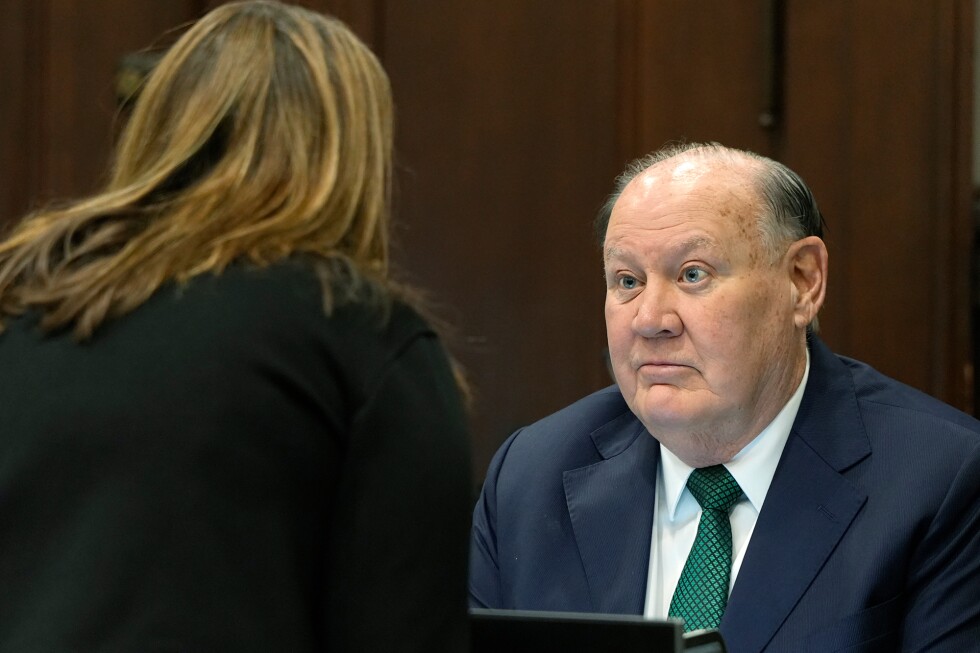
Jurors in Akron began deliberating Tuesday in the corruption trial of two former FirstEnergy Corp. executives charged for their alleged roles in a $60 million bribery scheme that resulted in a lucrative bailout for two nuclear power plants affiliated with the utility giant.
Former CEO Chuck Jones and ex-senior vice president Michael Dowling face charges of corruption, bribery, conspiracy and aggravated theft. Prosecutors allege they paid $4.3 million to Sam Randazzo, who would later become Ohio’s top utility regulator, to help draft favorable legislation and deliver other regulatory benefits to FirstEnergy. Both executives have pleaded not guilty.
During closing arguments spanning two days, prosecutors emphasized that Jones and Dowling deliberately corrupted Randazzo, who was later appointed chair of the Public Utilities Commission of Ohio, to secure legislative and regulatory favors that boosted FirstEnergy’s bottom line and, by extension, their own compensation.
“They rigged a process that was supposed to be fair for everyone. Their corruption here was using power, influence and money for personal and corporate greed,” Special Assistant Attorney General Matthew Meyer told jurors Monday. “By cleverly structuring the timing and labels of their payoff to Sam Randazzo, these two captains of industry behaved like they were untouchable.”
Defense attorneys strongly rejected these characterizations, maintaining that the January 2019 payment to Randazzo—made before he became a candidate for the commission—was a legitimate business transaction to terminate a consulting agreement with Randazzo’s clients at Industrial Energy Users-Ohio.
“Chuck Jones did not bribe Sam Randazzo,” Jones’ attorney Carole Rendon told jurors on Tuesday. “He made a legitimate business decision to terminate a settlement agreement that was for Sam Randazzo’s clients, the members of IEU-Ohio.”
The prosecution presented evidence including text messages between the executives and their preparations for meetings with then-Governor-elect Mike DeWine and then-Lieutenant Governor-elect Jon Husted, who later testified in the trial. Prosecutors argued these communications revealed a calculated plan by Jones and Dowling to enrich themselves at the expense of Ohio ratepayers.
Michael Dowling’s attorney, Steven Grimes, countered that the state failed to prove its case beyond reasonable doubt, arguing that prosecutors had cherry-picked events from years ago to construct a narrative of conspiracy that wasn’t supported by the evidence.
“You guys are the safeguards. You’re the constitutional protection that Mike has,” Grimes told jurors. “When you go back there in your jury room, please demand the details. Don’t compromise. Listen. Respect your fellow jurors. Talk it out. But don’t accept these assumptions.”
The case represents the latest chapter in a sprawling corruption scandal that has rocked Ohio politics. FirstEnergy admitted in a 2021 non-prosecution agreement that it had funded the $60 million scheme in which former Ohio House Speaker Larry Householder secured power, passed House Bill 6 (the nuclear bailout legislation), and defended it against a citizen referendum.
Householder was convicted of racketeering in 2023 alongside lobbyist and former Ohio Republican Party chair Matt Borges. Householder received a 20-year sentence, while Borges got five years. Two other political operatives pleaded guilty to their roles, and a dark money group admitted to serving as a conduit for the funds. Another Householder associate charged in the scheme, lobbyist Neil Clark, died by suicide in 2021.
Randazzo, who was facing his own litany of state and federal charges, also took his own life in 2024 after pleading not guilty.
The trial of Jones and Dowling has lasted six weeks under Summit County Common Pleas Judge Susan Baker Ross. Some details from the five-year investigation were not shared with jurors in this case.
The verdict will mark a significant milestone in Ohio’s efforts to hold accountable those allegedly involved in what prosecutors have called one of the largest public corruption cases in state history.
Fact Checker
Verify the accuracy of this article using The Disinformation Commission analysis and real-time sources.

11 Comments
If the allegations are proven true, this would be a major blow to FirstEnergy’s reputation. Shareholders and customers alike should demand more transparency and ethical leadership from the company going forward.
Agreed. Energy providers have an obligation to act with integrity and put the public interest first, not use their political clout to line their own pockets.
The energy industry has a long history of regulatory capture. Hopefully this case sends a clear message that such corrupt practices will not be tolerated, no matter how large the companies involved.
Jury deliberations in high-profile corruption cases can be agonizingly slow, but it’s critical they take the time to carefully weigh all the evidence. Justice must be served, regardless of the powerful interests involved.
This trial underscores the importance of robust whistleblower protections and campaign finance reform to reduce the influence of money in politics. Strong ethics rules and enforcement are essential.
Well said. Unchecked corporate power and political influence-peddling can have serious consequences for the public good.
This case highlights the need for greater transparency and accountability in the energy industry. Executives should not be able to bribe officials for regulatory favors that benefit their company at the expense of the public interest.
Agreed. Corruption undermines public trust and the integrity of the regulatory process. Stiff penalties are warranted if these executives are found guilty.
I’m curious to hear more details that emerged during the trial. What kind of regulatory benefits did FirstEnergy allegedly secure through these bribes, and how did that impact electricity rates and grid reliability for Ohio customers?
It’s concerning to see such a large bribery scheme involving millions of dollars. The public deserves to know their utility regulations are not being improperly influenced by corporate interests.
Absolutely. Utility oversight and ratemaking should prioritize the needs of consumers, not just the profit margins of big energy companies.