


Listen to the article
Toyota Announces Leadership Shake-Up as Profits Fall 43% Amid Global Challenges
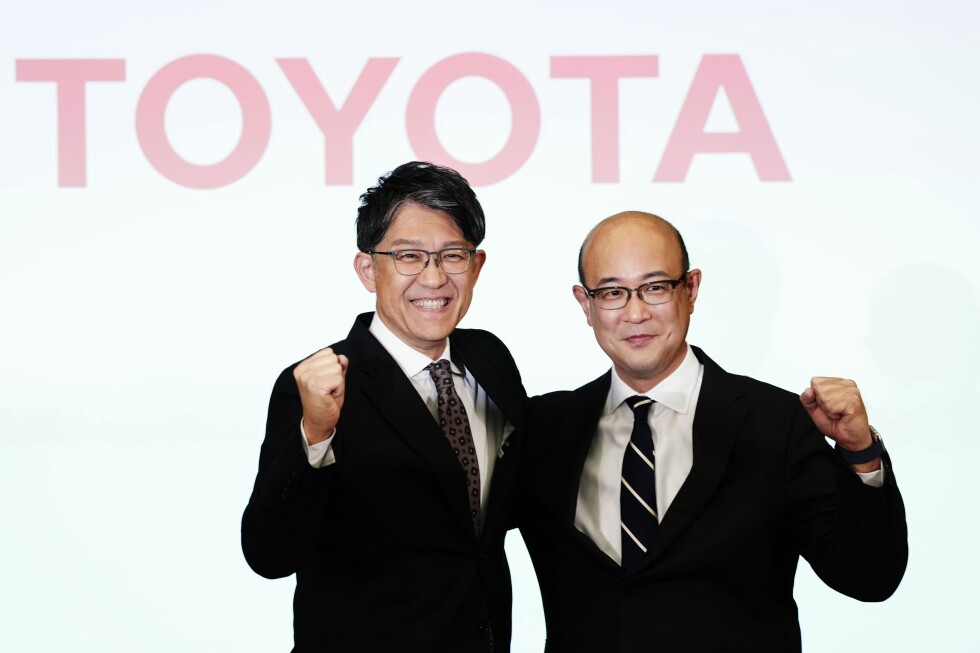
Toyota Motor Corp., Japan’s leading automaker, reported a steep 43% drop in quarterly profit on Friday while simultaneously announcing a significant leadership change. Kenta Kon, the company’s current chief financial officer, will replace Koji Sato as both chief executive and president in April, with formal shareholder approval expected in June.
The leadership transition comes at a challenging time for the automaker as it navigates global economic headwinds. Sato, who will remain as vice chairman at Toyota, described the executive reshuffling as part of a strategic “gear shift” and “our determination to move toward change with all our might” during a press conference with reporters.
Kon brings diverse experience to his new role, having worked in various departments including automated driving technology. Toyota cited his expertise in improving company earnings as a key qualification for the position. Industry analysts note that Kon is considered to have close ties to company chairman Akio Toyoda, the grandson of Toyota’s founder.
The financial results reveal significant challenges facing the automaker. For the October-December quarter, Toyota’s group profit totaled 1.25 trillion yen ($8 billion), down sharply from 2.19 trillion yen during the same period a year earlier. The company reported a 26% decline in profit for January-December 2023, falling to 3.03 trillion yen ($19 billion) from 4.1 trillion yen the previous year.
Despite the profit decline, Toyota’s sales rose nearly 7% to 38 trillion yen ($242 billion) in the January-December period, up from 35 trillion yen the year before. Global vehicle sales for the first nine months of the fiscal year increased to 7.3 million vehicles from about 7 million, with growth occurring across Japan, North America, and Europe.
One of the most significant factors affecting Toyota’s profitability has been U.S. trade policy. The company estimates that tariffs implemented during the Trump administration erased 1.45 trillion yen ($9.2 billion) from its operating profit last year. This challenge isn’t unique to Toyota, as all Japanese automakers have struggled with both rising material costs and the impact of U.S. tariffs.
In explaining his departure after just three years as president, Sato emphasized that his industry leadership roles – including his position as chairman of the Japan Automobile Manufacturers Association (JAMA) and his leadership role at Keidanren, the Japan Business Federation – demanded his full attention during a period of urgent industry transformation.
Toyota officials were careful to note that Sato’s replacement was not due to poor performance, pointing to the company’s continued resilience despite external challenges beyond its control. In fact, Toyota raised its full fiscal year profit forecast to 3.57 trillion yen ($22.8 billion), though this still represents a 25% year-over-year decline.
Kon acknowledged organizational challenges at the automaker, noting that Toyota employees tend to be reluctant to modify systems they worked hard to establish. He emphasized the need for greater agility in the company’s operations going forward.
The market responded positively to the announcements, with Toyota’s Tokyo-traded shares jumping 2% on Friday.
As part of its forward-looking strategy, Toyota emphasized its continued commitment to expanding beyond traditional automotive manufacturing. “For Toyota to continue advancing its transformation into a mobility company, it is necessary not only to strengthen industry collaboration but also to expand partnerships beyond the industry,” the company stated.
Fact Checker
Verify the accuracy of this article using The Disinformation Commission analysis and real-time sources.

16 Comments
Toyota’s drop in profits is a concerning sign, and the leadership change could be a necessary step to address the underlying issues. It will be interesting to see how the new CEO approaches the task of steering the company back to profitability.
Certainly. Kon’s expertise in areas like automated driving technology could be a valuable asset, but he’ll need to balance innovation with cost-cutting measures to improve Toyota’s bottom line.
Toyota’s financial results highlight the challenges facing the automotive industry. The new CEO will need to find ways to boost profitability while also addressing evolving consumer preferences and market trends.
That’s a fair assessment. The ability to adapt and innovate will be crucial for Toyota’s success under the new leadership.
The transition at the top of Toyota comes at a challenging time for the company. The new CEO will need to carefully navigate the global economic headwinds and find ways to boost profitability while maintaining Toyota’s reputation for quality and innovation.
Agreed. It will be crucial for the new CEO to demonstrate strong leadership and a clear strategic vision to guide Toyota through this turbulent period.
Interesting to see Toyota undergoing this leadership transition. It will be important for the new CEO to navigate the company through the global economic headwinds it faces while maintaining Toyota’s reputation for quality and innovation.
Agreed. Kon’s experience in areas like automated driving technology could be a valuable asset as Toyota looks to adapt to industry trends.
The leadership change at Toyota comes at a pivotal time for the automaker. Navigating the global economic landscape and maintaining the company’s reputation will be top priorities for the new CEO.
Absolutely. Kon’s experience in areas like automated driving technology could give Toyota an edge, but he’ll need to demonstrate strong leadership to guide the company through these turbulent times.
The leadership transition at Toyota comes at a critical juncture for the company. Kon’s background suggests he may be well-equipped to tackle the challenges ahead, but the proof will be in his ability to execute a successful turnaround strategy.
Agreed. Toyota’s reputation is on the line, so the new CEO will need to demonstrate a clear vision and the ability to effectively implement it to restore the company’s financial performance.
A 43% drop in quarterly profits is a significant challenge for Toyota. The leadership change could provide a fresh perspective, but the new CEO will need to address the underlying issues impacting the automaker’s financial performance.
Certainly, Toyota’s ability to weather these global economic pressures will be crucial. The company’s reputation is on the line, so the new CEO’s strategy will be closely watched.
This shake-up at the top of Toyota raises some questions about the company’s direction. While Kon’s background seems promising, it remains to be seen if he can turn things around and restore Toyota’s profitability.
You raise a fair point. The transition period could be critical, as the new CEO will need to quickly assess the situation and implement effective measures to address Toyota’s challenges.