


Listen to the article
Japanese Prime Minister Faces Challenging U.S. Visit Amid Middle East Crisis
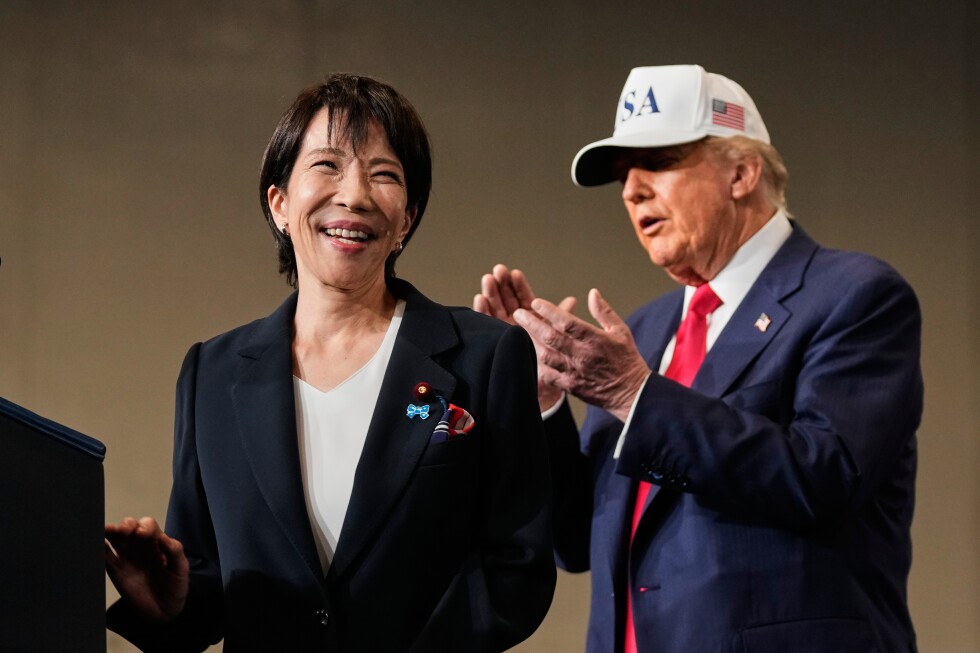
Japanese Prime Minister Sanae Takaichi departed for Washington on Wednesday for what she anticipates will be a “very difficult” three-day meeting with U.S. President Donald Trump, as regional tensions and security concerns reshape the agenda of her visit.
Initially expected to focus on trade relations and strengthening the U.S.-Japanese alliance in the face of China’s growing regional influence, the summit’s priorities have shifted dramatically following the outbreak of war between the United States and Israel against Iran on February 28.
“I think the U.S. visit will be a very difficult one, but I will do everything to maximize our national interest and to protect the daily lives of the people when the situation changes daily,” Takaichi told parliament hours before her departure. “We must work toward restoring peace and stability in the Middle East and I hope to thoroughly discuss that.”
This marks Takaichi’s second meeting with Trump, following their initial encounter in Tokyo last October shortly after she became Japan’s first female prime minister. A hard-line conservative and protégé of former Prime Minister Shinzo Abe—who maintained close ties with Trump—Takaichi now finds herself navigating complex geopolitical waters.
The summit comes at a particularly challenging time, as Trump recently called on Japan and other allies to send warships to secure the Strait of Hormuz, a vital maritime passage for global oil shipments. Trump later walked back the request, complaining about a lack of enthusiasm from allies.
“We have no plans to send warships right now,” Takaichi clarified during a parliamentary session. She noted that survey and intelligence missions might be possible, but only after a ceasefire. Japanese defense experts suggest that minesweeping operations could be a feasible mission for Japan once hostilities subside.
Japan’s hesitancy stems from both constitutional constraints on military deployment and legal questions surrounding the U.S. action against Iran. Additionally, public opinion in Japan strongly opposes involvement in the conflict. Takaichi emphasized that she would “clearly explain what we can do and cannot do based on Japanese law” during her meeting with Trump.
The escalating Middle East conflict poses significant economic concerns for Japan, which relies heavily on oil imports from the region, including Iran. “Without early de-escalation of the situation, our economy will be in trouble,” Takaichi warned. “Early de-escalation is important for both the U.S. and global economy.”
Despite the Middle East crisis dominating headlines, China’s growing regional influence remains a critical agenda item. Takaichi seeks to ensure continued U.S. commitment to the Indo-Pacific region, particularly as some American forces stationed in Japan are being redeployed to the Middle East—a development viewed with concern in Tokyo.
The prime minister plans to reassure Trump of Japan’s accelerated military buildup, highlighting the deployment of long-range missiles that enhance Japan’s offensive capabilities—a significant departure from the country’s post-war self-defense-only stance. She is expected to express interest in joining America’s “Golden Dome,” a multi-billion dollar, multi-layered missile defense system.
Japan’s military expansion includes increased defense presence on its southwestern islands near the East China Sea, where tensions with China have intensified. Takaichi has pledged to revise Japan’s security and defense policy by December and intends to lift the country’s ban on lethal arms exports in the coming weeks to promote defense industry cooperation with the United States and other allies.
Energy security will also feature prominently in discussions. Japan, resource-poor and seeking to diversify its oil suppliers, is reportedly finalizing Japanese investment to increase oil production in Alaska and build stockpiles in Japan. Potential investments in U.S. small modular reactors and natural gas are also on the table.
These projects would contribute to a $550 billion investment package that Japan pledged in October. The two nations announced in February Japan’s commitment to $36 billion in initial projects, including a natural gas plant in Ohio, a Gulf Coast crude oil export facility, and a synthetic diamond manufacturing site.
Japan is also expected to propose joint development of rare earth elements discovered in undersea soil around the remote Japanese island of Minamitorishima as part of the investment package.
The summit occurs against a backdrop of heightened tensions between Japan and China, further complicated by Takaichi’s recent comment that Chinese military action against Taiwan could trigger a Japanese military response.
Fact Checker
Verify the accuracy of this article using The Disinformation Commission analysis and real-time sources.

10 Comments
The U.S.-Japan alliance faces some real challenges given the rapidly evolving geopolitical situation. Trade and China concerns will likely take a backseat as the two leaders focus on the urgent Iran crisis. This could be a pivotal moment for strengthening their strategic partnership.
Restoring stability in the Middle East has to be the top priority. Japan’s unique position as a non-combatant could allow it to play a mediating role, if the U.S. is open to that approach.
The U.S. and Japan will need to work closely to find a diplomatic solution to the Iran crisis. Japan’s historical neutrality and trade ties in the region could make them a valuable broker, if the warring parties are willing to engage in dialogue.
This visit will be a critical test of the U.S.-Japan alliance. Their ability to coordinate an effective response to the regional security threats could shape the trajectory of this conflict.
Shifting priorities for this U.S. visit make it an extremely challenging diplomatic moment for Japan’s leader. De-escalating the Iran conflict while safeguarding Japanese interests will require great skill and flexibility.
Interesting that the Iran war fallout is complicating this diplomatic visit. Japan will need to carefully balance its interests with those of the US and Middle East stability. I’m curious to see what concrete steps they can agree on to de-escalate tensions in the region.
Japan has traditionally played a constructive role in Middle East diplomacy. It will be important for them to leverage that experience and relationships to help find a peaceful resolution.
Japan’s unique position as a non-combatant in the Iran war could give it leverage to play a constructive mediation role. But it will have to carefully navigate the competing interests of the U.S. and its allies in the region.
This visit will test Japan’s diplomatic acumen and the strength of its alliance with the U.S. A successful outcome could enhance Japan’s global stature as a peacemaker.
With the outbreak of war between the U.S., Israel and Iran, this U.S. visit by Japan’s PM takes on a very different tone. Protecting regional stability and the daily lives of their citizens will be the key focus, rather than the originally planned trade and alliance discussions.